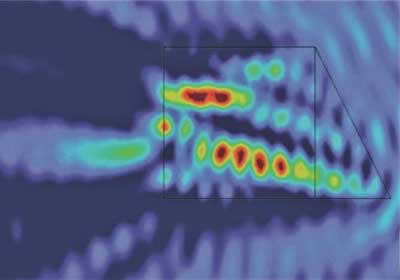
 A new class of curved plasmon beams named as a photonic hook plasmon can be used as a nanoparticle manipulator, as well as in biosensors to study substances in small volumes and plasmon microscopes for benefiting superresolution.
Oct 26th, 2018
Read more
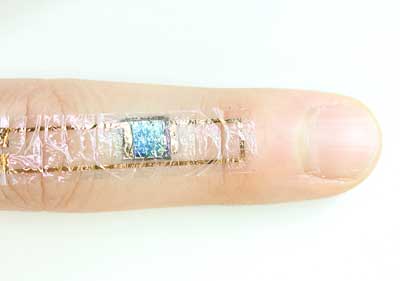 Scientists have developed a human-friendly, ultra-flexible organic sensor powered by sunlight, which acts as a self-powered heart monitor.
Oct 26th, 2018
Read more
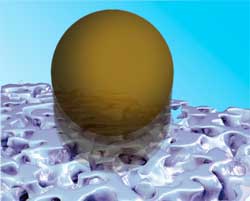 The new invention consists of a type of coating that produces thin films of water-loving, oil-repelling molecules on the surface of filter membranes. These metal oxide molecules grab onto any loose water atoms while resisting oil.
Oct 26th, 2018
Read more
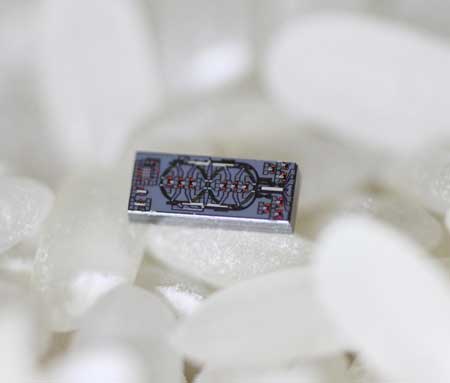 Engineers create an optical gyroscope smaller than a grain of rice.
Oct 25th, 2018
Read more
 Using engineered nanocomposite structures called metamaterials, a research team reports the ability to measure a significant increase in the energy transfer between molecules.
Oct 25th, 2018
Read more
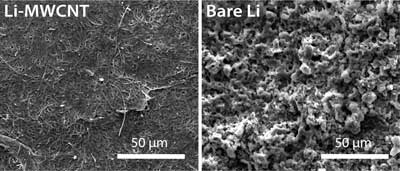 Scientists' method quenches lithium metal dendrites in batteries that charge faster, last longer.
Oct 25th, 2018
Read more
 The DESY accelerator facility in Hamburg, Germany, goes on for miles to host a particle making kilometer-long laps at almost the speed of light. Now researchers have shrunk such a facility to the size of a computer chip.
Oct 25th, 2018
Read more
 Researchers have discover squeezed light at the nanoscale that propagates only in specific directions along thin slabs of molybdenum trioxide. Besides its unique directional character, this nanolight lives for an exceptionally long time, and thus could find applications in signal processing, sensing or heat management at the nanoscale.
Oct 24th, 2018
Read more
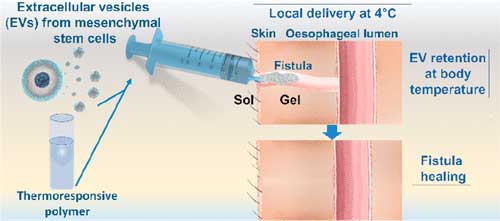 While stem cells have the most therapeutic potential, the benefits of regenerative medicine may best be mobilised using extracellular vesicles, also known in the past as 'cellular dust'. A team of researchers has tested these vesicles for the first time in a porcine model for the treatment of post-operative digestive fistulas.
Oct 24th, 2018
Read more
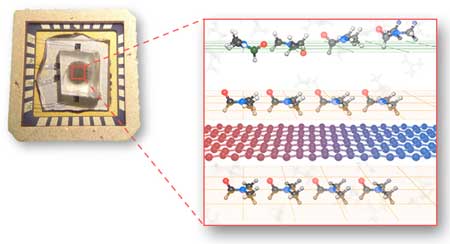 Researchers describe and explain why dispersing graphene in a suitable solvent leads to the resulting nanofluid having much better thermal properties than the original liquid.
Oct 24th, 2018
Read more
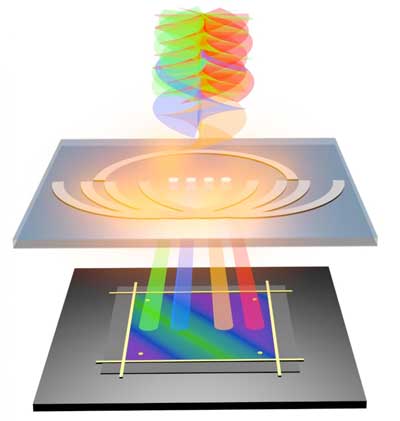 Groundbreaking new technology could allow 100-times-faster internet by harnessing twisted light beams to carry more data and process it faster.
Oct 24th, 2018
Read more
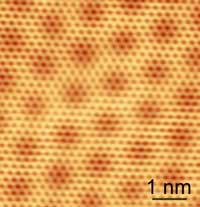 Tinkering with the electronic and magnetic properties of new materials can improve the performance and capabilities of logic, memory and energy devices for next-generation technology.
Oct 24th, 2018
Read more
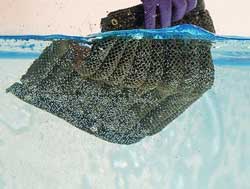 Researchers have created sponges made from wood that selectively absorb oil, and then can be squeezed out and used again.
Oct 24th, 2018
Read more
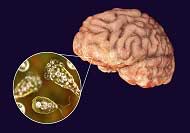 Scientists have developed silver nanoparticles coated with anti-seizure drugs that can kill brain-eating amoebae while sparing human cells.
Oct 24th, 2018
Read more
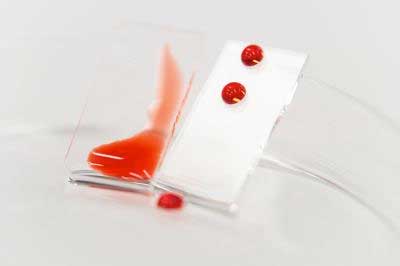 New surfaces create promise of safer implants, more accurate diagnostic tests.
Oct 24th, 2018
Read more
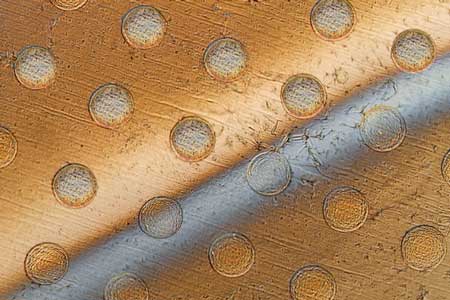 Novel technique could lead to tiny, self-powered devices for environmental, industrial, or medical monitoring.
Oct 23rd, 2018
Read more

 Subscribe to our Nanotechnology News feed