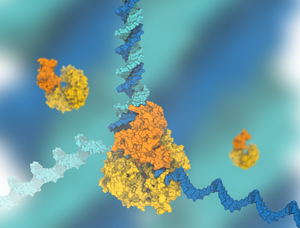
 Scientists have long known that double-stranded DNA can be unwound into single-stranded DNA by molecular motor proteins called helicases, just like pulling a zipper. But researchers have discovered that the same machinery, after changing its shape, can also put the unwound DNA back together into double-stranded DNA.
Oct 9th, 2018
Read more
 The course starts on edX on November 1st, 2018. Listeners will learn the latest achievements and modern applications about plasmonics.
Oct 9th, 2018
Read more
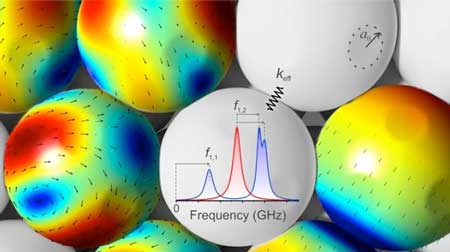 The team's findings include properties such as surface mobility, glass transition temperature and elastic modulus.
Oct 8th, 2018
Read more
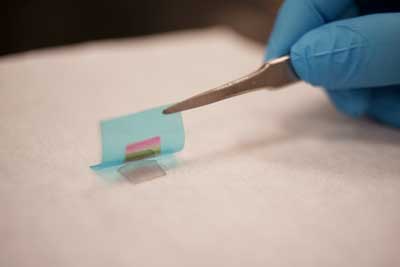 Cost-effective method produces semiconducting films from materials that outperform silicon.
Oct 8th, 2018
Read more
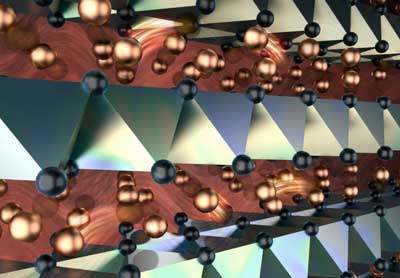 Atomic insights into superionic crystals could lead to safer, more efficient rechargeable batteries.
Oct 8th, 2018
Read more
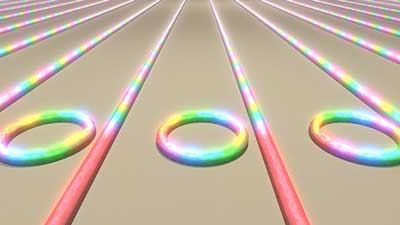 Low-power chip unites lasers and frequency combs for the first time and can be powered by an AAA battery, opening the door to portable devices for a wide range of applications from spectroscopy to optical communications to LIDAR.
Oct 8th, 2018
Read more
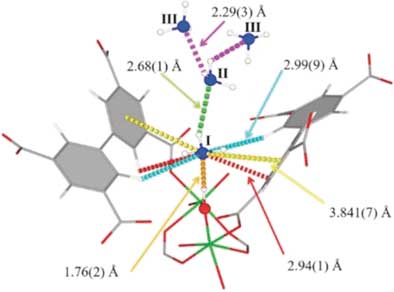 Metal-organic framework as a robust material for the uptake and storage of ammonia at densities that come close to that of the liquefied gas.
Oct 8th, 2018
Read more
 Researchers found that the proximity effects of graphene on a magnetic semiconducting substrate affect the substrate's magnetism down to several layers below the surface.
Oct 8th, 2018
Read more
 Catalytic research has developed a new and more definitive way to determine the active site in a complex catalyst.
Oct 6th, 2018
Read more
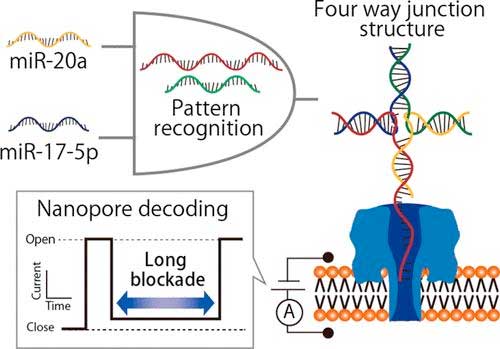 Researchers have developed a simple technique that allows detection of two independent microRNAs as an early diagnosis marker of Small Cell Lung Cancer , which is very aggressive. In this technique, they combined nanopore and DNA computing technologies as rapid and label-free detection.
Oct 5th, 2018
Read more
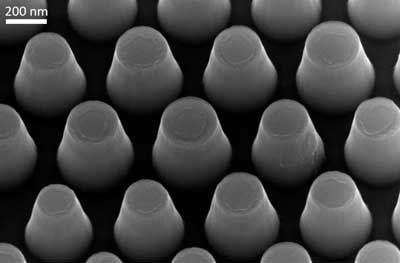 Researchers propose a new device concept that can efficiently transfer the information carried by electron spin to light at room temperature - a stepping stone towards future information technology.
Oct 5th, 2018
Read more
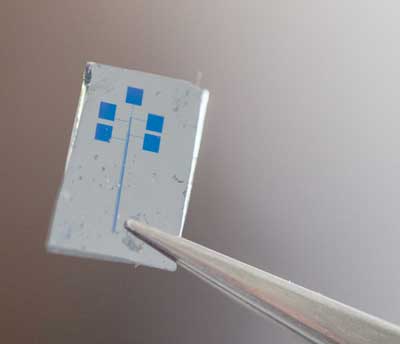 Engineers have invented a semiconductor with organic and inorganic materials that can convert electricity into light very efficiently, and it is thin and flexible enough to help make devices such as mobile phones bendable.
Oct 5th, 2018
Read more
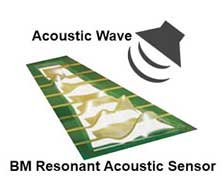 Researchers fabricated a flexible piezoelectric membrane by mimicking the basilar membrane in the human cochlear. Resonant frequencies vibrate corresponding regions of the trapezoidal piezoelectric membrane, which converts voice to electrical signal with a highly sensitive self-powered acoustic sensor.
Oct 5th, 2018
Read more
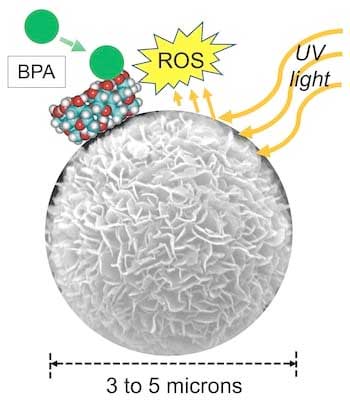 Scientists have developed something akin to the Venus flytrap of particles for water remediation.
Oct 5th, 2018
Read more
 Scientists have developed a human-friendly, ultra-flexible organic sensor powered by sunlight, which acts as a self-powered heart monitor.
Oct 5th, 2018
Read more
 Researchers streamline the design of microfluidic devices to be see-through to observe their inner workings.
Oct 5th, 2018
Read more

 Subscribe to our Nanotechnology News feed