Solving the mystery of the topology of semimetal bismuth
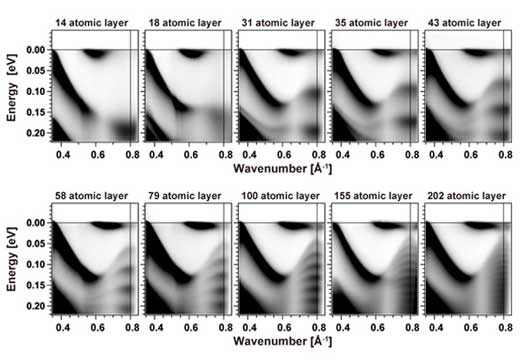 Ultrahigh-resolution measurement achieved by electronic interferometry.
Apr 7th, 2017
Read more
Ultrahigh-resolution measurement achieved by electronic interferometry.
Apr 7th, 2017
Read more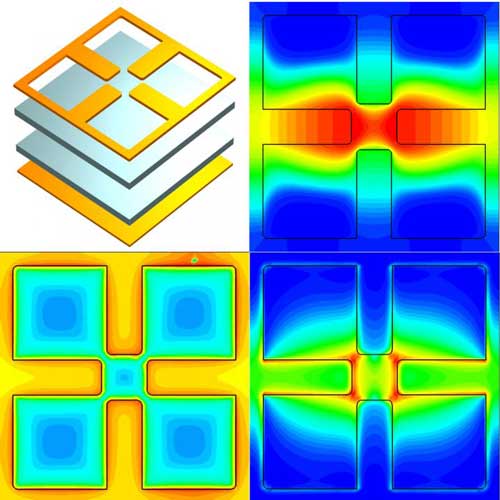 New metamaterials-based technology could replace infrared sensors used for gas leaks, agriculture and recycling.
Apr 7th, 2017
Read more The natural structure found within leaves could improve the performance of everything from rechargeable batteries to high-performance gas sensors, according to an international team of scientists.
Apr 6th, 2017
Read more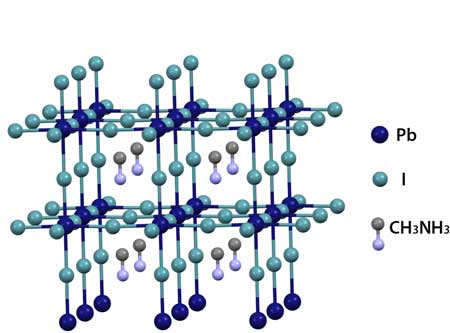 The new material, called a hybrid perovskites, would create solar cells thinner than conventional silicon solar cells, and is also flexible, cheap and easy to make.
Apr 6th, 2017
Read more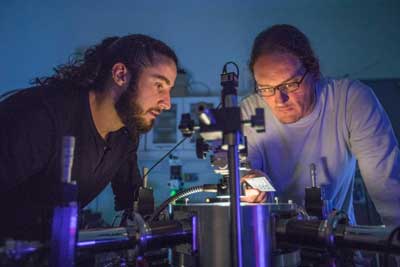 Leading innovation could transform everyday products (like your milk carton) into intelligent smart devices.
Apr 6th, 2017
Read more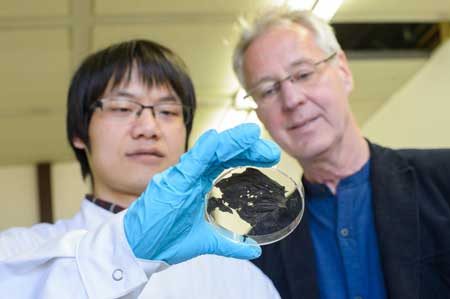 Experimental physicists have developed a thin nanomaterial with superconducting properties. Below about -200 C these materials conduct electricity without loss, levitate magnets and can screen magnetic fields.
Apr 6th, 2017
Read more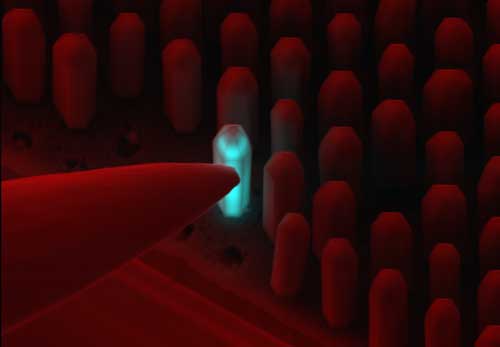 Creating a new type of chip-sized optical microscope with high resolution capabilities is the challenge of ChipScope, a European project.
Apr 6th, 2017
Read more Like baristas creating beautiful spirals of creamy foam on the warm surfaces of lattes, researchers have found a way to control the creation of special textured surfaces in magnetically ordered materials.
Apr 6th, 2017
Read more In the past six years, the project 'Opportunities and Risks of Nanomaterials' intensively studied the development, use, behaviour and degradation of engineered nanomaterials, including their impact on humans and on the environment.
Apr 6th, 2017
Read more The special nanopowders are used as modifying additives in the production of aluminum alloys. This method will significantly improve the operational properties of the foundry products, and reduce the energy costs for its final processing.
Apr 6th, 2017
Read more Researchers have developed an electrochemical sensor on the basis of polymers with molecular imprinting, aimed at detection of saccharides and hydroxy acids.
Apr 6th, 2017
Read more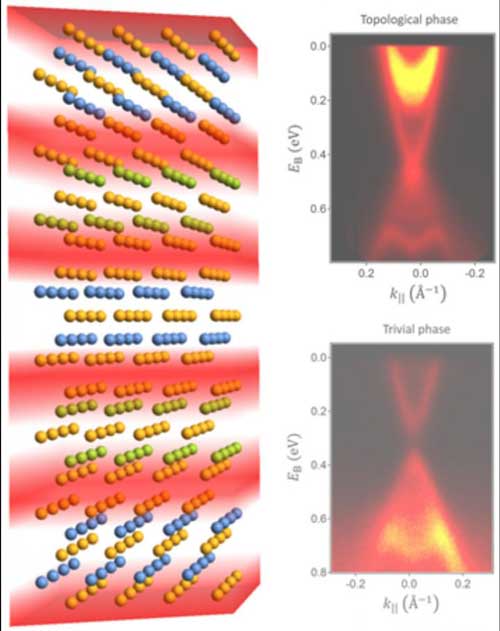 An international team of researchers have created a new structure that allows the tuning of topological properties in such a way as to turn on or off these unique behaviors. The structure could open up possibilities for new explorations into the properties of topological states of matter.
Apr 5th, 2017
Read more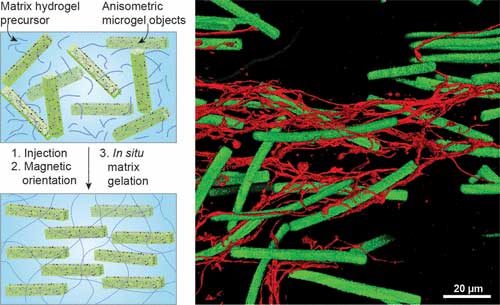 Scientists have developed an injectable gel, which can act as a guidance system for nerve cells.
Apr 5th, 2017
Read more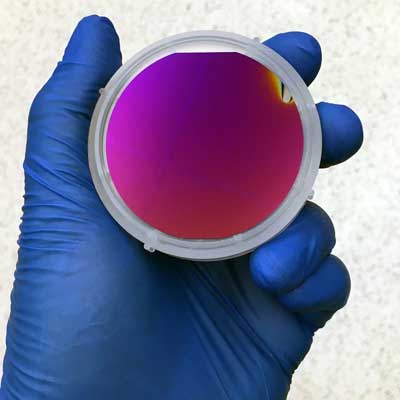 Researchers have shown how to modify commercially available silicon wafers into a structure that efficiently absorbs solar energy and withstands the high temperatures needed for Concentrated Solar Power Plants that might run up to 24 hours a day.
Apr 5th, 2017
Read more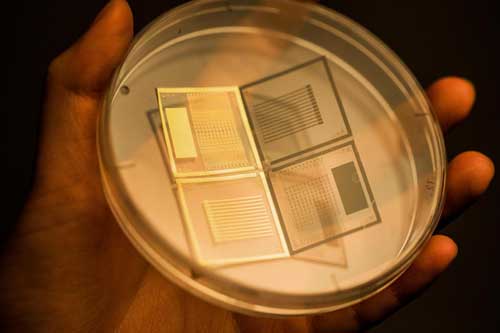 Researchers present a novel method of fabricating a transistor-type active-matrix pressure sensor using foldable substrates and air-dielectric layers.
Apr 5th, 2017
Read more Researchers have developed a method to select semiconducting nanotubes from a solution and make them self-assemble on a circuit of gold electrodes.
Apr 5th, 2017
Read more Subscribe to our Nanotechnology News feed