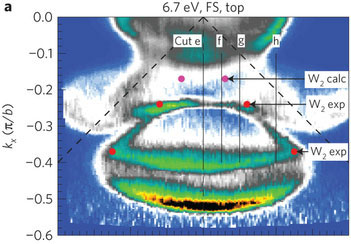
 Researchers have discovered a new type of Weyl semimetal, a material that opens the way for further study of Weyl fermions, a type of massless elementary particle hypothesized by high-energy particle theory and potentially useful for creating high-speed electronic circuits and quantum computers.
Aug 15th, 2016
Read more
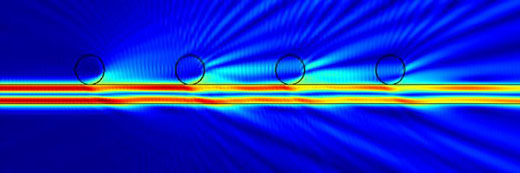 Scientists found that the interactions between particles trapped in light distributed along an optical microfiber, as well as the speed of particle movement were different based on the light's characteristics.
Aug 15th, 2016
Read more
 New platform uses lab-on-a-chip technology to predict how hazardous engineered nanomaterials might be.
Aug 15th, 2016
Read more
 New research results indicate that the 'sweet spot' for mass-producing polymer solar cells - a tantalizing prospect for decades - may be far larger than dictated by the conventional wisdom.
Aug 15th, 2016
Read more
 White light from lasers demonstrates data speeds of up to 2 GB/s.
Aug 15th, 2016
Read more
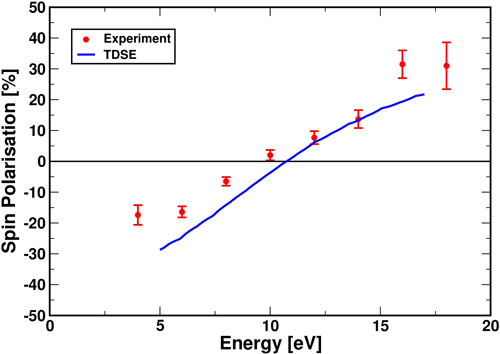 Surprisingly, a joint experimental and theoretical study shows that a chance of detaching spin-up or spin-down electron from an atom can be very different.
Aug 15th, 2016
Read more
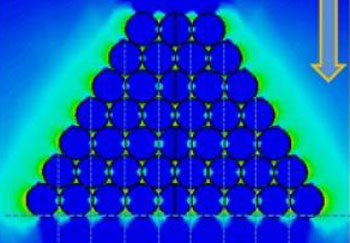 New solid 3-D superlenses made from nanobeads extends magnification x5 to reveal new detail.
Aug 13th, 2016
Read more
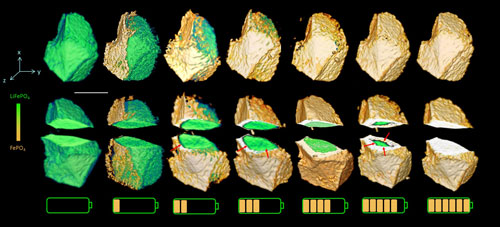 Images reveal battery materials' chemical reactions in five dimensions - 3D space plus time and energy.
Aug 12th, 2016
Read more
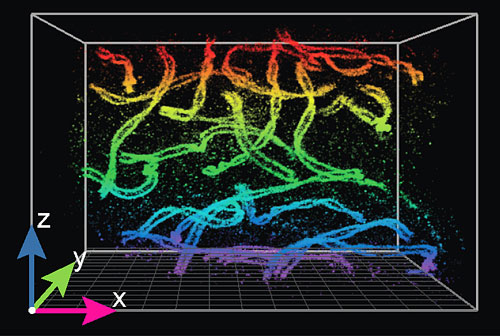 A new ultra-high resolution 'nanoscope' is capable of taking 3-D images of an entire cell and its cellular constituents in unprecedented detail, an advance that could reveal biological phenomena never before seen and bring new medical insights.
Aug 12th, 2016
Read more
 A nanocrystalline material that rapidly makes white light out of blue light has been developed by researchers.
Aug 12th, 2016
Read more
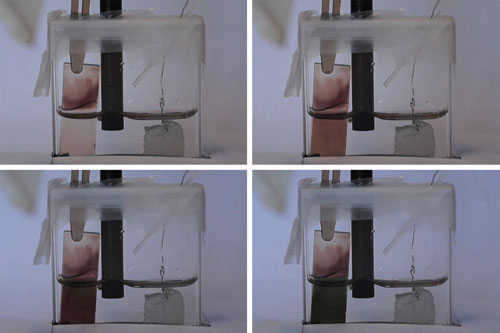 New system can rapidly switch glass from transparent to dark - and keep it that way without power.
Aug 11th, 2016
Read more
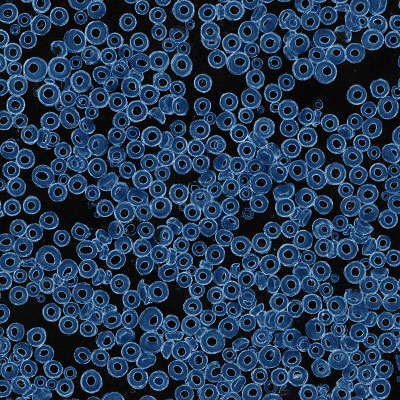 Researchers have stumbled upon a phenomenon that has the potential to greatly improve cell-free protein production and cell delivery, particularly for Type 1 diabetes patients.
Aug 11th, 2016
Read more
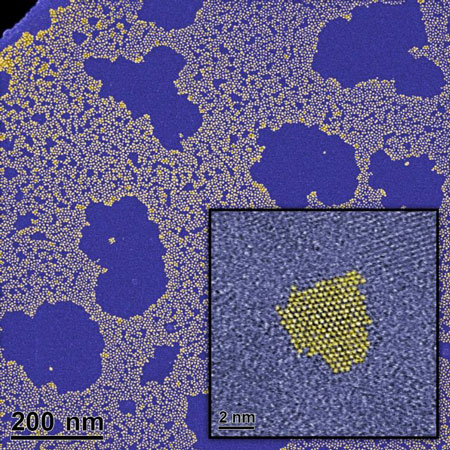 Researchers have shown that zinc oxide quantum dots prepared by an original method developed by them, after modification by the click reaction with the participation of copper ions, fully retain their ability to emit light.
Aug 11th, 2016
Read more
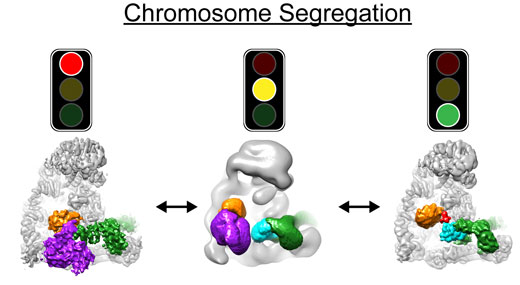 Scientists have visualised a molecular machine called the APC/C. APC/C initiates chromosome segregation and it does this only after the mother cell has completed all other steps that are necessary for cell division.
Aug 11th, 2016
Read more
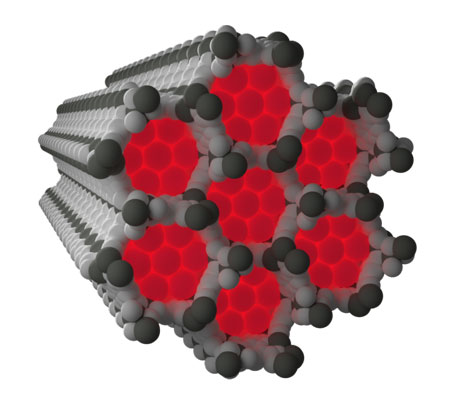 Neon is well known for being the most unreactive element and is a key component in semiconductor manufacturing, but neon has never been studied within an organic or metal-organic framework until now.
Aug 10th, 2016
Read more
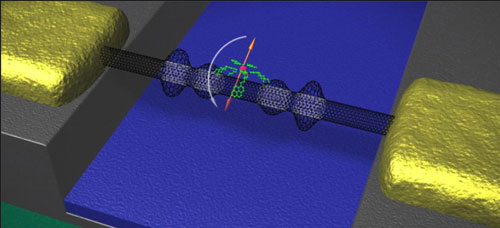 For the first time, researchers formulate the Einstein-de-Haas effect for quantum magnets.
Aug 10th, 2016
Read more

 Subscribe to our Nanotechnology News feed