Showing Spotlights 113 - 120 of 2785 in category All (newest first):
 A novel tunable stealth material design drawing inspiration from leaves can provide adjustable radar and infrared camouflage from a single lightweight structure, overcoming challenges that have impeded multifunctional stealth technologies for decades.
Nov 29th, 2023
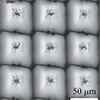 Innovative hybridized technique combines ultrafast laser ablation with controllable in-situ nanoparticle deposition, enabling iterative, layered fabrication of complex multi-tiered hierarchical surface micro- and nanostructures.
Nov 28th, 2023
 Researchers develop flexible electronic sensor skins with extreme resilience that maintains accurate strain and temperature measurements when submerged in harsh acids or swung between scorching heat and subzero icy seawater.
Nov 27th, 2023
 Ingenious auxetic shape-memory alloy wire lattice textile realizes zone-specified actuation to convey readily discerned complex tactile sensations, enabling intuitive navigation when immersed in virtual environments.
Nov 25th, 2023
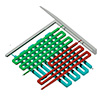 Breakthrough research enables full digital manufacturing of self-operating microfluidic devices in 30 minutes on widely accessible 3D printers, removing major barriers to real-world adoption.
Nov 24th, 2023
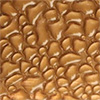 Researchers have developed an innovative nanotechnology material that can rapidly harvest clean drinkable water from air even in dry conditions via an integrated solar-powered cycle far outperforming existing technologies. Its exceptional uptake rate, capacity, release efficiency and durability promise major advancements towards mitigating global water scarcity.
Nov 23rd, 2023
 Researchers demonstrate focused electron beam induced deposition can reliably 3D print gold nanostructures with fully predictable, spectrally tunable plasmonic responses. The technique's flexibility enables precise vertical and lateral mode engineering in intricate geometries, unlocking applications from augmented spectroscopy to quantum optics.
Nov 22nd, 2023
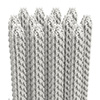 By genetically enhancing the intrinsic pyroelectric properties of viruses, researchers pave the way for biodegradable, ultra-sensitive gas sensors and bio-inspired energy harvesters.
Nov 20th, 2023

 Subscribe to our Nanotechnology Spotlight feed