Showing Spotlights 1377 - 1384 of 2784 in category All (newest first):
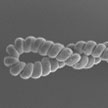 Materials engineers are keen to exploit the outstanding mechanical properties of carbon nanotubes (CNTs) for applications in fibers, composites, fabrics and other larger-scale structures and devices. The ability to fabricate continuous, multifunctional yarns represents an important step in this direction. The development of a continuous, weavable multilayered CNT yarn with superior mechanical, structural, surface, and electrical properties would open the way for a wide range of structural and functional applications, including composites, intelligent fabrics, catalyst supports, and sensors. Researchers in China have now found that carbon nanotubes can be self-assembled into a stable double-helix structure by a controlled over-twisting process, and this novel structure has unique mechanical properties.
Jan 22nd, 2013
 The media play an important role in the formation of society's opinion by drawing attention to selected topics and bringing them closer to the public. This applies in particular to areas with which a large percentage of the population would otherwise have no direct points of contact, such as nanotechnology. A new study of selected print media in the German-speaking countries now reveals the general picture of nanotechnology in the media, what topics are given significant treatment, which actors are consulted, and explains that (at least as yet) there is no need for any concerns about risk-centred controversial reporting on this technology.
Jan 21st, 2013
 The majority of current commercial applications of nanotechnology to medicine is geared towards drug delivery to enable new modes of action, as well as better targeting and bioavailability of existing medicinal substances. While most reviews on nanomedicine tend to focus on specific sectors or take a very forward-looking stance and fail to provide a complete perspective on the current landscape, a new review article provides a more comprehensive and contemporary inventory of nanomedicine products.
Jan 17th, 2013
 Designing, building, and running molecule-sized nanocars has become an active field of research among nanotechnology scientists. Based on research to reinvent the wheel for nanotechnology, efforts range from the original nano car developed by James Tour at Rice University in 2005 - which had buckyball wheels and flexible axles, and served as a proof-of-concept for the manufacture of machines at the nanoscale - to 'nanodragsters', and a nano car with molecular 4-wheel drive. A new Perspective article in ACS Nano describes how this field began, its growth, and list problems to be solved.
Jan 15th, 2013
 To date, the predominant focus of the nanotechnology risk research endeavor has been defining the fate, transport, and toxic properties of pristine or "as manufactured" nanomaterials. However, the high surface to volume ratio and reactivity of nanoparticles makes them highly dynamic in environmental systems. The resulting transformations of the nanomaterials will affect their fate, transport, and toxic properties. A recent review summarizes what is known about chemical, physical, and biologically mediated transformations of nanomaterials in natural systems and their effects on the resulting nanomaterial behavior.
Jan 10th, 2013
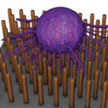 Metastasis - the process of cancer spreading from its original site to distant tissues - is caused by marauding tumor cells that break off from the primary tumor site and ride in the bloodstream to set up colonies in other parts of the body. Detecting and analyzing these circulating tumor cells (CTCs) can provide critical information for managing the spread of cancer and monitoring the effectiveness of therapies. In new work, researchers have created a Velcro-like platform which can not only capture CTCs with very high efficiency, but also release them in order to biochemically analyze them further.
Jan 8th, 2013
 Human breath contains a number of volatile organic components (VOCs). An accurate detection of a specific VOC - i.e., a biomarker for a particular disease - in the exhaled breath, can provide useful information for diagnosis of various diseases. The critical advantage of exhaled breath analysis is that it allows for non-invasive disease diagnosis. Researchers have now shown that that a chemiresistive sensor can work as a VOCs sensing device to detect very low concentrations of acetone if the sensing materials have optimized morphology and microstructure.
Jan 7th, 2013
 Nanotechnology is finding applications in the treatment of infectious and inflammatory diseases, particularly skin disease. These applications work in one of two ways: utilizing nanomaterials that have inherent antimicrobial properties; or incorporating known therapeutics into nanoscale vehicles to enhance delivery and improve efficacy. An ideal approach to develop a topical therapy for microbial infection in skin would combine both. Now, researchers have developed a new nanoparticle platform using chitosan for the treatment of inflammatory skin diseases such as Acne Vulgaris.
Jan 3rd, 2013

 Subscribe to our Nanotechnology Spotlight feed