Showing Spotlights 1393 - 1400 of 2779 in category All (newest first):
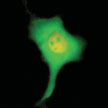 Fluidic force microscopy (FluidFM) is an emerging technology which combines atomic force microscopy (AFM) with microfluidics. In a new study, researchers in Switzerland have now developed an innovative method for straightforward injection into the nucleus of a living cell, taking advantage of the nanoscale accuracy and small probe size of AFM and the possibility to handle fluid under pressure-control through the integrated microchannel.
Nov 29th, 2012
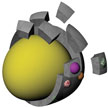 Spores are reproductive structures that have developed in nature to preserve genetic information and protect cellular components in harsh conditions and against external stresses such as nutrient deprivation, high temperatures, or radiation. Spores form part of the life cycles of many bacteria and plants. The cellular components of a spore are protected against the environment by a very robust hierarchical shell structure that allows it to survive for many years under hostile conditions found naturally that can easily and quickly kill normal cells. By developing the concept of artificial spores, researchers have been developing strategies to coat single cells with a hard, protective layer of a hard thin shells.
Nov 28th, 2012
 Increasingly we are observing glass windows as a key building material in modern construction design. Specially in the urban areas presence of high rise residential and commercial buildings are clearly visible. At the same time, it is important to make this increasing urbanization as green as possible. With an increase in building height, its power consumption rises not only because of the presence of more people but also because lifting water, operating elevators, etc. require extra amounts of power. Therefore, developing a complementary source of power which is clean and otherwise wasted is a key research topic for a sustainable future. Researchers at KAUST explored a novel idea to integrate micro- to nanoscale thermoelectric materials with the window glasses to generate thermoelectricity based on the temperature difference that exists between the hot outside and relatively cold inside.
Nov 22nd, 2012
 In nature, numerous inorganic materials are synthesized by living organisms. These bioinorganic materials can be extremely complex both in structure and function, and also exhibit exquisite hierarchical ordering from the nanometer to macroscopic length scales. The possibility of using such microorganisms and plants in the deliberate synthesis of nanomaterials is a recent phenomenon and scientists are now exploring the use of biological organisms and materials to literally grow nanomaterials. In a novel approach, researchers have now synthesized nanoparticles in hair. The purpose was to try to describe some of the chemical reactions occurring inside the hair shaft, in the so-called amorphous matrix surrounding intermediate filaments made of keratin proteins. This matrix can be seen as a set of nanoreactors.
Nov 20th, 2012
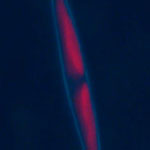 Optical tweezers offer researchers the chance to perform precise force sensing in a fluid environment. This could help to give clarity to some of the picoNewton forces that govern fundamental processes in the cell. However, currently the use of tweezers to probe biological, samples requires either direct irradiation with a laser, or the use of a tool or proxy to exert or sense very small forces. There are many instances when exposing samples to high intensity laser light is less than ideal - typically this is within a biological context. Researchers have now have shown that optical tweezers can be combined with naturally derived algae to create a stable nanoscale optical force sensor. This may enable other groups to utilize this technique to probe key force interactions that occur at the lowest end of the nanoscale force regime.
Nov 15th, 2012
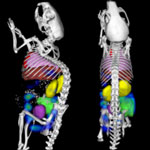 One of the key issues in the development of novel nanomedicines is the ability to track nanoscale drug carriers inside the body to evaluate where they go and how they get there. Virtually all previous preclinical studies in this area of research rely on 2D Fluorescence Reflectance Imaging (FRI). Given the limitation of 2D FRI in not being able to detect the fluorescence in deep-seated organs and tissues, 3D Fluorescence Molecular Tomography (3D FMT) emerged as an alternative. However, the lack of anatomical information was an important barrier hindering the routine use of standard 3D FMT for in vivo imaging of nanomedicines. Researchers have now developed a hybrid CT-FMT-based imaging protocol to enable more meaningful and more quantitative in vivo analyses.
Nov 13th, 2012
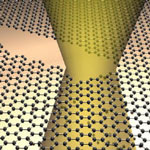 Within graphene research, transmission electron microscopy (TEM) has proven to be an extremely useful and versatile characterization tool. However, the electron beam can interact with the sample leading to its modification during the process. This may be an undesirable effect and measures to avoid this do exist. In other cases, however, electron beam-sample interactions can be useful for nanoengineering or nanomanufacturing. It is therefore crucially important to understand how a material responds to the electron beam and the environment inside a TEM. In new work, researchers have now demonstrated that damage-free sculpting of graphene with condensed electron beams is feasible.
Nov 12th, 2012
 Power dissipation is the limiting factor to the continued scaling of size and speed of conventional silicon technology used for fabrication of integrated circuits and computer chips. For each switch of a transistor, an amount of energy needs to be dissipated that is proportional to the number of electrons and temperature. This condition is of a fundamental nature, resulting from the laws of thermodynamics.However, the assumption underlying this fundamental limit is that the electrons or spins act as an ensemble of independent particles. If instead, the electrons are in a collective state, then the minimum dissipation limit for one switching cycle can be greatly reduced. This fact provides a strong motivation to exploit collective states as alternative variables for information processing.
Nov 8th, 2012

 Subscribe to our Nanotechnology Spotlight feed