Antibiotic Resistance: Definition, Mechanisms, Causes, and Biotechnology Approaches
What Is Antibiotic Resistance?
Definition: Antibiotic resistance is the ability of bacteria to survive and continue growing in the presence of an antibiotic that would normally kill them or stop their growth.
In simple terms: an antibiotic that would normally treat an infection no longer works because the bacteria causing it have changed, or already carry traits, that let them withstand the drug. It is the bacteria that become resistant, not the person being treated.
Antibiotic resistance occurs when a population of bacteria can grow despite exposure to a concentration of antibiotic that would normally inhibit or kill it. In clinical terms, an infection is considered resistant when the lowest drug concentration needed to stop the bacteria exceeds the level that can be safely achieved in the patient. Resistance can be intrinsic, meaning a species is naturally insensitive to a particular drug, or acquired, meaning bacteria that were once susceptible gain resistance through mutation or by acquiring resistance genes from other bacteria.
Antibiotic resistance is the bacterial component of the broader phenomenon of antimicrobial resistance, which also covers resistant viruses, fungi and parasites. Because bacterial infections are common and antibiotics are among the most widely used drugs in medicine, antibiotic resistance is one of the most studied and clinically important parts of that wider problem. The scale is substantial: a 2022 global analysis estimated that bacterial resistance was directly responsible for 1.27 million deaths in 2019 and associated with roughly 4.95 million deaths worldwide.
At a glance:
- What it is: bacteria surviving a drug that should kill or stop them
- Who is resistant: the bacteria, not the patient
- Two origins: intrinsic resistance and acquired resistance
- Main driver: selection pressure from antibiotic exposure
- Spread: bacterial reproduction plus horizontal transfer of resistance genes
- Scale: directly responsible for an estimated 1.27 million deaths in 2019
Key Takeaways
Antibiotic resistance is bacterial evolution under drug pressure. It can arise through mutation or gene transfer, spread between bacteria via mobile genetic elements, and be amplified by antibiotic use in medicine, agriculture and the environment. Control depends on stewardship, infection prevention, rapid diagnostics, surveillance, new therapeutics and sustained investment in drug discovery.
How Does Antibiotic Resistance Develop?
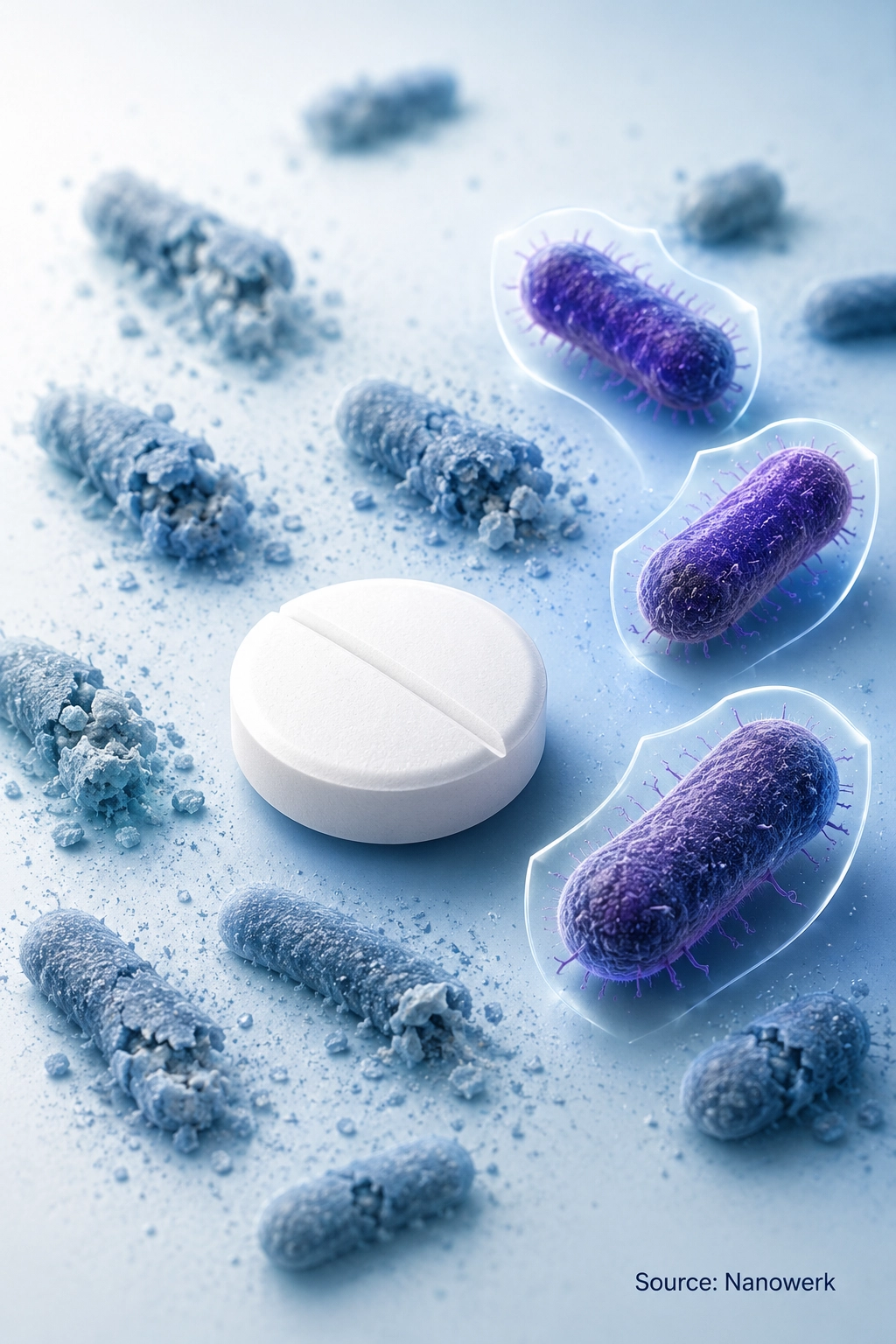
Resistance develops through natural selection acting on bacterial populations. Within a large population of bacteria, genetic variation is constant: mutations occur as cells divide, and bacteria can also acquire new genes from other cells. Some of these changes reduce the effect of an antibiotic. When the antibiotic is present, susceptible cells are killed or stopped while resistant cells survive. Some bacteria can divide every 20 to 30 minutes under favorable conditions, so resistant survivors may repopulate quickly and shift the population from mostly susceptible to mostly resistant.
A key point is that antibiotics usually do not create resistance traits from scratch. They mainly select for resistant variants already present or arising independently during bacterial growth. This distinction matters for control strategy. Every use of an antibiotic, whether appropriate or not, can apply some degree of selection pressure, which is why total antibiotic exposure across medicine, agriculture and the environment is a central driver of resistance. Reducing unnecessary exposure can slow resistance and, in some cases, reduce its frequency, although resistance genes may persist for long periods after a drug is withdrawn.
Resistance can emerge by several routes. In a single patient, treatment may select spontaneous resistance mutations, pre-existing resistant subpopulations or genes transferred from co-resident bacteria. In the wider world, resistant bacteria and the genes they carry move between people, animals, water, soil and healthcare settings. Both routes are shaped by how, where and how much antibiotics are used.
Mechanisms of Antibiotic Resistance
At the molecular level, bacteria resist antibiotics through a limited set of strategies, and many resistant strains combine several at once. The main mechanisms are reducing how much drug gets inside the cell, pumping the drug back out, modifying or protecting the drug's target, inactivating the drug itself, or bypassing the metabolic step that the antibiotic blocks.
Restricting Drug Entry and Active Efflux
An antibiotic can only act if it reaches its target inside the bacterium at a sufficient concentration. Many resistant bacteria reduce the amount of drug that accumulates inside the cell. Gram-negative bacteria can decrease the number or change the structure of outer-membrane channels, called porins, through which small drugs enter. In parallel, bacteria use efflux pumps, membrane proteins that actively expel antibiotics before they can act. Some efflux systems remove several unrelated drug classes at once, contributing directly to multidrug resistance.
Target Modification and Protection
Most antibiotics work by binding tightly to a specific bacterial component, such as a ribosomal RNA site, a cell-wall-building enzyme or a DNA-processing protein. Bacteria can alter that target so the drug no longer binds well while the component still performs its normal job. Examples include methicillin-resistant Staphylococcus aureus (MRSA), which carries an altered penicillin-binding protein, and vancomycin-resistant enterococci, which modify the cell-wall target recognized by the drug.
Drug Inactivation
Bacteria can also destroy or chemically modify an antibiotic before it reaches its target. The best-known example is the production of beta-lactamase enzymes, which break the core chemical ring of penicillins and related drugs. Extended-spectrum beta-lactamases and carbapenemases in Enterobacterales can defeat some of the most important hospital antibiotics. Other enzymes add chemical groups to antibiotics such as aminoglycosides, blocking their activity. Because these enzymes are frequently encoded on mobile genetic elements, drug-inactivating resistance spreads especially easily between bacteria.
How Resistance Spreads Between Bacteria
Resistance does not only pass from a bacterium to its descendants. Bacteria can share genes directly through horizontal gene transfer, which lets resistance move rapidly between unrelated strains and even different species. This is one of the main reasons resistance has spread so widely: a resistance gene that arises once can be disseminated across many bacterial populations without those bacteria having to evolve it independently.
There are three classical routes. In transformation, a bacterium takes up free DNA released by other cells. In transduction, a bacteriophage carries bacterial genes from one cell to another. In conjugation, two bacteria connect and transfer DNA directly, often a plasmid carrying several resistance genes at once. Conjugative plasmids and transposable elements are especially important because they can move multiple resistance genes together, so a single transfer event can confer resistance to several drug classes.
Once acquired, resistance genes can become stable within bacterial communities. Mobile elements may carry additional genes that help them persist even without continuous antibiotic pressure, and resistance genes circulate among bacteria in people, animals, water and soil. This shared pool means clinical resistance cannot be understood in isolation from agricultural and environmental antibiotic use, an insight that underlies the One Health framework for managing the problem.
What Causes the Rise of Antibiotic Resistance?
Resistance itself is an ancient natural phenomenon, found in bacteria from environments never exposed to manufactured drugs, because antibiotics and resistance genes evolved among microbes long before clinical use. What has changed is the scale of selection pressure. Widespread antibiotic use in human medicine, including use for infections that will not benefit, continually selects for resistant bacteria. Inappropriate prescribing, self-medication and substandard drugs add to this pressure by exposing bacteria to poorly matched or suboptimal drug levels.
Agriculture is another major contributor. Large quantities of antibiotics are used in livestock and aquaculture, sometimes to promote growth or prevent disease in healthy animals rather than to treat infection. Resistant bacteria and resistance genes from these settings can reach people through food, water, direct contact and environmental spread. Pharmaceutical manufacturing waste, hospital effluent and contaminated water further seed the environment with resistant organisms. Because the same resistance gene can move among human, animal and environmental bacteria, these sectors form one connected system rather than separate problems.
A third factor is a weak drug pipeline. Developing new antibiotics is scientifically difficult and commercially unattractive because a successful new drug is often held in reserve to preserve its usefulness, limiting return on investment. As a result, resistance has continued to emerge against existing drugs faster than replacements have reached the clinic, narrowing the options for treating the most resistant infections.
The Global Burden of Antimicrobial Resistance
The health impact of resistance is now quantified at a global scale. A comprehensive 2022 analysis estimated that in 2019 bacterial resistance was directly responsible for about 1.27 million deaths and associated with roughly 4.95 million deaths worldwide. A 2024 follow-up estimated more than one million deaths attributable to resistance every year between 1990 and 2021, and forecast that annual deaths directly attributable to resistance could rise to about 1.91 million by 2050 under current trends. The burden falls most heavily on regions with limited access to effective drugs, diagnostics and care.
A small number of pathogens account for much of this burden. Drug-resistant Escherichia coli, Staphylococcus aureus, Klebsiella pneumoniae, Streptococcus pneumoniae, Acinetobacter baumannii and Pseudomonas aeruginosa together cause a large share of resistance-associated deaths. To direct research toward the most urgent threats, the World Health Organization maintains a bacterial priority pathogens list. Its 2024 update covers 24 antibiotic-resistant pathogens across 15 families and ranks them into critical, high and medium tiers, with carbapenem-resistant Gram-negative bacteria and rifampicin-resistant tuberculosis among the critical priorities.
Tackling Antibiotic Resistance With Biotechnology
No single measure can solve resistance, so responses combine careful use of existing drugs with the development of new options. Antibiotic stewardship, better diagnostics, infection prevention and surveillance aim to reduce unnecessary selection pressure and slow the spread of resistant strains. These measures buy time but do not replace the need for new therapeutic tools, which is where biotechnology is most active.
Several approaches are under investigation. Rapid molecular diagnostics, including those built on DNA sequencing and CRISPR-based detection chemistry, can identify the pathogen and its resistance genes within hours so that the right drug is used sooner. Bacteriophage therapy uses bacteria-specific viruses to kill resistant strains, and engineered phages or phage-derived enzymes are being developed as more controllable versions. Other strategies include monoclonal antibodies against bacterial targets, microbiome-based approaches that restore colonization resistance, beta-lactamase inhibitors that protect older drugs, and antimicrobial peptides.
Nanotechnology is also being explored for targeted antibiotic delivery, antimicrobial surfaces, nanoparticle-enabled diagnostics and combination systems that disrupt biofilms or increase local drug concentration while limiting systemic exposure. Researchers are using bioinformatics and machine learning to screen large chemical and genomic datasets for new antibiotic candidates and resistance markers.
Each approach has limits. Bacteria can evolve resistance to phages, antibodies and peptides as well, and new drugs remain costly and slow to develop. Durable progress will likely depend on combining stewardship, surveillance, infection control, rapid diagnostics, better incentives for antibiotic development and a continuously replenished pipeline, treating resistance as a problem to be managed indefinitely rather than solved once.
Frequently Asked Questions
Is antibiotic resistance the same as antimicrobial resistance? No, the two terms are related but not identical. Antimicrobial resistance is the broad concept covering resistance in bacteria, viruses, fungi and parasites to the drugs used against them. Antibiotic resistance is the specific case of bacteria resisting antibiotics, and it is one of the most studied and clinically important components of antimicrobial resistance.
Can a person become resistant to antibiotics? No. It is the bacteria, not the patient, that become resistant. Antibiotic resistance is a property of bacterial populations, so a resistant infection means the bacteria causing it can no longer be killed or stopped by a given drug. A person can, however, carry resistant bacteria without being ill, and those bacteria can later cause a hard-to-treat infection or spread to others.
Does stopping antibiotics early cause resistance? The relationship is more complex than the traditional advice implied. Any antibiotic exposure selects for resistance, and for several common infections shorter evidence-based courses are now preferred because they reduce total selection pressure. The current emphasis is on using the right drug for the right duration as defined by clinical evidence, rather than on a universal rule to always finish every course. Patients should follow the duration prescribed by their clinician and should not stop or extend treatment without medical advice.
Why does antibiotic use in farming matter for human health? Antibiotics used in animals select for resistant bacteria and resistance genes that can reach people through food, water, direct contact and the wider environment. Because the same gene can move between animal, environmental and human bacteria, agricultural and environmental antibiotic use contributes to the resistance problem in clinical medicine. This connection is the basis of the One Health approach to controlling resistance.
Do bacteriophages help against antibiotic-resistant infections? Bacteriophages, viruses that infect bacteria, can kill antibiotic-resistant strains and are being investigated as phage therapy for infections that no longer respond to drugs. Phages are highly specific and bacteria can also evolve resistance to them, so the approach is mostly used experimentally or on a case-by-case basis rather than as a routine treatment. It is one of several alternatives being explored alongside new antibiotics.
Further Reading
Nature Reviews Microbiology, Molecular Mechanisms of Antibiotic Resistance Revisited
Nature Reviews Microbiology, Molecular Mechanisms of Antibiotic Resistance
Nature Reviews Microbiology, Antibiotic Resistance in the Environment