

Cleantech and Environmental News – Latest Headlines
 Subscribe to our Cleantech News feed
'Superglue' for the atmosphere
It has been known for several years that sulfuric acid contributes to the formation of tiny aerosol particles, which play an important role in the formation of clouds. A new study shows that dimethylamine can tremendously enhance new particle formation. The formation of neutral nucleating clusters of sulfuric acid and dimethylamine was observed for the first time.
October 8, 2014 Read more

Designing future cities
New tools will merge urban design with scientific analysis to improve the decision-making process associated with large-scale urban developments. One such tool, called LakeSim, has been prototyped with an initial focus on consumer-driven energy and transportation demand.
October 8, 2014 Read more
Out of the red and into the blue: making the LED revolution cost-effective
Researchers are working on producing more cost-effective gallium nitride LEDs that can have widespread use in homes and offices.
October 8, 2014 Read more
The Nobel Prize in Physics 2014 - New light to illuminate the world
'for the invention of efficient blue light-emitting diodes which has enabled bright and energy-saving white light sources'
October 7, 2014 Read more
First-ever global life cycle assessment of renewable energy future
A future where electricity comes mostly from low-carbon and renewable resources is not only feasible in terms of material demand, but will significantly reduce air pollution, a new study says.
October 6, 2014 Read more
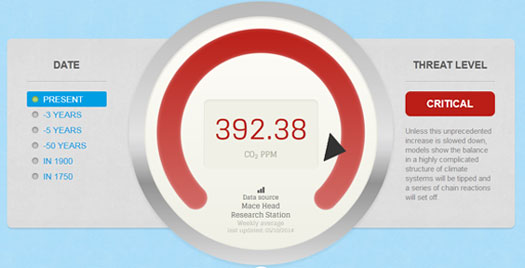
Climate-KIC launches new online CO2 meter to indicate carbon emissions threat level
A new online meter combines a live data feed drawing on European data, updated regularly to show the precise level of CO2 in the earth's atmosphere today, and comparison tools to show how CO2 levels have changed over time.
October 6, 2014 Read more
Global clean energy investment sustains its recovery
Figures for the third quarter show another year-on-year rise, with a solar boom in China the biggest single contributor.
October 2, 2014 Read more
Online resource to support the work of biodiversity conservation organizations
A free online resource, launched today, will help conservation organizations share expertise and tools, aiding them in addressing some of the planet's most challenging conservation issues.
October 1, 2014 Read more
Demolish, re-use, recycle and rebuild
Some 380 million tonnes of construction and demolition waste are generated every year and most of it ends up in landfills. Re-using and recycling components and materials is good for the environment and saves money, but industry has been less than enthusiastic. An EU-funded research project has laid the foundations for change - it is promoting concrete, ceramics, gypsum and plastics recycling around Europe.
October 1, 2014 Read more
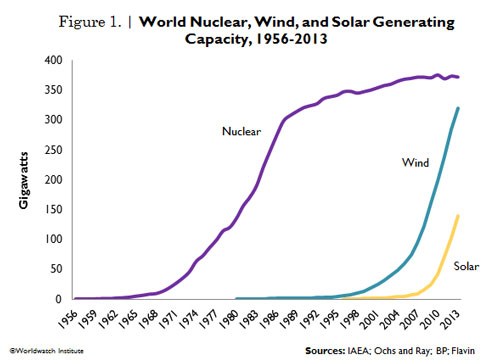
Wind, solar generation capacity catching up with nuclear power
New Worldwatch Institute analysis examines global trends in renewable and nuclear power.
September 30, 2014 Read more
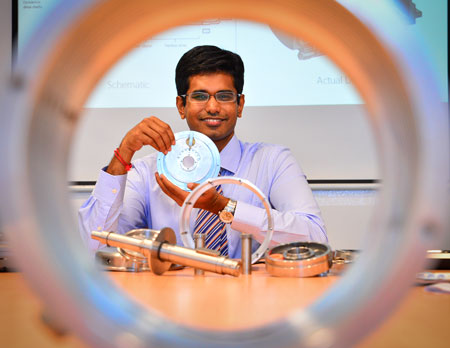
Novel 2-in-1 electric motor which increases the range of electric vehicles
This innovative engine integrates the traditional electric motor with the air-con compressor, typically two separate units. This novel, space-saving design allows the use of bigger batteries, which can increase the range of electric vehicles by an additional 15 to 20 per cent.
September 30, 2014 Read more

Smart, ecofriendly new battery to solve problems
Present-day lithium batteries are efficient but involve a range of resource and environmental problems. Using materials from alfalfa (lucerne seed) and pine resin and a clever recycling strategy, researchers have now come up with a highly interesting alternative.
September 29, 2014 Read more
Solutions for an internet of energy
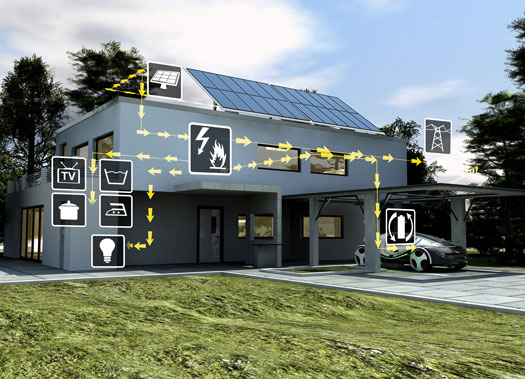
The 'Internet of Energy' is defined as the networking of relatively autonomous electricity producers and consumers, who determine and cover the energy demand among themselves. Such an infrastructure will become necessary when large numbers of electric vehicles have to be supplied with energy in the future.
September 26, 2014 Read more
Algae deliver hydrogen
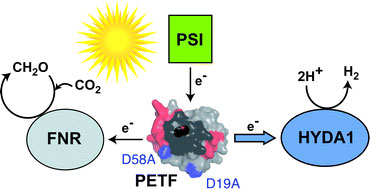
Modified enzymes enable efficient hydrogen production.
September 25, 2014 Read more
New York breaks ground on largest solar manufacturing facility in Western Hemisphere
Governor Andrew M. Cuomo today announced a new, one million-square-foot site for the future SolarCity GigaFactory facility, which will manufacture solar panels at the RiverBend site in South Buffalo.
September 23, 2014 Read more

Plant-based building materials may boost energy savings
Insulation for homes of the future may be harvested from fields of kenaf, an alternative to fiberglass.
September 23, 2014 Read more
Paraffins to cut energy consumption in homes
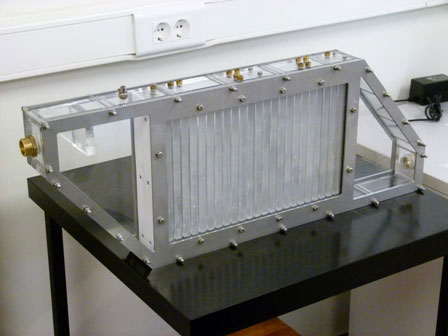
Researchers have developed a modular device based on paraffins that allows thermal energy to be stored, thus reducing the total volume of the system by 50 percent with respect to storage by means of water, traditionally used in buildings.
September 23, 2014 Read more
Search for better biofuels microbes leads to the human gut
Scientists have scoured cow rumens and termite guts for microbes that can efficiently break down plant cell walls for the production of next-generation biofuels, but some of the best microbial candidates actually may reside in the human lower intestine, researchers report.
September 23, 2014 Read more