Reference terms from Wikipedia, the free encyclopedia
 

Excretory system

The excretory system is a passive biological system that removes excess, unnecessary materials from the body fluids of an organism, so as to help maintain internal chemical homeostasis and prevent damage to the body. The dual function of excretory systems is the elimination of the waste products of metabolism and to drain the body of used up and broken down components in a liquid and gaseous state. In humans and other amniotes (mammals, birds and reptiles) most of these substances leave the body as urine and to some degree exhalation, mammals also expel them through sweating.

Only the organs specifically used for the excretion are considered a part of the excretory system. In the narrow sense, the term refers to the urinary system. However, as excretion involves several functions that are only superficially related, it is not usually used in more formal classifications of anatomy or function.

As most healthy functioning organs produce metabolic and other wastes, the entire organism depends on the function of the system. Breaking down of one of more of the systems is a serious health condition, for example kidney failure.

 
Note:   The above text is excerpted from the Wikipedia article Excretory system, which has been released under the GNU Free Documentation License.
 

Check out these latest Nanowerk News:

 

Scientists discover classical space-time crystals moving like Majorana quasiparticles

New experimental evidence demonstrates that discrete space-time crystals can be realized in classical soft-matter systems, thereby moving beyond the traditional complexities of quantum mechanics.

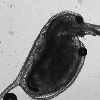
Tiny water fleas reveal early warning signs of nanomaterial toxicity

Automated system analyzes heart rates of about 150 Daphnia magna per hour, enabling more sensitive detection of toxic effects at low concentrations in aquatic ecosystems.

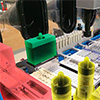
Self-driving chemistry lab discovers catalysts that can switch products on demand

A self-driving lab rapidly screened catalyst recipes, finding tunable systems that switch chemical products by changing reaction conditions

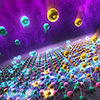
Electron buildup unlocks precision control of Janus 2D semiconductors

Plasma treatment weakens sulfur bonds, enabling precise room-temperature fabrication of Janus 2D semiconductors for advanced electronics.

Sugar-coated nanoparticles show promise for treating most aggressive form of brain cancer

Sugar-coated lipid nanoparticles carried tumor-suppressing mRNA across the blood-brain barrier, shrinking glioblastoma tumors in mice.

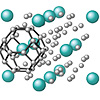
A better way to model the behavior of metal alloys

Researchers' approach captures subtle atomic patterns, improving predictions of material properties.

Next-gen instruments bring nanomaterials into sharper focus

New instruments on the horizon promise the most precise tools yet to study and experiment on the smallest and most complex materials ever manufactured.

Listening for quantum oscillations in the Kondo insulator YbB12

Ultrasonic measurements reveal magnetic quantum oscillations only after YbB12 transitions into a metallic state.

Nano-focusing: Why speed and precision matter in surface metrology and microscopy

Fast piezo and voice-coil nano-focusing systems keep microscopes and metrology tools sharply focused with nanometer precision and millisecond response.

Creating complex light patterns using a two-century-old light phenomenon

Researchers used the Poisson spot effect to create stable optical skyrmions with a laser and disc, simplifying studies for photonics and computing applications.