Reference terms from Wikipedia, the free encyclopedia
 

Peptide bond

A peptide bond is an amide type of covalent chemical bond linking two consecutive alpha-amino acids from C1 (carbon number one) of one alpha-amino acid and N2 (nitrogen number two) of another, along a peptide or protein chain.

It can also be called an eupeptide bond to separate it from an isopeptide bond, a different type of amide bond between two amino acids.

When two amino acids form a dipeptide through a peptide bond,[1] it is a type of condensation reaction. In this kind of condensation, two amino acids approach each other, with the non-side chain (C1) carboxylic acid moiety of one coming near the non-side chain (N2) amino moiety of the other. One loses a hydrogen and oxygen from its carboxyl group (COOH) and the other loses a hydrogen from its amino group (NH2). This reaction produces a molecule of water (H2O) and two amino acids joined by a peptide bond (-CO-NH-). The two joined amino acids are called a dipeptide.

The amide bond is synthesized when the carboxyl group of one amino acid molecule reacts with the amino group of the other amino acid molecule, causing the release of a molecule of water (H2O), hence the process is a dehydration synthesis reaction.

The formation of the peptide bond consumes energy, which, in organisms, is derived from ATP. Peptides and proteins are chains of amino acids held together by peptide bonds (and sometimes by a few isopeptide bonds). Organisms use enzymes to produce nonribosomal peptides, and ribosomes to produce proteins via reactions that differ in details from dehydration synthesis.

Some peptides, like alpha-amanitin, are called ribosomal peptides as they are made by ribosomes, but many are nonribosomal peptides as they are synthesized by specialized enzymes rather than ribosomes. For example, the tripeptide glutathione is synthesized in two steps from free amino acids, by two enzymes: glutamate–cysteine ligase (forms an isopeptide bond, which is not a peptide bond) and glutathione synthetase (forms a peptide bond).

 
Note:   The above text is excerpted from the Wikipedia article Peptide bond, which has been released under the GNU Free Documentation License.
 

Check out these latest Nanowerk News:
 

New research reveals what really controls water chemistry in nanoscale spaces

Water in nanoscale spaces is shaped more by pressure and surrounding materials than confinement, offering new ways to improve batteries, fuel cells and nanofluidics.

Scientists discover classical space-time crystals moving like Majorana quasiparticles

New experimental evidence demonstrates that discrete space-time crystals can be realized in classical soft-matter systems, thereby moving beyond the traditional complexities of quantum mechanics.

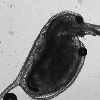
Tiny water fleas reveal early warning signs of nanomaterial toxicity

Automated system analyzes heart rates of about 150 Daphnia magna per hour, enabling more sensitive detection of toxic effects at low concentrations in aquatic ecosystems.

Self-driving chemistry lab discovers catalysts that can switch products on demand

A self-driving lab rapidly screened catalyst recipes, finding tunable systems that switch chemical products by changing reaction conditions

Electron buildup unlocks precision control of Janus 2D semiconductors

Plasma treatment weakens sulfur bonds, enabling precise room-temperature fabrication of Janus 2D semiconductors for advanced electronics.

Sugar-coated nanoparticles show promise for treating most aggressive form of brain cancer

Sugar-coated lipid nanoparticles carried tumor-suppressing mRNA across the blood-brain barrier, shrinking glioblastoma tumors in mice.

A better way to model the behavior of metal alloys

Researchers' approach captures subtle atomic patterns, improving predictions of material properties.

Next-gen instruments bring nanomaterials into sharper focus

New instruments on the horizon promise the most precise tools yet to study and experiment on the smallest and most complex materials ever manufactured.

Listening for quantum oscillations in the Kondo insulator YbB12

Ultrasonic measurements reveal magnetic quantum oscillations only after YbB12 transitions into a metallic state.

Nano-focusing: Why speed and precision matter in surface metrology and microscopy

Fast piezo and voice-coil nano-focusing systems keep microscopes and metrology tools sharply focused with nanometer precision and millisecond response.