CRISPR-Cas9: How Gene Editing Works, Applications, and Safety
What is CRISPR-Cas9?
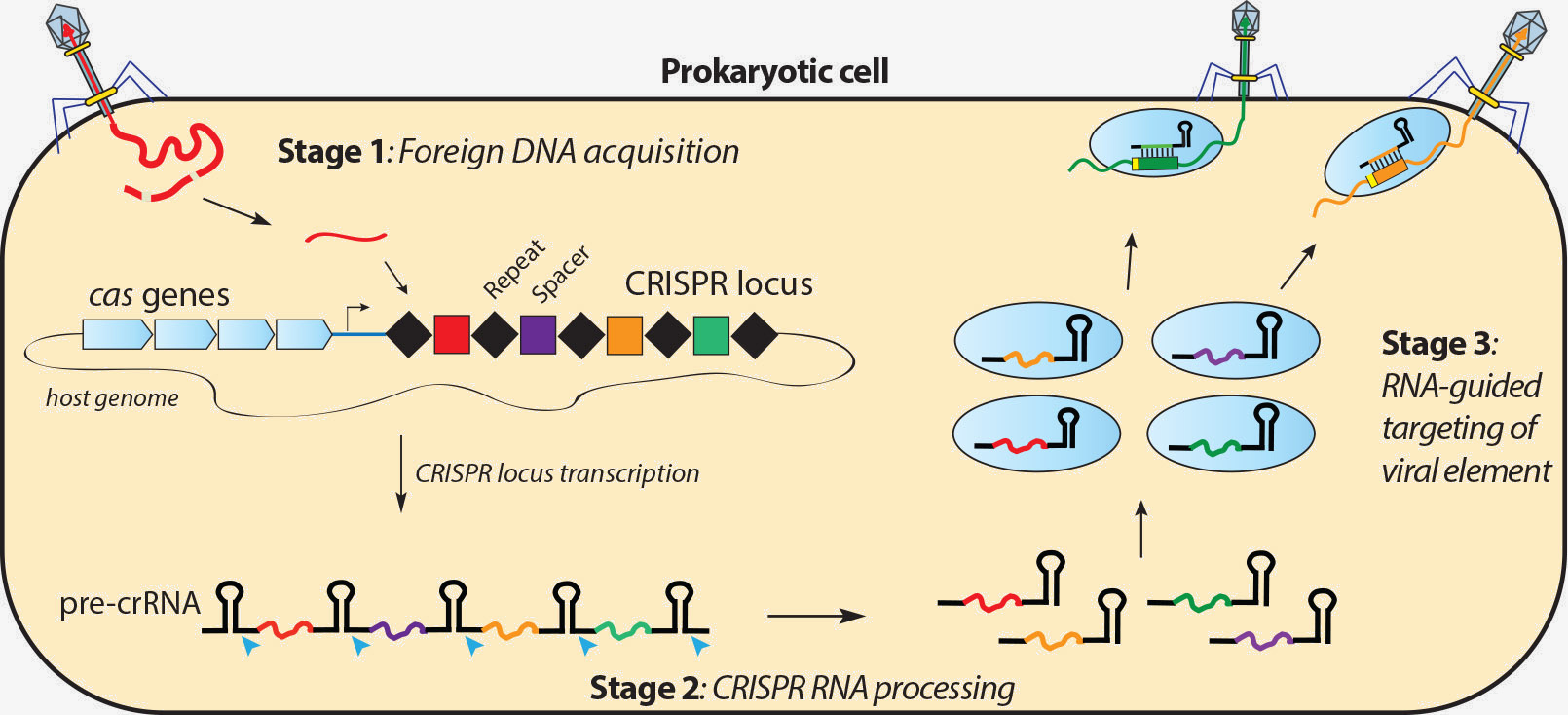
CRISPR-Cas9 is an RNA-guided DNA-cutting enzyme system that allows researchers to modify the genetic code of virtually any organism with a precision, speed, and affordability previously unattainable. CRISPR – short for Clustered Regularly Interspaced Short Palindromic Repeats – refers to the family of repetitive DNA sequences found in bacteria and archaea, while Cas9 (CRISPR-associated protein 9) is the enzyme that these sequences program to recognize and cleave specific DNA targets. Together they form the basis of a bacterial adaptive immune system that Emmanuelle Charpentier and Jennifer Doudna repurposed as a genome-editing tool in 2012, work that earned them the 2020 Nobel Prize in Chemistry.
The appeal of CRISPR-Cas9 lies in its programmability. Earlier genome-editing tools required a new protein to be designed and assembled for every DNA target. With CRISPR-Cas9, the same Cas9 enzyme is used for every edit, and specificity is supplied by a short synthetic guide RNA that costs only a few dollars to produce. This shift transformed genome editing from a specialized craft into a routine laboratory technique within a few years of its introduction.
How Does CRISPR-Cas9 Work?
Cas9 from Streptococcus pyogenes (SpCas9) – the most widely used variant – is a 1,368-amino-acid enzyme organized into two major lobes connected by an arginine-rich bridge helix. The recognition (REC) lobe binds the sgRNA and the sgRNA–DNA heteroduplex, while the nuclease (NUC) lobe houses the two catalytic centers: the HNH domain, which cleaves the DNA strand complementary to the guide, and the RuvC domain, which cleaves the opposite strand. A carboxy-terminal PAM-interacting domain reads out the protospacer adjacent motif, a short DNA sequence that flanks the target and licenses cleavage.
Target recognition proceeds in a strict order. The Cas9–sgRNA complex first scans genomic DNA for PAM sites – for SpCas9, the three-nucleotide motif 5'-NGG-3'. When a PAM is found, Cas9 locally melts the adjacent DNA duplex and tests whether the 20-nucleotide guide sequence in the sgRNA can base-pair with the target strand. Successful pairing displaces the non-target strand to form an R-loop, triggering a conformational rearrangement in which the flexible HNH domain rotates by roughly 140 degrees into its active state. HNH then cleaves the target strand three nucleotides upstream of the PAM, while RuvC severs the non-target strand, producing a blunt double-strand break. Magnesium ions (Mg2+) serve as essential catalytic cofactors, and the process requires no ATP hydrolysis – the energy for strand separation comes entirely from RNA–DNA base pairing.
DNA Repair: NHEJ, HDR, and How the Edit Is Made
The double-strand break introduced by Cas9 is not itself the edit. The actual modification of the genome is made by the cell's own DNA repair machinery, and the choice of pathway determines the outcome. Non-homologous end joining (NHEJ) is the fast, error-prone route that directly re-ligates the broken ends, frequently introducing small insertions or deletions ("indels") that disrupt the reading frame of a gene. NHEJ is the workhorse of gene knockout experiments.
Homology-directed repair (HDR), by contrast, uses a supplied DNA template to copy a defined sequence into the break site with nucleotide-level precision. HDR enables knock-ins, correction of point mutations, and the precise insertion of reporter genes, but it is restricted to dividing cells and is typically 10–100 times less efficient than NHEJ. Which pathway is recruited depends on cell type, cell-cycle stage, and experimental design – and is a central concern for anyone attempting a precise edit in a clinical setting.
CRISPR vs. TALENs and Zinc Finger Nucleases
Before CRISPR, targeted genome editing relied on zinc-finger nucleases (ZFNs) and transcription activator-like effector nucleases (TALENs). Both fuse a custom-designed DNA-binding protein to the FokI nuclease domain, and both require a new protein to be engineered for every new target. CRISPR-Cas9 reprograms in minutes: only the 20-nucleotide guide sequence within the sgRNA needs to change. This shift from protein engineering to RNA synthesis is the central reason CRISPR displaced its predecessors within a few years of its introduction.
| Feature | Zinc Finger Nucleases | TALENs | CRISPR-Cas9 |
|---|---|---|---|
| Targeting principle | Engineered protein–DNA binding | Engineered protein–DNA binding | RNA–DNA base pairing |
| Design time for a new target | Weeks to months | Days to weeks | Hours to days |
| Relative cost per target | High | Moderate | Low (tens of dollars) |
| Targeting constraints | Context-dependent binding | Flexible, no PAM | Requires a nearby PAM |
| Multiplexing | Difficult | Difficult | Straightforward |
| Current clinical use | Some therapies | Allogeneic CAR-T | Approved therapy (Casgevy) |
The trade-offs are not all in CRISPR's favor. ZFNs and TALENs act as obligate dimers, which translates into higher specificity for some applications and imposes no PAM requirement. TALENs remain in clinical use – notably in some allogeneic CAR-T therapies – where their stringent targeting and non-bacterial origin are advantageous. Meganucleases, an older class of homing endonucleases with very long recognition sites, are also still employed for niche therapeutic applications. Most modern laboratories reach for CRISPR-Cas9 first because of its speed, cost, and ease of multiplexing, while other tools are selected when a specific application demands their particular strengths.
Beyond Cutting: Base Editing, Prime Editing, and the Expanded Toolkit
Researchers have engineered Cas9 itself into a platform for manipulations that extend far beyond the original cut-and-repair paradigm. Inactivating both catalytic domains produces a catalytically "dead" Cas9 (dCas9) that still binds tightly to its RNA-guided target. Fusing dCas9 to transcriptional repressors or activators yields CRISPR interference (CRISPRi) and CRISPR activation (CRISPRa), which silence or boost the expression of target genes without altering their DNA sequence.
Base editors, developed by David Liu's laboratory, fuse a Cas9 nickase (with one nuclease domain inactivated) to a deaminase enzyme that chemically converts one DNA base into another at the target site. Cytosine base editors install C•G-to-T•A substitutions, while adenine base editors perform A•T-to-G•C conversions, correcting many disease-causing point mutations without a double-strand break. Prime editing, introduced by the same group in 2019, uses a Cas9 nickase fused to a reverse transcriptase and a specialized prime-editing guide RNA to write new genetic information directly into the genome, enabling all twelve possible single-base substitutions as well as small insertions and deletions. Additional tools include RNA-targeting Cas13 enzymes, epigenetic editors that place or remove epigenetic marks at defined loci, and compact Cas12f variants small enough for efficient viral packaging.
What Is CRISPR Used For?
CRISPR-Cas9 has become an indispensable tool in basic biology. Researchers use it to knock out individual genes, introduce tagged alleles for live-cell imaging, and generate genetically defined disease models in cultured cells, organoids, and whole animals. Pooled CRISPR screens – in which thousands of sgRNAs targeting every gene in the genome are delivered to a population of cells and the effects quantified by DNA sequencing – have become a standard approach to identify genes involved in drug resistance, viral infection, and countless other phenotypes.
In agriculture, CRISPR is being used to develop crops with improved yield, disease resistance, and nutritional quality. Edited varieties already on the market include non-browning mushrooms, high-GABA tomatoes, and drought-tolerant soybeans, and regulatory frameworks in several jurisdictions treat small CRISPR edits differently from transgenic GMOs. In industrial biotechnology, CRISPR is used to engineer microbial strains that produce fuels, fine chemicals, and therapeutic proteins. CRISPR-based diagnostics such as SHERLOCK and DETECTR exploit the collateral nucleic-acid-cleaving activity of Cas12 and Cas13 to detect pathogen sequences with attomolar sensitivity in portable formats.
CRISPR Gene Therapy: From Sickle Cell to In Vivo Medicine
The first CRISPR-based medicine, exagamglogene autotemcel (brand name Casgevy), was approved by the U.S. Food and Drug Administration in December 2023 for sickle cell disease and in early 2024 for transfusion-dependent β-thalassemia. Casgevy is an ex vivo therapy in which a patient's own hematopoietic stem cells are extracted, edited with CRISPR-Cas9 to reactivate fetal hemoglobin production, and reinfused after conditioning chemotherapy. Clinical data have shown that more than 90 percent of treated patients are freed from vaso-occlusive crises for at least a year, the first curative genetic therapy for these disorders. The treatment launched at roughly $2.2 million per patient, raising pressing questions about access and affordability.
In vivo CRISPR therapies – delivered directly into the patient's body, typically via lipid nanoparticles or adeno-associated virus – are advancing rapidly. NTLA-2001, a lipid-nanoparticle-delivered treatment for transthyretin amyloidosis with cardiomyopathy, has entered a pivotal Phase 3 trial after demonstrating greater than 90 percent reductions in the pathogenic TTR protein after a single intravenous dose. Other in vivo programs target cardiovascular disease via PCSK9, ANGPTL3, and lipoprotein(a). In May 2025, a landmark case saw a bespoke CRISPR therapy designed, manufactured, and delivered within six months to treat an infant with a rare carbamoyl-phosphate synthetase 1 deficiency, establishing a possible pathway for personalized genetic medicines. As of early 2025, more than 250 gene-editing clinical trials are active worldwide, spanning cancer (CAR-T enhancement and solid tumors), inherited retinal diseases, hemophilia, and emerging indications in autoimmune and infectious disease.
Is CRISPR Safe? Off-Target Effects and Specificity
Despite its precision, CRISPR-Cas9 can tolerate mismatches between the guide RNA and target DNA, particularly in the region distal to the PAM. These off-target cuts can introduce unintended mutations elsewhere in the genome, and Cas9-induced double-strand breaks occasionally cause larger deletions or chromosomal rearrangements. Several strategies improve specificity: high-fidelity Cas9 variants such as SpCas9-HF1, eSpCas9, and HypaCas9 contain structure-guided mutations that destabilize binding to mismatched targets; paired nickase approaches require double recognition before a double-strand break is made; and delivery of preassembled ribonucleoprotein complexes rather than plasmid DNA shortens the window of editor activity. Base editors and prime editors, which avoid double-strand breaks altogether, further reduce certain classes of unintended outcome.
Unbiased genome-wide assays such as GUIDE-seq, CIRCLE-seq, and DISCOVER-seq make it possible to profile off-target activity empirically, and regulatory agencies now expect detailed off-target characterization as part of any clinical application. Long-term safety monitoring of edited patients is an active requirement of ongoing trials.
CRISPR Ethics: Germline Editing, Designer Babies, and Access
CRISPR's accessibility has amplified debates about the ethics of genome editing. The distinction between somatic editing – which affects only the treated individual – and germline editing, which alters eggs, sperm, or embryos and is heritable, is central to these discussions. In 2018, the announcement by He Jiankui that he had used CRISPR to edit the genomes of twin human embryos carried to term was met with near-universal condemnation from the scientific community and led to his imprisonment in China. The episode reinforced the urgency of international norms, and most national academies and the World Health Organization now recommend a moratorium on clinical germline editing.
Equity and access are equally pressing. Without substantial changes to manufacturing, licensing, and reimbursement, CRISPR medicines risk being available only to patients in wealthy health systems, even though the diseases they treat disproportionately affect populations with fewer resources. Gene drives, agricultural deployment, and potential dual-use of CRISPR for pathogen engineering raise further governance questions that are the subject of active policy work.
Future Perspectives
The CRISPR toolkit continues to expand. Novel Cas enzymes discovered through metagenomic surveys are broadening the range of targetable genomic sites, and engineered variants with near-PAMless activity allow editing at essentially any position in the genome. Delivery technologies are advancing in parallel: tissue-targeted lipid nanoparticles, engineered virus-like particles, and conjugates that home to specific cell types are extending in vivo editing beyond the liver, currently the easiest organ to reach. Converging progress in machine-learning-based guide design, single-cell sequencing, and synthetic biology is making it feasible to plan and verify complex multi-locus edits at scale. As CRISPR matures from a laboratory tool into a foundational platform for medicine and agriculture, its continued development will depend on sustained attention to safety, transparency, and equitable access.
Frequently Asked Questions
What is the difference between CRISPR and CRISPR-Cas9? CRISPR refers to the repetitive DNA sequences in bacterial genomes and to the broader family of bacterial immune systems built around them. CRISPR-Cas9 is the specific gene-editing tool that combines a Cas9 enzyme with a programmable guide RNA. Other CRISPR systems use different Cas enzymes – Cas12, Cas13, Cas3, and others – each with distinct properties.
What is a guide RNA? A guide RNA (gRNA or sgRNA) is a short synthetic RNA molecule, typically about 100 nucleotides long, that directs Cas9 to a specific DNA location. A 20-nucleotide spacer at one end base-pairs with the target DNA, while the remainder forms a scaffold that binds Cas9. Designing a new edit is largely a matter of choosing a new 20-nucleotide sequence.
What is a PAM sequence? A protospacer adjacent motif (PAM) is a short DNA sequence immediately next to the target site that Cas9 must recognize before it will cut. For SpCas9 the PAM is 5'-NGG-3'. The PAM requirement prevents Cas9 from cleaving the CRISPR locus within its host bacterium and constrains which positions in a genome can be edited, although engineered Cas9 variants with relaxed or altered PAM specificities have largely removed this limitation.
Can CRISPR edit RNA as well as DNA? Yes. The Cas13 family of CRISPR enzymes targets single-stranded RNA rather than DNA, enabling transient knockdown of transcripts and the basis of the SHERLOCK diagnostic platform. RNA-targeting tools offer reversible effects and avoid permanent changes to the genome, making them attractive for applications where lasting edits are undesirable.
Is CRISPR the same as a GMO? Not necessarily. Traditional genetically modified organisms are typically created by inserting foreign DNA, often from a different species, into a target genome. Many CRISPR edits introduce only small changes that could in principle arise from natural mutation or conventional breeding and leave no foreign DNA behind. Regulatory regimes in the United States, Japan, and the United Kingdom treat such edits differently from transgenic GMOs, while the European Union's rules are still evolving.
Further Reading
Nature Reviews Drug Discovery, Chemical Engineering of CRISPR–Cas Systems for Therapeutic Application
Frontiers in Genome Editing, Therapeutic Applications of CRISPR-Cas9 Gene Editing