Biotechnology: Definition, Types, Tools, and Applications
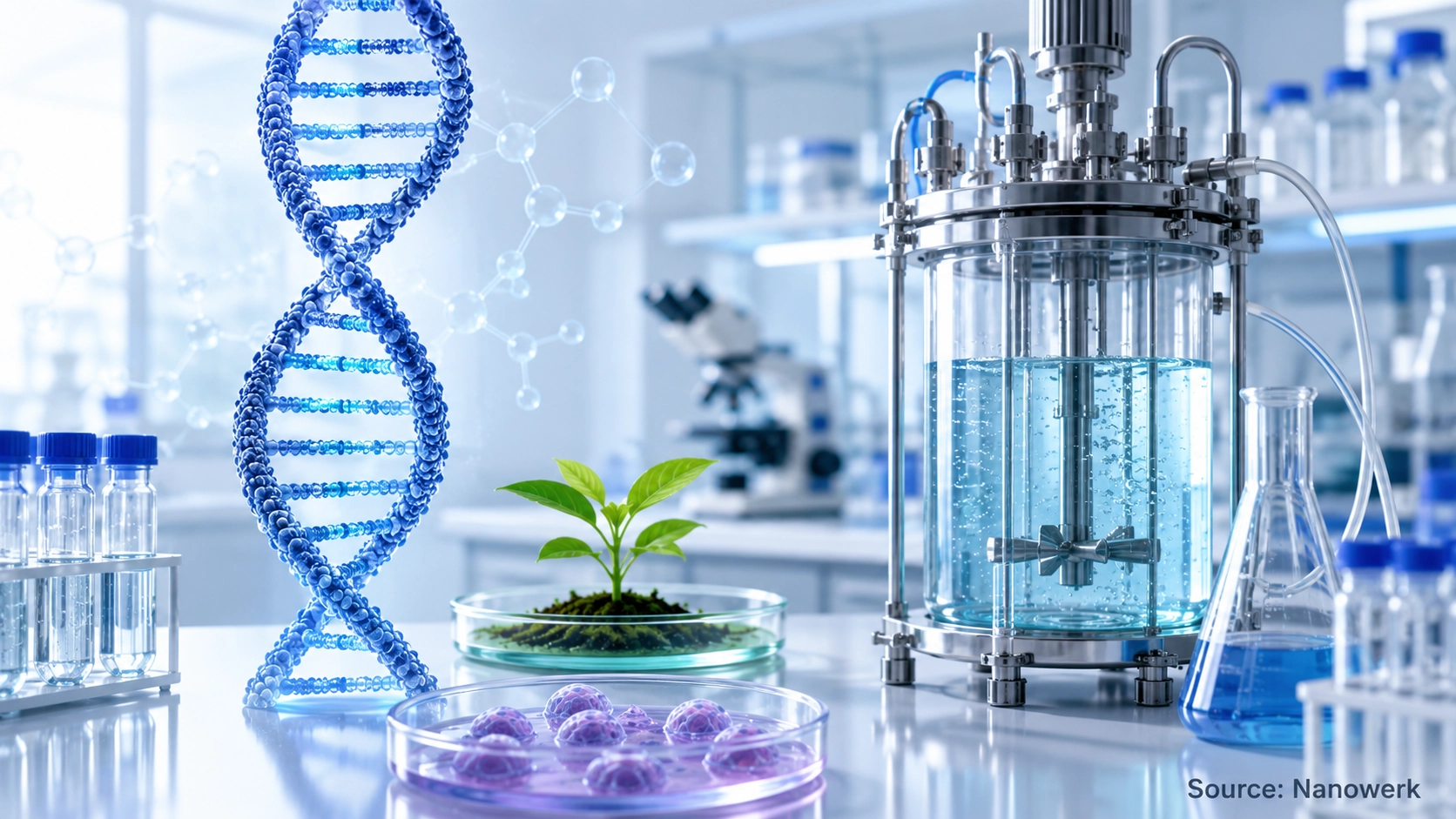
Biotechnology is the use of living organisms, cells and biological molecules to create products and processes for medicine, agriculture, industry and environmental management.
What Is Biotechnology?
Definition: Biotechnology is the use of living organisms, cells, or their molecular components – such as DNA, proteins and enzymes – to develop or make products and processes that benefit medicine, agriculture, industry and the environment.
In simple terms: biotechnology puts biology to work. It harnesses what cells and biomolecules already do well – copying genetic information, building proteins, breaking down sugars – and directs those abilities toward making things people need, from medicines and food to fuels and diagnostic tests.
The word combines "biology" and "technology," and the field is broad by design. It spans practices thousands of years old, such as using microorganisms to ferment bread, beer, wine and cheese, and techniques developed since the 1970s in which an organism's genome is deliberately altered. What unites these activities is the use of biological systems as tools: a brewer's yeast cell and a genetically engineered bacterium producing a human hormone are both biotechnology, separated by technique rather than by principle.
A common definition, drawn from the United Nations Convention on Biological Diversity, describes biotechnology as any technological application that uses biological systems, living organisms, or derivatives thereof to make or modify products or processes for specific use. That breadth is deliberate. Biotechnology is not a single technique but an umbrella over many, including fermentation, recombinant DNA technology, cell culture, and modern genome editing.
At a glance:
- What it is: using living systems and biomolecules to make products and processes
- Core idea: direct the natural capabilities of cells, genes and proteins toward useful ends
- Traditional form: fermentation and selective breeding, used for millennia
- Modern form: recombinant DNA, genetic engineering and genome editing, since the 1970s
- Main domains: health, agriculture, industrial processing, and the environment
- Key constraints: biological complexity, biosafety, regulation and public acceptance
Why Biotechnology Matters
Biotechnology matters because it turns biological knowledge into tangible products at scale. It is the basis of the modern pharmaceutical industry's protein drugs and vaccines, a major component of global agriculture, and a growing route to manufacturing chemicals and materials with lower fossil-fuel input. National governments increasingly treat it as strategic infrastructure within a broader bioeconomy, the part of the economy that uses renewable biological resources and biological processes for production. Its impact is uneven across sectors: medicine and industrial enzymes are mature commercial successes, while many proposed environmental and synthetic applications remain at the research or early commercial stage.
From Fermentation to Genetic Engineering: A Brief History
Traditional biotechnology long predates any understanding of cells or DNA. For thousands of years humans used microorganisms without knowing they existed: yeast to leaven bread and brew beer, bacteria to make yogurt and cheese, and selective breeding to improve crops and livestock. These practices exploited biological processes empirically, by observing useful outcomes and repeating what worked.
The modern scientific phase began as researchers uncovered the molecular basis of heredity. The structure of DNA was described in 1953, and the genetic code linking DNA sequence to protein was worked out through the 1960s. The decisive step for modern biotechnology came in 1973, when researchers constructed recombinant DNA molecules – combining genetic material from different sources into a plasmid – and showed they replicated inside bacteria. This made it possible to insert a chosen gene into a microorganism and have that microorganism manufacture the corresponding protein.
Commercial consequences followed quickly. Dedicated biotechnology firms, most famously Genentech, began appearing in the mid-to-late 1970s, and in 1982 human insulin produced in engineered bacteria became the first FDA-approved recombinant DNA drug, replacing insulin extracted from animal pancreases. The decades since have added the polymerase chain reaction for amplifying DNA, rapid DNA sequencing, and precise CRISPR-Cas9 genome editing, each widening what biotechnology can do.
The Color-Coded Branches of Biotechnology
Because biotechnology touches so many sectors, an informal color code is widely used to group its applications by domain. The scheme is a communication and policy convenience rather than a rigorous scientific taxonomy, and the colors are not standardized everywhere, but it usefully maps the field's main territories. The table below summarizes the most commonly cited branches.
| Branch | Domain | Representative applications |
|---|---|---|
| Red | Medicine and pharmaceuticals | Recombinant drugs, monoclonal antibodies, vaccines, gene therapy, diagnostics |
| Green | Agriculture | Genetically modified crops, marker-assisted breeding, biofertilizers |
| White | Industrial and chemical | Industrial enzymes, biofuels, bioplastics, fermented chemicals |
| Blue | Marine and aquatic | Marine-derived enzymes and compounds, aquaculture, algae cultivation |
| Grey | Environmental | Bioremediation, wastewater treatment, pollutant degradation |
A non-obvious point about this scheme is that the categories describe end use, not method, so a single technique routinely appears under several colors. Engineered microbial fermentation produces medicines (red), industrial chemicals (white) and food ingredients that may be classed under green or white depending on the source. The color code is therefore best read as a map of where biotechnology is applied rather than a statement about how distinct those applications are technically.
How Modern Biotechnology Works: The Core Toolkit
Modern biotechnology rests on a compact set of enabling technologies that are combined differently for different goals. The first is recombinant DNA technology, in which a gene of interest is isolated, joined to a carrier such as a plasmid using cutting and joining enzymes, and introduced into a host cell. The host then reads the inserted gene and produces the encoded protein, a process known as genetic engineering. This is how microorganisms are turned into living factories for human proteins.
The second is cell culture and fermentation: growing bacteria, yeast or mammalian cells under controlled conditions so they multiply and synthesize a target product in useful quantities. At industrial scale this takes place in a bioreactor, and the surrounding operations of feeding, monitoring, harvesting and purification are collectively called bioprocessing. The third is the analytical toolkit: the polymerase chain reaction to amplify specific DNA sequences, and high-throughput DNA sequencing to read genomes, both of which underpin diagnostics, research and quality control.
A fourth tool is precise genome editing, most prominently CRISPR-Cas9, which allows targeted changes to be made at chosen sites in a genome rather than relying on inserting genes at random locations. The fifth is the computational layer, bioinformatics, which stores, compares and interprets the large volumes of sequence and experimental data the other tools generate. The engineering-oriented assembly of these tools into standardized, designed systems is the basis of synthetic biology, a design-led extension of biotechnology.
Biotechnology and Related Terms
Several neighboring terms overlap with biotechnology but emphasize different parts of the field. Genetic engineering refers specifically to deliberate changes in DNA, such as inserting, deleting or editing genes; it is one set of methods within biotechnology. Synthetic biology is a design-led branch that aims to build standardized genetic circuits, cells or biological systems with predictable functions. Bioengineering applies engineering principles to biological problems, including devices, tissues, bioprocesses and engineered organisms. Bioprocessing focuses on the practical manufacturing steps – growing cells, running bioreactors, harvesting products and purifying them – that turn a biological idea into a usable product.
Applications of Biotechnology
Medicine and Health
Medical, or red, biotechnology is the field's most commercially developed area. Engineered cells manufacture protein drugs such as insulin, growth hormone and clotting factors, as well as therapeutic antibodies that now form one of the largest classes of new medicines. Surveys of regulatory approvals show that recombinant proteins, and monoclonal antibodies in particular, dominate the biopharmaceutical pipeline by both number of approvals and sales. Biotechnology also supplies many vaccines, including lipid-formulated mRNA vaccine platforms, and underpins diagnostic tests, stem cell research, and emerging genome-edited therapies.
The clinical reach of genome editing is now concrete. In late 2023 the first CRISPR-based therapy, exagamglogene autotemcel, was authorized in the United Kingdom and then approved by the US Food and Drug Administration on 8 December 2023 for sickle cell disease, a one-time treatment in which a patient's own blood stem cells are edited to restore production of fetal hemoglobin. It illustrates a broader shift: biotechnology is no longer only making drugs outside the body; in some cases, it is directly modifying a patient's own cells.
Agriculture and Food
Agricultural, or green, biotechnology includes genetically modified organisms engineered for insect resistance or herbicide tolerance, marker-assisted and genome-edited breeding, and microbial products such as biofertilizers. A widely cited 2014 meta-analysis of farm data found that, on average, adopting GM crop technology reduced chemical pesticide use by about 37 percent, increased crop yields by about 22 percent, and raised farmer profits by about 68 percent, with larger gains in developing countries. GM crops remain socially and politically contested in many regions, and adoption and regulation vary widely between countries.
Industrial and Environmental
Industrial, or white, biotechnology uses enzymes and engineered microorganisms to manufacture chemicals, materials and fuels, often replacing energy-intensive chemical steps with milder biological ones. Familiar examples include enzymes in laundry detergents and food processing, fermentation-derived organic acids and amino acids, biofuels, and bioplastics. Environmental applications use microorganisms to degrade pollutants, treat wastewater and clean contaminated sites, a set of approaches grouped as bioremediation. Together these uses are central to the bioeconomy concept, in which renewable biological feedstocks and biological processes substitute for fossil-based production; analyses argue that scaling this transition depends as much on advances in bioengineering, automation and policy as on the underlying biology.
Biosafety, Regulation, and Ethics
Because biotechnology manipulates living systems, it is governed by biosafety frameworks that classify work by risk level and require physical and procedural containment, institutional review, and regulatory approval before products reach people or the environment. Genetically modified foods that have been approved are subject to safety assessment, and a large body of evidence indicates that approved GM crops assessed by regulators are as safe to eat as comparable conventional varieties. Risk is evaluated product by product, for a specific organism and use, rather than assumed for the technology as a whole.
Biotechnology also raises ethical and governance questions that are treated as integral to the field rather than peripheral. These include the acceptability and oversight of human germline genome editing, equitable access to expensive cell and gene therapies, biosecurity and the dual-use risk that the same techniques could be misused, intellectual-property control over genes and engineered organisms, and the ecological implications of releasing engineered organisms. These debates shape regulation and research priorities alongside the science itself.
Future Directions
Several trends are shaping the next phase of biotechnology. Falling costs of DNA sequencing and synthesis continue to broaden what can be read and written, while machine learning is increasingly used to predict protein structures, identify candidate molecules and design biological systems, tightening the loop between computational design and laboratory testing. Genome editing is moving from research into approved medicines, and engineered microbes are being developed as scalable, lower-carbon routes to chemicals, materials and food ingredients within the bioeconomy.
The persistent constraint across all of these directions is biological complexity. Engineered cells may lose productivity over time, interact unexpectedly with host biology, or behave differently outside controlled laboratory and manufacturing environments. Making biology as reliably designable as other engineered media remains one of the field's central open challenges.
Frequently Asked Questions
What is the difference between biotechnology and genetic engineering? Biotechnology is the broad use of living systems and biomolecules to make products or solve problems, and it includes ancient practices such as fermentation that involve no DNA manipulation. Genetic engineering is one set of techniques within modern biotechnology in which an organism's DNA is deliberately altered, for example by inserting a gene. All genetic engineering is biotechnology, but not all biotechnology involves genetic engineering.
What are the main types or branches of biotechnology? Biotechnology is often grouped using an informal color code. Red biotechnology covers medical and pharmaceutical uses, green covers agriculture, white covers industrial and chemical processes, blue covers marine and aquatic applications, and grey covers environmental cleanup. The colors are a communication aid rather than a strict scientific classification, and many real projects span more than one category.
When did modern biotechnology begin? Traditional biotechnology, such as brewing and bread-making by fermentation, is thousands of years old. Modern biotechnology is usually dated to 1973, when recombinant DNA molecules were first constructed and replicated in bacteria. Human insulin became the first FDA-approved recombinant DNA drug in 1982.
Is biotechnology safe? Biotechnology is regulated through biosafety frameworks that classify work by risk level and require containment, review and approval before products reach people or the environment. Genetically modified foods that have been approved have undergone safety assessment, and a large body of evidence indicates that approved GM crops assessed by regulators are as safe to eat as comparable conventional varieties. Risk is managed product by product rather than judged for the field as a whole.
What is the difference between biotechnology and bioengineering? The terms overlap and are sometimes used interchangeably. Biotechnology emphasizes using biological systems and molecules to make products, while bioengineering (biological or biomedical engineering) emphasizes applying engineering design and analysis to biological problems, including devices, tissues and processes. Many programs and companies use both labels for closely related work.
What products come from biotechnology? Biotechnology products include recombinant drugs such as insulin and therapeutic antibodies, vaccines, genetically modified crops, industrial enzymes used in detergents and food processing, biofuels, bioplastics, and diagnostic tests. Fermented foods and beverages are products of traditional biotechnology.
Further Reading
Proceedings of the National Academy of Sciences, Construction of Biologically Functional Bacterial Plasmids In Vitro
Nature Biotechnology, Biopharmaceutical Benchmarks 2022
Nature Reviews Bioengineering, The Role of Bioengineering in Building a Bioeconomy
Nature Reviews Bioengineering, Manufacturing Innovation Is Essential for Monoclonal Antibody Affordability and Access