Immunotherapy: How It Works, Types, Applications, and Future Directions
What Is Immunotherapy?
Immunotherapy is a class of medical treatments that harness, enhance, or redirect the body's immune system to fight disease. In its most prominent application – cancer treatment – immunotherapy works by enabling the patient's own immune cells, particularly T lymphocytes, to recognize and destroy tumor cells that would otherwise evade immune detection. Unlike chemotherapy, which directly kills dividing cells, or targeted therapy, which inhibits specific oncogenic signaling pathways, immunotherapy acts on the immune system itself, and the resulting antitumor responses can persist long after treatment ends, producing durable remissions that are rarely achieved with conventional approaches.
The concept that the immune system can fight cancer dates to the late 19th century, when William Coley injected bacterial toxins into tumors and observed occasional regression. The modern era of immunotherapy began in the 1990s and 2000s with the identification of immune checkpoint receptors – notably CTLA-4 and PD-1 – that tumors exploit to suppress T cell activity. James Allison's work on anti-CTLA-4 antibody blockade and Tasuku Honjo's discovery of PD-1 earned the 2018 Nobel Prize in Physiology or Medicine and established immune checkpoint therapy as a foundational cancer treatment. As of 2024, the U.S. Food and Drug Administration has approved more than 150 immunotherapy indications spanning dozens of cancer types, and the global immuno-oncology pipeline includes thousands of active clinical trials.
How Does Immunotherapy Work?
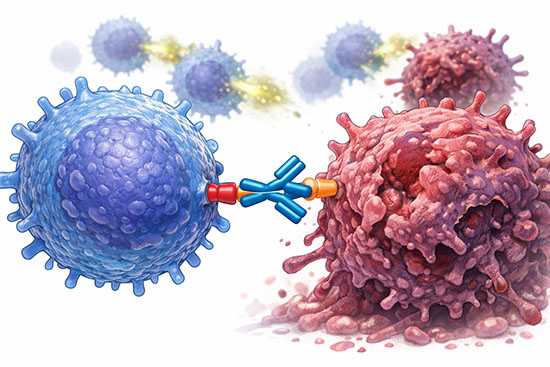
The immune system continuously surveys the body for abnormal cells, a process known as immune surveillance. When a tumor arises, it presents abnormal proteins – including neoantigens generated by somatic mutations – that can be recognized by T cells through their T cell receptors. Dendritic cells capture tumor antigens, process them, and present fragments on their surface via major histocompatibility complex (MHC) molecules, activating antigen-specific T cells in lymph nodes. These activated T cells then traffic to the tumor site to kill cancer cells.
Tumors, however, develop multiple strategies to evade this response. They may downregulate MHC expression to become invisible to T cells, recruit immunosuppressive cells such as regulatory T cells and myeloid-derived suppressor cells, secrete inhibitory cytokines, or – most critically – upregulate inhibitory ligands such as PD-L1 that engage checkpoint receptors on T cells and shut down their effector function. The tumor microenvironment becomes an immunosuppressive niche where T cells become exhausted, functionally impaired, and unable to eliminate cancer cells.
Immunotherapy addresses this failure at different points in the cancer-immunity cycle. Some approaches release the brakes on T cells already primed against tumor antigens; others provide the patient with large numbers of engineered tumor-reactive T cells; still others stimulate new antitumor immune responses through vaccination or amplify immune cell activity with cytokines. Combination strategies that address multiple bottlenecks simultaneously are a major area of clinical investigation.
Types of Immunotherapy
Immune Checkpoint Inhibitors
Immune checkpoint inhibitors (ICIs) are monoclonal antibodies that block inhibitory receptors or their ligands on T cells, restoring the immune system's ability to attack tumors. The two most established checkpoint pathways are CTLA-4, which dampens T cell activation in lymph nodes during the priming phase, and PD-1/PD-L1, which suppresses T cell effector function in peripheral tissues and the tumor microenvironment. Ipilimumab, an anti-CTLA-4 antibody approved in 2011 for metastatic melanoma, was the first checkpoint inhibitor to demonstrate an overall survival benefit in a randomized trial. Anti-PD-1 antibodies (nivolumab, pembrolizumab) and anti-PD-L1 antibodies (atezolizumab, durvalumab, avelumab) followed, achieving approvals across melanoma, non-small-cell lung cancer, renal cell carcinoma, bladder cancer, head and neck squamous cell carcinoma, and many other indications.
Combination checkpoint blockade – typically anti-PD-1 plus anti-CTLA-4 – produces higher response rates than either agent alone in melanoma and renal cell carcinoma, but at the cost of increased immune-related adverse events. Relatlimab, an anti-LAG-3 antibody approved in 2022 in combination with nivolumab for melanoma, marked the entry of a third checkpoint pathway into clinical use. Additional checkpoints under active investigation include TIGIT, TIM-3, and VISTA, each with distinct mechanisms of immune suppression and varying levels of clinical evidence.
Adoptive Cell Therapies
Adoptive cell therapy (ACT) involves isolating, modifying, or expanding a patient's immune cells ex vivo and reinfusing them to mount a targeted antitumor response. The most successful form of ACT is chimeric antigen receptor (CAR) T cell therapy, in which patient T cells are genetically engineered to express a synthetic receptor targeting a specific tumor antigen. Anti-CD19 CAR-T cells – including tisagenlecleucel and axicabtagene ciloleucel, approved in 2017 – transformed the treatment of relapsed or refractory B cell acute lymphoblastic leukemia and large B cell lymphoma. Additional CAR-T products targeting CD19 and BCMA (B cell maturation antigen) for multiple myeloma have since been approved. Long-term follow-up data indicate that CD19-targeted CAR-T cells can produce remissions lasting a decade or more in some patients with B cell malignancies.
Tumor-infiltrating lymphocyte (TIL) therapy, in which T cells are harvested directly from a patient's tumor, expanded to billions of cells, and reinfused after lymphodepleting chemotherapy, received its first FDA approval in 2024. Lifileucel was approved for advanced melanoma that had progressed on prior therapies. T cell receptor-engineered T cell (TCR-T) therapy, where T cells are modified to express a specific TCR directed against an intracellular tumor antigen presented via MHC, also entered the clinic in 2024 with the approval of afamitresgene autoleucel for synovial sarcoma – the first TCR-T therapy approved for a solid tumor.
Cancer Vaccines
Therapeutic cancer vaccines aim to prime or boost the patient's immune response against tumor-specific antigens. Unlike prophylactic vaccines that prevent infection (such as HPV vaccines, which also prevent HPV-driven cancers), therapeutic cancer vaccines treat existing disease by stimulating dendritic cell presentation of tumor neoantigens and driving the expansion of neoantigen-specific T cells. Personalized neoantigen vaccines, which use DNA sequencing and computational prediction to identify patient-specific mutant peptides, represent the most active area of vaccine development. mRNA-based neoantigen vaccines, building on the platform validated by COVID-19 vaccines, are in advanced clinical trials in melanoma, pancreatic cancer, and non-small-cell lung cancer, often in combination with checkpoint inhibitors.
Cytokines and Bispecific Antibodies
Cytokine therapies were among the earliest immunotherapies. High-dose interleukin-2 (IL-2), approved for metastatic melanoma and renal cell carcinoma in the 1990s, can produce durable complete responses but carries severe toxicity. Engineered cytokine variants with improved safety profiles, including IL-15 agonists and PEGylated IL-2 formulations, are in clinical development. Bispecific antibodies – engineered to simultaneously bind a tumor antigen and a T cell activating receptor (typically CD3) – physically bridge T cells to tumor cells and trigger killing independent of MHC recognition. Blinatumomab, a CD19/CD3 bispecific approved for B cell acute lymphoblastic leukemia, and tebentafusp, a bispecific TCR-antibody fusion approved for uveal melanoma, exemplify this approach. A large number of bispecific antibodies targeting solid tumor antigens are currently in clinical trials.
Comparing Major Immunotherapy Approaches
| Approach | Mechanism | Key Examples | Primary Indications | Key Limitation |
|---|---|---|---|---|
| Checkpoint inhibitors | Block inhibitory receptors on T cells | Pembrolizumab, nivolumab, ipilimumab | Melanoma, NSCLC, RCC, bladder, many others | Response limited to ~20–40% of patients |
| CAR-T cells | Engineered T cells target specific surface antigens | Tisagenlecleucel, axicabtagene ciloleucel, idecabtagene vicleucel | B cell leukemia/lymphoma, multiple myeloma | Cytokine release syndrome; limited efficacy in solid tumors |
| TIL therapy | Expanded tumor-infiltrating lymphocytes reinfused | Lifileucel | Advanced melanoma | Complex manufacturing; 3–5 week production time |
| Cancer vaccines | Prime neoantigen-specific T cell responses | mRNA neoantigen vaccines (investigational) | Melanoma, pancreatic cancer (trials) | Modest single-agent activity; most effective in combinations |
| Bispecific antibodies | Bridge T cells to tumor cells via dual binding | Blinatumomab, tebentafusp | B-ALL, uveal melanoma | Short half-life; continuous infusion often required |
The field is increasingly moving toward rational combinations that address multiple points of immune evasion simultaneously. Checkpoint inhibitors form the backbone of most combination regimens, paired with chemotherapy, targeted therapy, cancer vaccines, or radiation to broaden and deepen antitumor responses in patients who would not benefit from any single modality alone.
Approved Treatments and Clinical Applications
Checkpoint inhibitors have achieved regulatory approval in more than 20 cancer types. In melanoma, the combination of nivolumab and ipilimumab produces 5-year overall survival rates exceeding 50 percent in previously untreated metastatic disease – a striking improvement over the approximately 10 percent 5-year survival rate observed with pre-immunotherapy treatments. In non-small-cell lung cancer, pembrolizumab monotherapy or in combination with chemotherapy has become a standard first-line treatment for patients with PD-L1-expressing tumors. Checkpoint inhibitors have also entered earlier disease settings: adjuvant pembrolizumab is approved for resected melanoma and renal cell carcinoma, and neoadjuvant nivolumab with chemotherapy is approved for resectable non-small-cell lung cancer.
CAR-T cell therapy has transformed outcomes in hematologic malignancies. Multiple CAR-T products targeting either CD19 or BCMA have received FDA approval since 2017, with seven approved as of 2025. Complete response rates of 50–80 percent have been reported in heavily pretreated patients with diffuse large B cell lymphoma and B cell acute lymphoblastic leukemia. In multiple myeloma, BCMA-directed CAR-T cells produce deep responses in patients who have exhausted multiple prior lines of therapy. The expansion of CAR-T cell therapy into autoimmune diseases – with anti-CD19 CAR-T cells inducing sustained remissions in refractory systemic lupus erythematosus – has been a notable recent development.
Beyond oncology, immunotherapy approaches have found application in infectious disease (therapeutic vaccines for hepatitis B, immunomodulatory antibodies for HIV), autoimmunity (CAR-T cells for lupus and other autoimmune conditions), and regenerative medicine research. The principles of immune modulation developed in cancer immunotherapy are increasingly being adapted across medical disciplines.
Safety and Side Effects
Immunotherapy carries a distinct toxicity profile compared with conventional cancer treatments. Checkpoint inhibitors cause immune-related adverse events (irAEs), which result from the same immune activation that drives antitumor responses. The most common irAEs include dermatitis, colitis, hepatitis, thyroiditis, and pneumonitis. Most are grade 1–2 (mild to moderate) and are manageable with corticosteroids, but severe (grade 3–4) irAEs occur in approximately 10–20 percent of patients on anti-PD-1 monotherapy and 40–60 percent with combination anti-PD-1/anti-CTLA-4 regimens. Rare but potentially fatal irAEs, including myocarditis, encephalitis, and adrenal insufficiency, require urgent recognition and treatment.
CAR-T cell therapy carries acute toxicities distinct from those of checkpoint inhibitors. Cytokine release syndrome (CRS), caused by massive activation and cytokine secretion by engineered T cells, occurs in the majority of treated patients and ranges from mild flu-like symptoms to life-threatening multiorgan failure. Immune effector cell-associated neurotoxicity syndrome (ICANS) affects a significant proportion of patients, manifesting as confusion, aphasia, or seizures. The anti-IL-6 receptor antibody tocilizumab is a standard treatment for CRS, and management protocols have improved significantly since the first CAR-T approvals.
Challenges and Limitations
The central challenge of cancer immunotherapy is that it works well in a minority of patients. An estimated 20–40 percent of patients across checkpoint inhibitor indications derive meaningful clinical benefit, while the majority experience primary resistance (no initial response) or acquired resistance (initial response followed by progression). Tumors evade immunotherapy through multiple mechanisms: loss of neoantigen expression, defects in antigen presentation, upregulation of alternative checkpoint pathways, recruitment of immunosuppressive cells, and metabolic reprogramming of the tumor microenvironment. Identifying reliable predictive biomarkers to select patients most likely to respond – and to spare non-responders from toxicity – remains an unmet need. PD-L1 expression, tumor mutational burden, and microsatellite instability status are used clinically but are imperfect predictors.
For CAR-T cell therapy, the principal limitations are the restriction to hematologic malignancies expressing defined surface antigens, the high cost of individualized manufacturing, and the challenge of extending efficacy to solid tumors. In solid tumors, CAR-T cells face physical barriers to tumor infiltration, antigen heterogeneity, and an immunosuppressive microenvironment that rapidly impairs their function. Manufacturing timelines of 3–5 weeks pose a further challenge for patients with rapidly progressing disease.
Future Perspectives
Several converging developments are reshaping the immunotherapy landscape. In vivo CAR-T cell engineering, which uses mRNA-loaded lipid nanoparticles or viral vectors to generate CAR-T cells directly inside the patient's body, could eliminate the need for ex vivo manufacturing and dramatically reduce costs and treatment timelines. Early clinical studies have demonstrated proof of concept, with efficient transduction and initial signs of antitumor activity. Allogeneic (off-the-shelf) CAR-T and CAR-NK cell products, manufactured from healthy donor cells using genome editing to remove alloreactive receptors, are in clinical testing and could enable immediate treatment availability.
Personalized neoantigen vaccines, particularly those delivered via mRNA platforms, are advancing through phase III trials. When combined with checkpoint inhibitors, these vaccines have shown improved recurrence-free survival in adjuvant melanoma and are being tested across pancreatic, lung, and colorectal cancers. The integration of artificial intelligence and genomics for neoantigen prediction, patient stratification, and biomarker discovery is accelerating the development of precision immunotherapy strategies. Next-generation checkpoint antibodies – including bispecific PD-1/CTLA-4 antibodies such as cadonilimab and novel targets such as LAG-3, TIGIT, and CD47 – are expanding the therapeutic toolkit.
The extension of immunotherapy principles beyond oncology – into autoimmune diseases, fibrosis, neurodegenerative conditions, and chronic infections – represents a broader paradigm shift. CAR-T cells targeting autoreactive B cells have produced sustained drug-free remissions in patients with systemic lupus erythematosus and other autoimmune conditions, suggesting that the same immune engineering tools developed for cancer may be applicable across a wide range of diseases. As manufacturing costs decrease, predictive biomarkers improve, and combination strategies mature, immunotherapy is expected to benefit an expanding proportion of patients with biotechnology-driven personalized medicine.
Frequently Asked Questions
What is the difference between immunotherapy and chemotherapy? Chemotherapy uses cytotoxic drugs that directly kill rapidly dividing cells, including both cancer cells and healthy cells such as those in the bone marrow and gut lining, which accounts for its characteristic side effects. Immunotherapy, by contrast, works by activating or enhancing the patient’s own immune system to recognize and destroy cancer cells. Because immunotherapy targets the immune response rather than the tumor directly, its side effects – called immune-related adverse events – are fundamentally different and involve autoimmune-like inflammation in organs such as the skin, gut, liver, or endocrine glands.
Can immunotherapy cure cancer? In a subset of patients, immunotherapy produces durable remissions lasting years or even decades, effectively amounting to a functional cure. Long-term follow-up data from melanoma trials, for example, show that roughly 20 percent of patients treated with ipilimumab remained alive at 10 years. However, the majority of patients across most cancer types do not achieve such lasting responses, and primary or acquired resistance remains a major challenge. Whether immunotherapy produces a true cure or a prolonged remission often cannot be determined until many years of follow-up.
How long does immunotherapy treatment last? Treatment duration varies by modality. Checkpoint inhibitor therapy is typically administered intravenously every two to six weeks for a defined period – often one to two years in the adjuvant setting, or until disease progression or unacceptable toxicity in metastatic disease. Some clinical protocols allow discontinuation after two years if the patient has achieved a sustained response. CAR-T cell therapy is a one-time infusion, though the engineered T cells can persist and remain active in the body for months to years. Cancer vaccines may involve an initial series of injections followed by periodic boosters. The optimal duration of immunotherapy remains an active area of clinical investigation.
How much does CAR-T cell therapy cost? Approved CAR-T cell therapies carry list prices ranging from approximately $373,000 to over $475,000 per one-time infusion, not including hospitalization, monitoring, and management of side effects such as cytokine release syndrome. Total costs of care can exceed $1 million per patient. The high cost reflects the individualized manufacturing process, in which T cells are collected from each patient, genetically engineered, expanded in a laboratory, and shipped back for infusion. Efforts to reduce costs include the development of allogeneic (off-the-shelf) CAR-T products and in vivo CAR-T approaches using lipid nanoparticles.
What are immune-related adverse events? Immune-related adverse events (irAEs) are side effects caused by the overactivation of the immune system during checkpoint inhibitor therapy. Because checkpoint inhibitors remove the brakes on immune responses broadly – not only against tumors – the immune system may attack healthy tissues. Common irAEs include skin rashes, colitis, hepatitis, thyroiditis, and pneumonitis. Most are mild to moderate and manageable with corticosteroids, but severe or fatal irAEs can occur, particularly with combination checkpoint blockade. Monitoring guidelines from oncology societies recommend regular assessment of organ function during and after treatment.
Further Reading
Nature Reviews Immunology, A Guide to Cancer Immunotherapy: From T Cell Basic Science to Clinical Practice
Nature Reviews Cancer, The Blockade of Immune Checkpoints in Cancer Immunotherapy
Nature Reviews Cancer, Systemic Immunity in Cancer