

Cleantech and Environmental News – Latest Headlines
 Subscribe to our Cleantech News feed

Toward fuel cells built from renewable and abundant components
Researchers report a novel concept to work with efficient and possibly cheaper catalysts. A kind of buffer protects the catalysts against the hostile conditions encountered in fuel cells, which have been to date dismissed utilization.
August 4, 2014 Read more
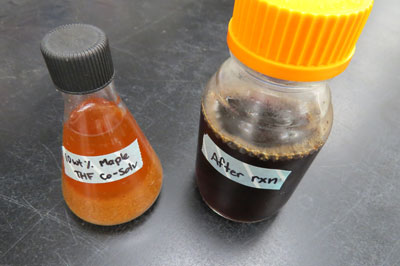
Enhancing biofuel yields from biomass with novel new method
Researchers have developed a versatile, relatively non-toxic, and efficient way to convert raw agricultural and forestry residues and other plant matter, known as lignocellulosic biomass, into biofuels and chemicals.
August 4, 2014 Read more
Chemists develop MRI technique for peeking inside supercapacitors
Researchers have developed a method for examining the inner workings of battery-like devices called supercapacitors, which can be charged up extremely quickly and can deliver high electrical power. Their technique, based on magnetic resonance imaging (MRI), establishes a means for monitoring and potentially enhancing the performance of such devices.
August 1, 2014 Read more
Tackling the many challenges of smarter, greener cities
The EU project CITyFiED aims to carry out an extensive demonstration of its low energy consumption concept, among other things, through in selected districts in the cities of Laguna de Duero, in Spain, Lund in Sweden and Soma in Turkey.
August 1, 2014 Read more
'Wetting' a battery's appetite for renewable energy storage (w/video)
New liquid alloy electrode improves sodium-beta battery performance.
August 1, 2014 Read more
All-in-one energy system offers greener power for off-grid homes, farms
A small-scale combined cooling, heat and power system has been designed to provide dependable electricity without the need for a mains connection.
July 30, 2014 Read more
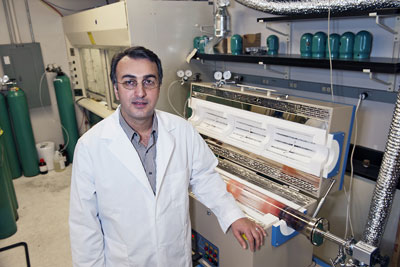
New catalyst converts carbon dioxide to fuel
Scientists have synthesized a catalyst that improves their system for converting waste carbon dioxide into syngas, a precursor of gasoline and other energy-rich products, bringing the process closer to commercial viability.
July 30, 2014 Read more
Electric vehicles - Recharging in private
A specially developed electronic payment system will protect the privacy of customers recharging their electric vehicles.
July 30, 2014 Read more
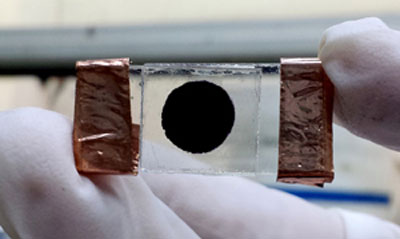
Dyes help harvest light
Dye-sensitized solar cell absorbs a broad range of visible and infrared wavelengths.
July 30, 2014 Read more

Physicists unlock nature of high-temperature superconductivity
Physicists have identified the 'quantum glue' that underlies a promising type of superconductivity - a crucial step towards the creation of energy superhighways that conduct electricity without current loss.
July 28, 2014 Read more
Turning bio-waste into hydrogen
Whilst hydrogen cars look set to be the next big thing in an increasingly carbon footprint-aware society, sustainable methods to produce hydrogen are still in their early stages. The HYTIME project is working on a novel production process that will see green hydrogen being produced from grass, straw and food industry residues.
July 28, 2014 Read more
Improving the features of solar thermal collectors by measuring infrared emissivity
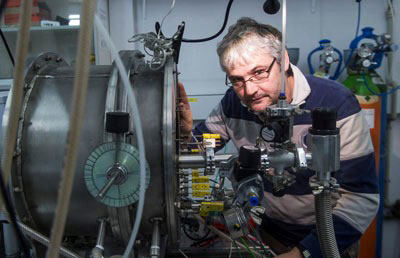
The method for measuring infrared emissivity developed by researchers in Spain is a direct method for measuring the emissivity of opaque bodies, and consists of comparing what is emitted by the body in question with what is emitted by a black body.
July 24, 2014 Read more
Connecting dead ends increases power grid stability
Climate change mitigation strategies such as the German Energiewende require linking vast numbers of new power generation facilities to the grid. As the input from many renewable sources is rather volatile, depending on how much the wind blows or the sun shines, there's a higher risk of local power instabilities and eventually blackouts. Scientists now employed a novel concept from nonlinear systems analysis called basin stability to tackle this challenge.
July 24, 2014 Read more
Study shows forward osmosis desalination not energy efficient
A new study shows that, contrary to popular support, forward osmosis desalination of seawater is significantly less energy efficient, compared to reverse osmosis.
July 24, 2014 Read more
Spinach could lead to alternative energy more powerful than Popeye
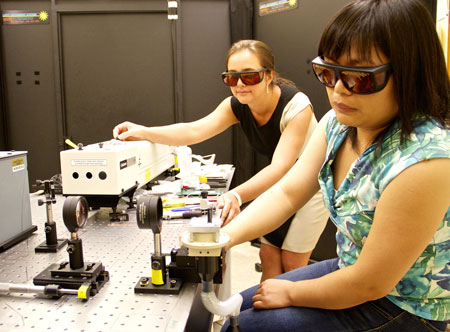
Spinach gave Popeye super strength, but it also holds the promise of a different power for a group of scientists: the ability to convert sunlight into a clean, efficient alternative fuel. Physicists are using spinach to study the proteins involved in photosynthesis, the process by which plants convert the sun's energy into carbohydrates used to power cellular processes. Artificial photosynthesis could allow for the conversion of solar energy into renewable, environmentally friendly hydrogen-based fuels.
July 23, 2014 Read more

The geography of the global electronic waste burden
As local and national governments struggle to deal with ever-growing piles of electronic waste, scientists are now refining the picture of just how much there is and where it really ends up.
July 23, 2014 Read more
Building up bamboo
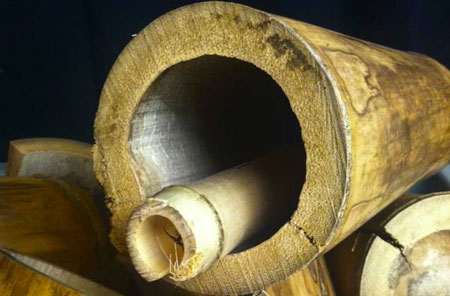
Researchers study bamboo for engineered building material, similar to plywood.
July 23, 2014 Read more

A village with CO2-neutral buildings is possible
No fossil fuels used for heating or hot water in an entire village - that is the ambitious goal of the Zernez Energia 2020 research project. ETH scientists have studied the feasibility of the project and are presenting the initial findings in an exhibition.
July 22, 2014 Read more