

Cleantech and Environmental News – Latest Headlines
 Subscribe to our Cleantech News feed

Self-cooling solar cells boost power, last longer
Scientists may have overcome one of the major hurdles in developing high-efficiency, long-lasting solar cells - keeping them cool, even in the blistering heat of the noonday Sun.
July 22, 2014 Read more
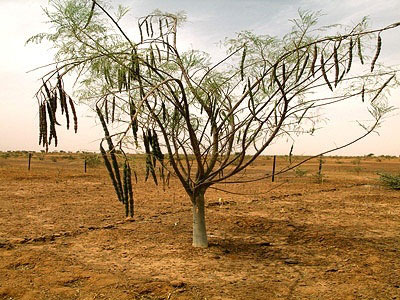
Researchers simplify process to purify water using seed extracts
Researchers have streamlined and simplified a process that uses extracts from seeds of Moringa oleifa trees to purify water, reducing levels of harmful bacteria by 90 percent to 99 percent. The hardy trees that are drought resistant are cultivated widely throughout many countries of Africa, Asia, and Latin America.
July 21, 2014 Read more
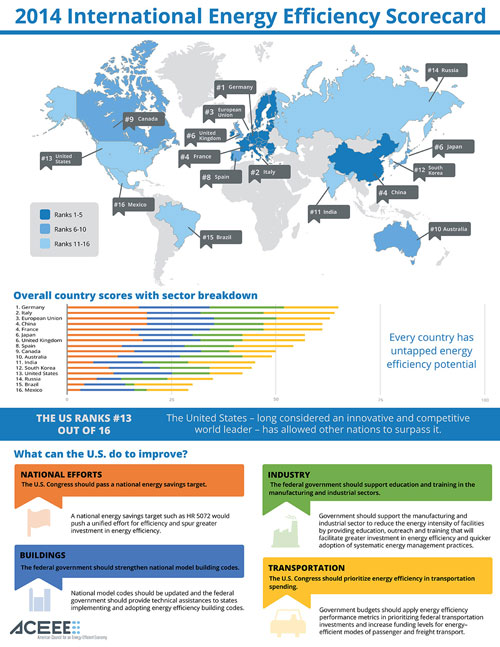
Global ranking for energy efficiency: U.S. near bottom, Germany at top
Germany comes in first in a new energy efficiency ranking of the world's major economies, followed by Italy, the European Union as a whole, China, and France, according to the 2014 International Energy Efficiency Scorecard published by the nonprofit American Council for an Energy-Efficient Economy (ACEEE).
July 21, 2014 Read more

Environmentalists claim U.S.-Europe trade deal threatens climate policy
New report documents U.S. move to weaken EU climate legislation in transatlantic trade talks.
July 20, 2014 Read more
Pumping efficiency into electrical motors
Researchers are using new magnetic materials to develop revolutionary electrical motors and generators which promise significant energy savings. They have used the new motors to develop patented highly efficient water pump systems with potential widespread application.
July 18, 2014 Read more

Microplastics worse for crabs and other marine life than previously thought, study shows
The tiny plastic particles polluting our seas are not only orally ingested by marine creatures, but also enter their systems through their gills, according to a new study.
July 18, 2014 Read more
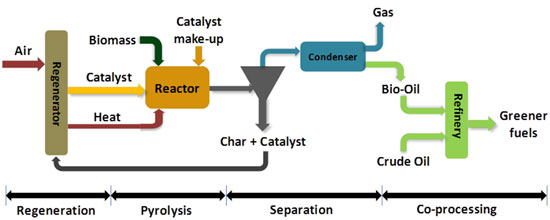
More energy from a liter of biofuel
Oil produced from biomass - such as wood chips or plant residues - seldom has the same quality and energy content as 'classical' crude oil. A new, simple catalyst improves the quality of this oil before it is even transported to the refinery.
July 18, 2014 Read more
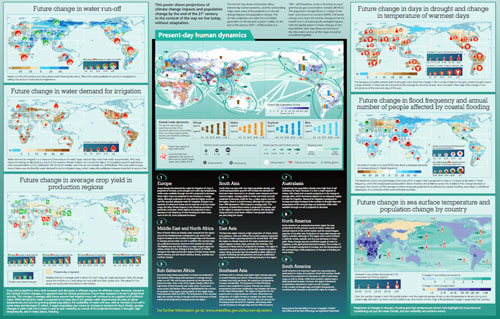
Map reveals worldwide impacts of climate change
Scientists from the University of Southampton have helped to create a new map, which shows the impact climate change could have on the whole planet by the end of the century, if carbon emissions continue to increase.
July 17, 2014 Read more

Are ants the answer to carbon dioxide sequestration?
A 25-year-long study provides the first quantitative measurement of in situ calcium-magnesium silicate mineral dissolution by ants, termites, tree roots, and bare ground. This study reveals that ants are one of the most powerful biological agents of mineral decay yet observed. It may be that an understanding of the geobiology of ant-mineral interactions might offer a line of research on how to 'geoengineer' accelerated carbon dioxide consumption by calcium-magnesium silicates.
July 17, 2014 Read more
Improving the cost and efficiency of renewable energy storage
Scientists have developed a method for improving the catalysis of water-splitting reactions used for storing wind and solar energy. The method chemically peels off the outermost surface of a catalyst, thereby maximizing its active surface for the reaction.
July 17, 2014 Read more
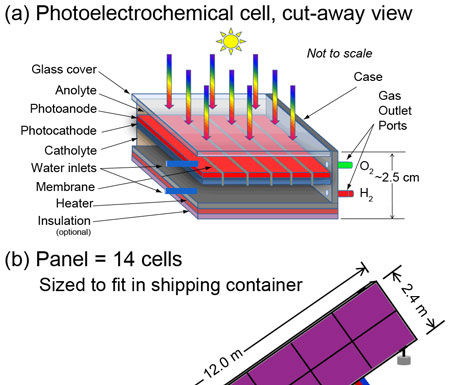
New study assesses energy balance of large-scale photoelectrochemical hydrogen production
A new study created a life-cycle assessment (LCA) model to provide some estimates that might help guide research directions to faster marketplace success. The scientists constructed a model simulation of a large-scale PEC-based hydrogen production facility, using what is known currently about the technology as well as projections of future performance.
July 16, 2014 Read more
What do Google searches tell us about our climate change fears?
Political ideology, education levels affect when people search for climate information.
July 16, 2014 Read more
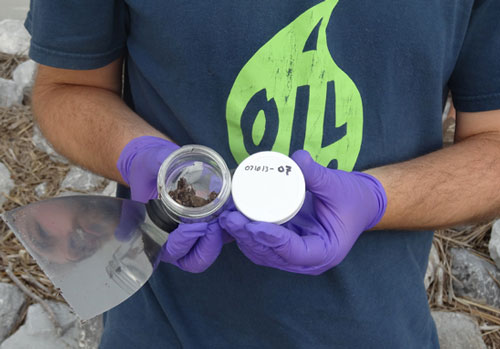
Dispersant from Deepwater Horizon spill found to persist in the environment
A new study has found that the dispersant compound DOSS, which decreases the size of oil droplets and hampers the formation of large oil slicks, remains associated with oil and can persist in the environment for up to four years.
July 16, 2014 Read more

Efficient structures help build a sustainable future
Researchers find find that using steel cable structural systems is better for the environment than using structural steel truss systems for long-span structures.
July 16, 2014 Read more
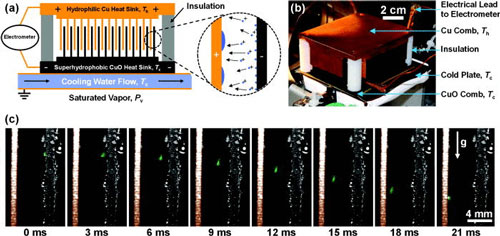
Getting a charge out of water droplets
Water condensing and jumping from a superhydrophobic surface can be harnessed to produce electricity.
July 11, 2014 Read more
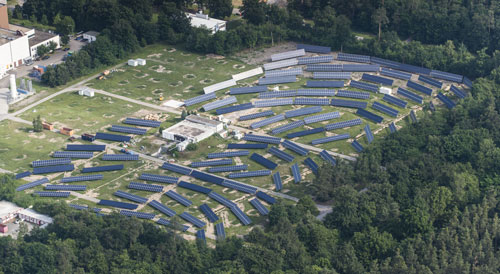
Largest German solar power storage park
Solar cells, batteries, and inverters are operated together with the purpose of storing solar electricity and making it available at any time.
July 11, 2014 Read more
EU aims for zero-waste economy with higher recycling targets
The EU has proposed higher recycling targets in a bid to transform Europe's economy into one where nothing is wasted, supporting sustainable growth.
July 11, 2014 Read more
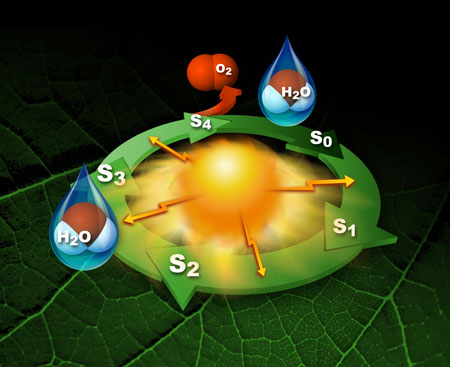
Postcards from the photosynthetic edge
Using the world's most powerful x-ray laser, an international collaboration led by Berkeley Lab researchers took femtosecond 'snapshots' of water oxidation in photosystem II, the only known biological system able to harness sunlight for splitting the water molecule. The results should help advance the development of artificial photosynthesis for clean, green and renewable energy.
July 9, 2014 Read more