

Nanotechnology News – Latest Headlines
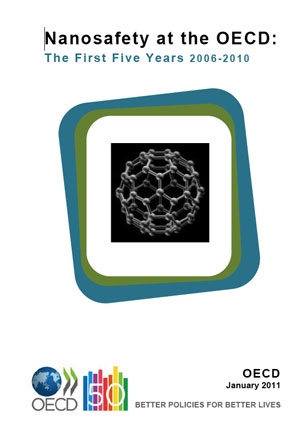
New booklet on the OECD Nanosafety work: The First Five Years
This booklet presents basic information about the OECD Nanosafety work for the public over the past five years since 2006.
February 14, 2011 Read more
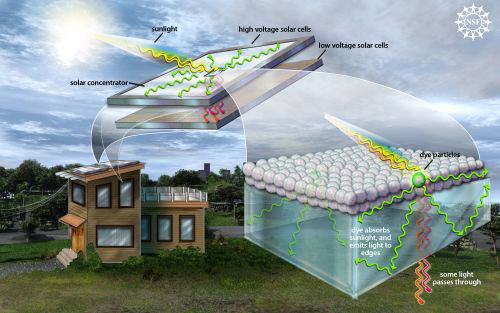
Spray-on solar panels
With support from the National Science Foundation (NSF), researchers are creating solar cells that are light, flexible, efficient and - often the biggest obstacle - affordable.
February 14, 2011 Read more
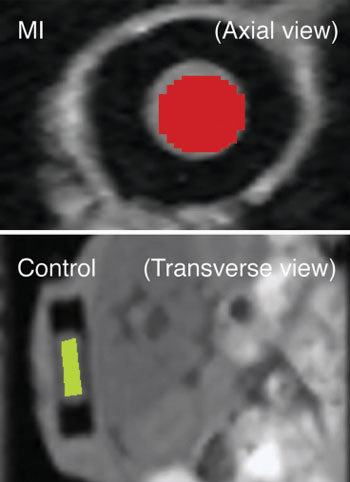
New implantable sensor finds telltale signs of heart attack
During about 30 percent of all heart attacks, the patient experiences no symptoms. However, unmistakable signs of the attack remain in the bloodstream for days. MIT researchers, working with Massachusetts General Hospital's Cardiovascular Research Center, have now designed a tiny implant that can detect those signs, which could help doctors more rapidly determine whether a patient has had a heart attack.
February 14, 2011 Read more
Nanotechnology could pave the way for hydrogen fuels
EADS Innovation Works, the Group's corporate research arm, is working with university researchers to find a new solid state storage system for hydrogen. This technology would make it possible to use hydrogen as a clean alternative to traditional hydrocarbon-based fuels in aeroplane and car engines.
February 14, 2011 Read more
New nanomaterials are good news for next-generation electronic devices
In a new study, researchers from UCLA's Henry Samueli School of Engineering and Applied Science and from the materials division of Australia's University of Queensland show the promise of surface-conduction channels in topological insulator nanoribbons made of bismuth telluride and demonstrate that surface states in these nanoribbons are "tunable" - able to be turned on and off depending on the position of the Fermi level.
February 13, 2011 Read more
Researchers discover a new class of magic atomic clusters called superhalogens
An international team of researchers has discovered a new class of magnetic superhalogens - a class of atomic clusters able to exhibit unusual stability at a specific size and composition, which may be used to advance materials science by allowing scientists to create a new class of salts with magnetic and super-oxidizing properties not previously found.
February 11, 2011 Read more
Measuring science investments
Think piece describes new approach to documenting results of scientific research.
February 11, 2011 Read more

NanoArt 2011 call to artists
The worldwide competition NanoArt 2011 is open to all artists 18 years and older. The online exhibition will open for public in April, 2011. Winners will be notified and published online on May 31, 2011.
February 11, 2011 Read more
Gold nanoparticles may enhance circulating tumor cell detection in blood
The detection of circulating tumor cells is an emerging technique that can allow oncologists to monitor patients with cancer for metastasis or to evaluate the progress of their treatment. The gold particles, which are embedded with dyes allowing their detection by laser spectroscopy, could enhance this technique's specificity by reducing the number of false positives.
February 11, 2011 Read more
Study of volcanoes in the outer solar system produces unexpected bonus for nanotechnology
Mysterious expanding ice crystals in the moons of Saturn and Neptune may be of interest to future developers of microelectronics. Neutron scattering has discovered that methanol crystals that may be found in outer solar system 'ice lavas' have unusual expansion properties. The unexpected finding by a British planetary geologist will interest developers of nano-switches - single atom thick valves used in nanoelectronics.
February 10, 2011 Read more
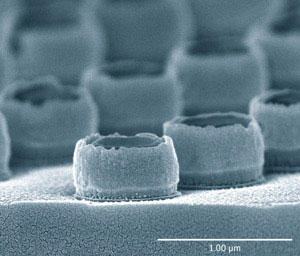
Simpler fabrication of nanogaps
A template-based coating technique allows the production of gapped nanostructures over large areas
February 10, 2011 Read more
EU initiative in research into living cancer cells in time and space
New technology has made it possible to examine living cells in a microscope while at the same time collecting information that can be used to create mathematical models of the cells' behaviour - a new field of research known as 'systems microscopy'.
February 10, 2011 Read more
New nanoarrays allow unique fingerprinting of threat agents at trace levels
While there are many methods currently being used that can detect these threats, none allow for the unique fingerprinting of threat agents at trace levels. A research team at the U.S. Naval Research Laboratory, Electronic Science and Technology Division, has overcome this limitation with surface enhanced Raman scattering (SERS) using optically stimulated plasmon oscillations in nanostructured substrates.
February 10, 2011 Read more
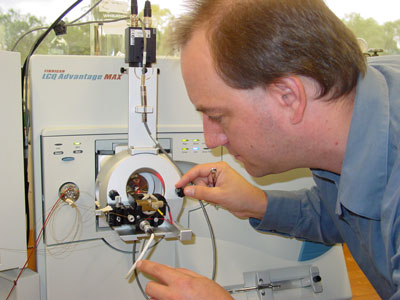
New instruments at UBuffalo will help scientists map tumor surfaces, study environmental impact of quantum dots
Two new, high-powered mass spectrometers worth a total of more than $2 million will enable University at Buffalo scientists to conduct a variety of health and environmental studies without outsourcing lab work to institutions outside of Western New York.
February 10, 2011 Read more

Let the Sun Shine: The future's bright with the African Network for Solar Energy
The newly created 'African Network for Solar Energy' (ANSOLE) met at the Johannes Kepler University, Linz, Austria on February 4th last week in a dynamic and fruitful second symposium that saw it make great strides in planning the next phase of its development, taking the status of the network to a new level.
February 10, 2011 Read more
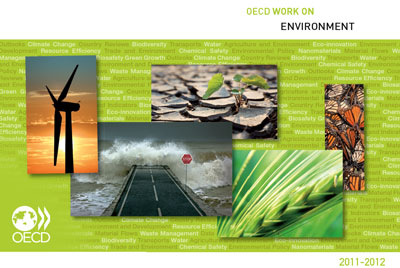
New OECD brochure highlights work on environment
A new brochure "OECD Work on Environment" (pdf) highlights the OECD work on Environment for 2011-2012, covering green growth, climate change, biodiversity, water, eco-innovation, chemical and bio-safety, resource efficiency.
February 10, 2011 Read more
 Subscribe to our Nanotechnology News feed