

Nanotechnology News – Latest Headlines
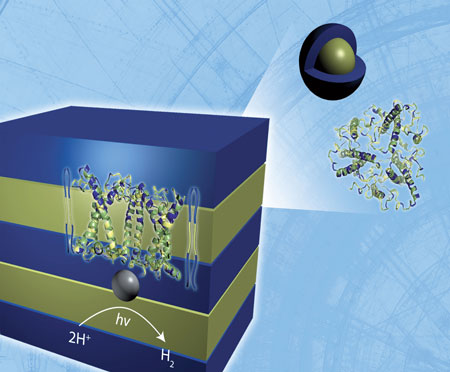
'Tall order' sunlight-to-hydrogen system works, neutron analysis confirms
Researchers at the Department of Energy's Oak Ridge National Laboratory have developed a biohybrid photoconversion system -- based on the interaction of photosynthetic plant proteins with synthetic polymers -- that can convert visible light into hydrogen fuel.
February 3, 2011 Read more

Quantum quirk: Scientists pack atoms together to prevent collisions in atomic clock
In a paradox typical of the quantum world, JILA scientists have eliminated collisions between atoms in an atomic clock by packing the atoms closer together. The surprising discovery can boost the performance of experimental atomic clocks made of thousands or tens of thousands of neutral atoms trapped by intersecting laser beams.
February 3, 2011 Read more
UAlbany NanoCollege hosts 150 leaders and executives in clean energy for launch of 'Entrepreneurial Boot Camp' series
Forums target emerging technologies and opportunities in growing renewable energy market.
February 3, 2011 Read more
Seeing the light: Scientists bring plasmonic nanofields into focus
In typical plasmonic devices, electromagnetic waves crowd into tiny metal structures, concentrating energy into nanoscale dimensions. Due to coupling of electronics and photonics in these metal nanostructures, plasmonic devices could be harnessed for high-speed data transmission or ultrafast detector arrays. However, studying plasmonic fields in nanoscale devices presents a real roadblock for scientists, as examining these structures inherently alters their behavior.
February 3, 2011 Read more
New nanomaterials unlock new electronic and energy technologies
A new way of splitting layered materials to give atom thin "nanosheets" has been discovered. This has led to a range of novel two-dimensional nanomaterials with chemical and electronic properties that have the potential to enable new electronic and energy storage technologies.
February 3, 2011 Read more
A revolution in structural biology: X-ray laser imaging of single particles
An international interdisciplinary consortium of more than 20 laboratories has achieved an extraordinary feat: producing an ultra powerful X-ray laser beam to visualize a single viral particle in a single flash lasting several femtoseconds.
February 3, 2011 Read more
Bundesumweltminister empfiehlt Nanomaterialien-Produktregister in Europa
Bundesumweltministers Norbert Roettgen hat angekuendigt, sich fuer die Einfuehrung eines Produktregisters fuer Nanomaterialien auf europaeischer Ebene stark zu machen.
February 3, 2011 Read more
EUREKA program CATRENE call for nanoelectronics proposals
The recent EUREKA programme CATRENE (Cluster for Application and Technology Research in Europe on NanoElectronics) will effect Technological Leadership for a competitive European ICT industry. The Participation in Project Outline (PO) phase of CATRENE 4th call is now open and closes on March 3, 2011.
February 3, 2011 Read more
Call for papers: DNA computing and molecular programming
Research in DNA computing and molecular programming draws together mathematics, computer science, physics, chemistry, biology, and nanotechnology to address the analysis, design, and synthesis of information-based molecular systems. This annual meeting is the premier forum where scientists with diverse backgrounds come together with the common purpose of advancing the engineering and science of biology and chemistry from the point of view of computer science, physics, and mathematics.
February 3, 2011 Read more
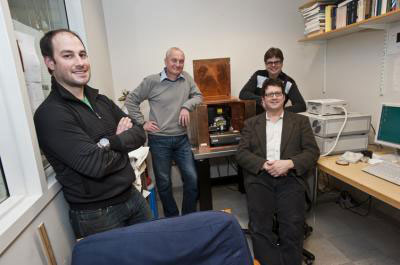
Boston College receives W.M. Keck Foundation funding for nanoscale optical microscope
Boston College has been awarded a $1 million grant from the W.M. Keck Foundation to support a team of university researchers developing a new microscope that uses a light-guiding "metamedium" to create images that reveal micro- and macroscopic matter with significantly improved clarity.
February 3, 2011 Read more

Thailand's science and technology minister to lead team to nano tech 2011 Japan
Thailand's Minister of Science and Technology H.E. Dr. Virachai Virameteekul and Prof. Dr. Sirirurg Songsivilai, Executive Director of National Nanotechnology Center (NANOTEC) will lead a team of officials from NANOTEC, Thailand Board of Investment (BOI), and Thailand Science Park (TSP) to Nano tech 2011 at Tokyo Big Sight to help boost research collaboration and promote nanotechnology investment.
February 3, 2011 Read more
Join The Industry Consortium for Environmental Measurement of Nanomaterials (ICEMN)
BASF Corporation is interested in working collaboratively with other nanomaterial stakeholders and the academic community to provide the California Department of Toxic Substances Control (DTSC) information on analytical methods which could be used to measure certain nanoscale materials in air, surface water, and soil.
February 2, 2011 Read more
Synthetic materials that behave like mollusk shells
Researchers report the identification of specific characteristics of the material microstructure of nacre that enable its outstanding performance. By performing detailed fracture experiments within an atomic force microscope, the group was able to directly visualize and quantify the way the tablets slid relative to each other as the material is deformed.
February 2, 2011 Read more
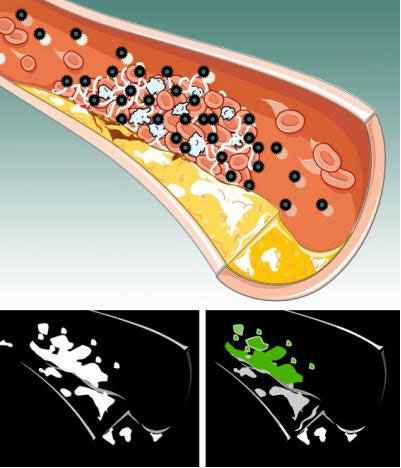
Bismuth nanoparticles make blood clots visible
For almost two decades, cardiologists have searched for ways to see dangerous blood clots before they cause heart attacks. Now, researchers at Washington University School of Medicine in St. Louis report that they have designed nanoparticles that find clots and make them visible to a new kind of X-ray technology.
February 2, 2011 Read more
Terahertz flashes enable accurate X-ray measurements
Scientists devise a method to study processes with a precision of a few femtoseconds using high-intensity ultrashort X-ray pulses.
February 2, 2011 Read more
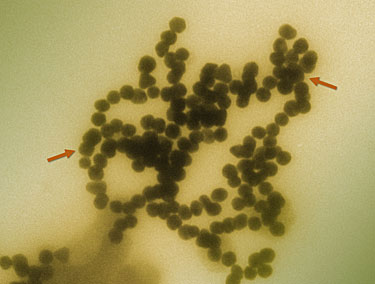
Technique controls sizes of nanoparticle clusters for EHS studies
Researchers at the National Institute of Standards and Technology (NIST) have demonstrated for the first time a method for producing nanoparticle clusters in a variety of controlled sizes that are stable over time so that their effects on cells can be studied properly.
February 2, 2011 Read more
 Subscribe to our Nanotechnology News feed