

Nanotechnology News – Latest Headlines
Launch of multi-lingual tools to explore and measure science
A new set of tools released today by Science-Metrix Inc. seeks to improve the way we talk about and understand science - from the classroom to the boardroom.
December 2, 2010 Read more
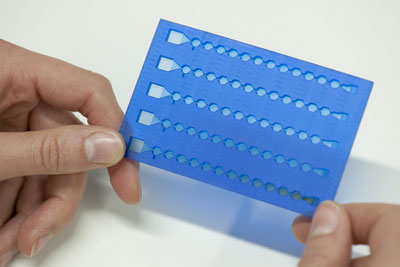
Nanoparticle-based, fast blood poisoning test can save lives
Blood poisoning can be fatal. If you suffer from sepsis, you used to have to wait as much as 48 hours for laboratory findings. A new diagnostic platform as big as a credit card will now supply the analysis after as little as an hour. This system is based on nanoparticles that are automatically guided by magnetic forces.
December 2, 2010 Read more

Research demonstrates continuous and controlled translocation of DNA polymer through a nanopore
Fine control of DNA translocation is essential component of nanopore-based DNA strand sequencing.
December 2, 2010 Read more
Using graphene to decode DNA
Graphene is generating huge excitement as a possible DNA sequencing material following the work of three independent research groups earlier this year.
December 1, 2010 Read more
Electron 'pairing': Triplet superconductivity proven experientially for first time
Tracking down Cooper pairs - researchers confirm theoretical hypothesis.
December 1, 2010 Read more
NSF awards University of Florida $1.5 million for nanotechnology center
The National Science Foundation has awarded a $1.5 million grant to a University of Florida chemist to create a center for investigating manufacturing techniques for nanoscale electronics.
December 1, 2010 Read more
Time ripe to move energy storage idea off drawing board
Funded with a recent $2.25 million stimulus grant from the U.S. Dept. of Energy's Advanced Research Projects Agency - Energy, or ARPA-E, a Case Western professor will try to make a capacitor ready for market within three years.
December 1, 2010 Read more
New EU project CORONET: Novel interfaces between brain and computer
Interfaces between the brain and electrical circuits in technical devices or computers open new perspectives for basic research and medical application, e.g., for therapeutic brain stimulation and neuroprosthetics. The new EU project CORONET will develop the technological and theoretical foundations for such future 'bio-hybrid' interfaces between biological and artificial nervous tissues.
December 1, 2010 Read more
University of Queensland receives $3.6 million nanotechnology infrastructure funding
Groundbreaking research into nanotechnology and advanced polymers will be accelerated with $3.6 million in infrastructure funding awarded to The University of Queensland today.
December 1, 2010 Read more
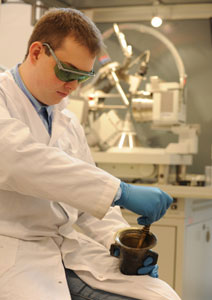
Three-dimensional chemistry at grinding powder
During the normal grinding of powders in a mortar, the powders can enter into chemical reactions with each other. This phenomenon has been known for years but only now it has become possible to transform in this way three-dimensional clusters of certain chemical compounds into other, also three-dimensional, clusters.
December 1, 2010 Read more

Breakthrough nanophotonic chip technology lights the path to exascale computing
IBM Silicon Nanophotonics uses optical signals to connect chips together faster and with lower power.
December 1, 2010 Read more
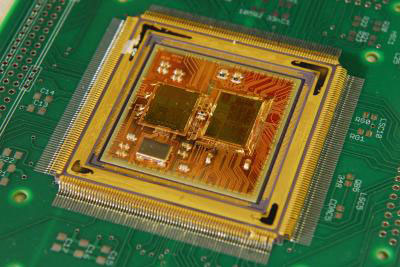
Project pioneers use of silicon-germanium for space electronics applications
A five-year project led by the Georgia Institute of Technology has developed a novel approach to space electronics that could change how space vehicles and instruments are designed. The new capabilities are based on silicon-germanium technology, which can produce electronics that are highly resistant to both wide temperature variations and space radiation.
November 30, 2010 Read more
Graphene's weakness - how to shatter the world's strongest material
Using quantum theory and supercomputers, researchers have revealed the mechanisms of mechanical failure of pure graphene under tensile stress.
November 30, 2010 Read more
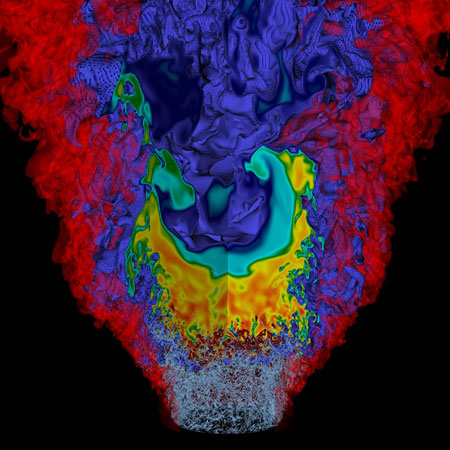
Massive time allocation on nation's fastest computer to advance research in cleaner, renewable energy technologies
Scientists at the Lawrence Berkeley National Laboratory have been awarded massive allocations on the nation's most powerful supercomputer to advance innovative research in improving the combustion of hydrogen fuels and increasing the efficiency of nanoscale solar cells.
November 30, 2010 Read more
Researchers demystify glasses by studying crystals
Researchers describe the behavior of iron-cobalt superlattice material as it cools down from its randomly ordered high temperature state.
November 30, 2010 Read more
Up to 20 million euros for German catalysis research
Sued-Chemie AG and Technische Universitaet Muenchen have formed a strategic alliance for catalysis research, 'Munich Catalysis'. In addition to basic research in the field of catalysis, a major aspect of this cooperation will be the development of innovative catalysts as a key technology to help meet the rising global demand for energy and base chemicals on a long-term basis.
November 30, 2010 Read more
 Subscribe to our Nanotechnology News feed