

Nanotechnology News – Latest Headlines
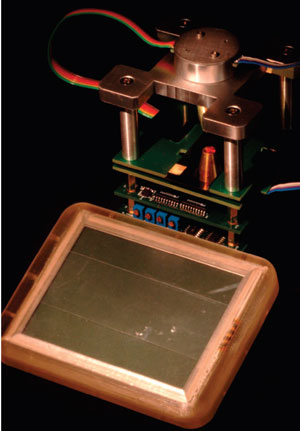
A new-generation of simpler sensors for detecting disease-causing microbes and toxins
Scientists in Singapore are reporting development of a complete, palm-sized sensor that can detect disease-causing microbes, toxins, and other biological threats instantly without the need for an external power source or a computer.
July 16, 2008 Read more
Using magnetic nanoparticles to combat cancer
Scientists at Georgia Tech have developed a potential new treatment against cancer that attaches magnetic nanoparticles to cancer cells, allowing them to be captured and carried out of the body.
July 16, 2008 Read more
Hochleistungswerkstoffe durch Nanotechnologie - GKSS-Forschungszentrum koordiniert EU-Projekt
GKSS-Forschungszentrum Geesthacht koordiniert EU-Projekt HARCANA zur Entwicklung neuer Kunststoffe.
July 16, 2008 Read more
Study shows increased education on nanotechnology, human enhancement increases public concerns
Educating the public about nanotechnology and other complex but emerging technologies causes people to become more worried and cautious about the new technologies' prospective benefits, according to a recent study.
July 16, 2008 Read more
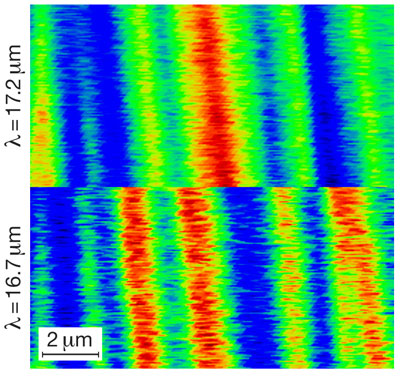
Shimmering ferroelectric domains
Dresden scientists were able to produce microscopic images of ferroelectric domains - tiny regions of a ferroelectric material -, where the electric polarization points into different directions.
July 16, 2008 Read more
Freeing light shines promise on energy-efficient lighting
The latest bright idea in energy-efficient lighting for homes and offices uses big science in nano-small packages to dim the future Edison's light bulb.
July 15, 2008 Read more
EU funds 'Nanoscale ICT Devices and Systems' coordination project (NANOICT)
This project aims to reinforce and support the whole European Research Community in 'ICT nanoscale devices' covering the following research areas expected to demonstrate unconventional solutions beyond the expected limits of CMOS technology.
July 15, 2008 Read more
IBM will make $1.5 billion nanotechnology investment in New York
Governor David A. Paterson today announced significant new investments by IBM and New York State, accelerating New York State's international leadership in nanotechnology research and development and creating up to 1,000 new high-tech jobs Upstate. The State will provide a total of $140 million in economic development grants, leveraging more than a ten-to-one private investment of $1.5 billion from IBM.
July 15, 2008 Read more
Raman reveals DNA in action
Researchers at the University of Strathclyde, UK, have been able to use Raman spectroscopy to observe strands of DNA pairing up and falling apart by attaching them to silver nanoparticles
July 15, 2008 Read more
Researchers generate hydrogen without the carbon footprint
A greener, less expensive method to produce hydrogen for fuel may eventually be possible with the help of water, solar energy and nanotube diodes that use the entire spectrum of the sun's energy.
July 15, 2008 Read more
TG2 identified as potential therapeutic target in chemo-resistant ovarian cancer
When researchers targeted and silenced TG2 in animal models, cancer progression was reversed, suggesting the protein may also provide a novel therapeutic approach for late-stage ovarian cancer.
July 15, 2008 Read more
Engineering professor conducts explorations on the nanoscale
For materials scientists like Petra Reinke, an associate professor in the University of Virginia's Department of Materials Science and Engineering, the goal is to be able to engineer materials and construct structures that perform in predictable ways at the nanoscale.
July 15, 2008 Read more
Emergency response and nanotechnology
Past meets future at the Health Physics Society meeting Wednesday sessions in Pittsburgh.
July 15, 2008 Read more
Researchers hone technique to KO pediatric brain tumors
Slow release of nanoparticles is key.
July 14, 2008 Read more
Research on the carcinogenicity of nanoparticles and other dusts
The primary aims of the study by the Federal Institute for Occupational Safety and Health in Germany were to analyse differences between the carcinogenicity of granular dusts in the rat lung after intratracheal instillation, to find out the optimal dose metric for their carcinogenic potency and to interprete their potential relevance for human health.
July 14, 2008 Read more
Controlled growth of truly nanoscale single crystal fullerites for device applications
University of Surrey researchers have found a way to make ultra-small pure carbon crystals entirely formed from the spherical carbon buckyball molecule known as C60. The method used involves mixing two liquids together, one of which contains C60, at low temperature.
July 14, 2008 Read more
 Subscribe to our Nanotechnology News feed