

Nanotechnology News – Latest Headlines
Photodynamic therapy with nanoparticles targets tumors
A nontoxic photodynamic dye that appears to be particularly lethal to brain cancer cells.
November 6, 2006 Read more
Nanoparticle probes light up cells
Nanosilver tags could provide a boost to high-throughput drug screening efforts.
November 6, 2006 Read more
Multifunctional nanoparticles image tumors, deliver drug
Researchers have successfully melded magnetic iron nanoparticles, the anticancer drug doxorubicin, and a polymer tagged with a tumor-targeted molecule into a stable nanoparticle that accumulates inside human tumor cells.
November 6, 2006 Read more
Perfecting targeted nanoparticles for anticancer therapy
Systematic experiments aimed at identifying how nanoparticle formulations affect drug delivery in the body.
November 6, 2006 Read more
EU network focuses on nanoengineered superconductors for power applications
A new European research project NESPA - NanoEngineered Superconductors for Power Applications.
November 6, 2006 Read more
EU launches nanotubes project for biomedical applications
A new EU research program CARBIO - Multifunctional Carbon Nanotubes for Biomedical Applications.
November 6, 2006 Read more
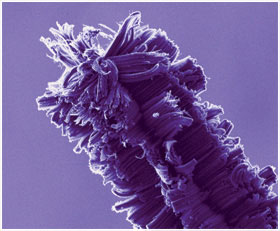
New techniques pave way for carbon nanotubes in electronic devices
Two new techniques for placing carbon nanotube patterns on metal surfaces of just about any shape and size.
November 6, 2006 Read more
Germany launches nano action plan
Germany launches a single framework for action.
November 6, 2006 Read more
New U.S. research grants available for nanotoxicity research
A new nanotoxicity research grant titled Manufactured Nanomaterials: Physico-chemical Principles of Biocompatibility and Toxicity.
November 3, 2006 Read more
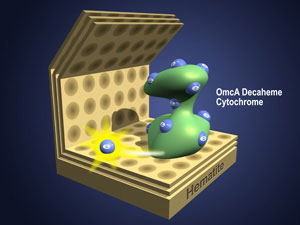
Biofuel cells without the bio cells
Proteins rendered portable from the organisms that spawned them could make miniature bioreactor cells feasible.
November 3, 2006 Read more
DNA gets kinky easily at the nanoscale
Scientists have answered a long-standing molecular stumper regarding DNA: How can parts of such a rigid molecule bend and coil without requiring large amounts of force?
November 3, 2006 Read more
New military nanotechnology research consortium
The Consortium for Nanomaterials for Aerospace Commerce and Technology, or CONTACT.
November 3, 2006 Read more
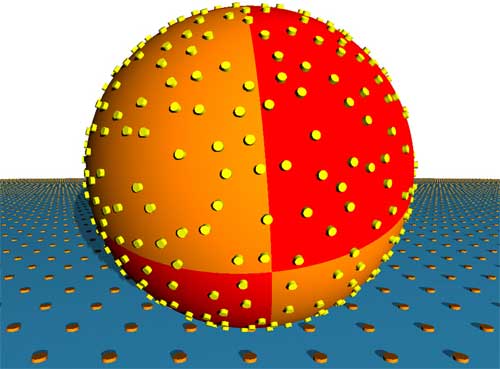
Floating and spiky
With the aid of complex computer simulations, scientists have discovered how the shape and distribution of certain sticky areas on the cell affect its adhesion in blood vessels.
November 3, 2006 Read more
UK completes its network of 22 nanotechnology centers
A new era with a complete network of 22 Nanotechnology Centres linking up across the UK will be officially ushered in Nov. 2, 2006.
November 2, 2006 Read more
Quantum coherence possible in incommensurate electronic systems
It was demonstrated that quantum coherence is possible in electronic systems that are incommensurate, thereby removing one obstacle in the development of quantum devices.
November 2, 2006 Read more
Pulsating gels could power tiny robots
The first general model to study large-scale shape changes in responsive gels.
November 2, 2006 Read more
 Subscribe to our Nanotechnology News feed