

Nanotechnology News – Latest Headlines
Nanocrystals are hot
Scientists have discovered that nanocrystals of germanium embedded in silica glass don't melt until the temperature rises almost 200 degrees Kelvin above the melting temperature of germanium in bulk.
October 10, 2006 Read more
Imaging nanoscale membrane organization
Researchers have developed a way to image cell membranes with unprecedented resolution ? on the order of 100 nanometers.
October 10, 2006 Read more
Photochemistry creates drug-trapping nanoparticles
A new method that uses light to create a well-defined polymeric nanoparticle with internal spaces that can provide a friendly environment to water-insoluble drugs.
October 10, 2006 Read more
Nanologue launches ethics nanometer
A European project has developed a set of tools to help support a dialogue between scientists, policy makers and the public about the benefits and potential impacts of nanosciences and nanotechnologies.
October 6, 2006 Read more
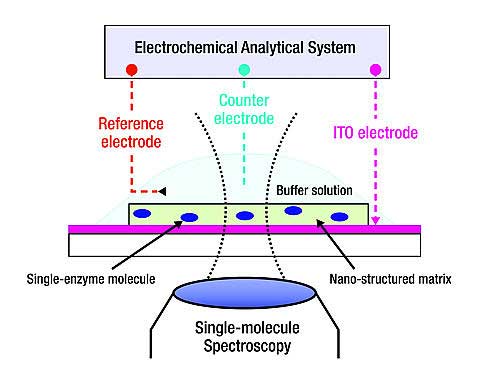
Research to illuminate inner workings of 'protein nanomachines'
Development of new instrumentation and methods for studying the molecular mechanisms of enzymes are the goals of a three-year program.
October 6, 2006 Read more
Toward terahertz detectors on a single, conventional chip
A new NSF grant supports developing semiconductor-based terahertz detectors that can be integrated seamlessly with conventional electronics.
October 6, 2006 Read more
Active nanoscale surfaces for biological separations
Researchers plan to develop nanoscale surfaces that actively reassemble in the presence of DNA, which could eventually lead to more efficient separation tools for genomics and proteomics.
October 6, 2006 Read more
Porous carbon sponges prepared by aerosol technique
Scientists discovered a way to prepare porous carbon sponges by heating a chemical mist from an ordinary home humidifier.
October 5, 2006 Read more
Highly functional biosurfactants using yeasts
Researchers in Japan have succeeded in developing a highly functional biosurfactants.
October 5, 2006 Read more
First quantum teleportation between light and matter
Researcher at the Max Planck Institute of Quantum Optics in Garching and the Niels Bohr Institute in Copenhagen have succeeded in transferring a quantum state of light to a material object.
October 5, 2006 Read more
Fantastic Voyage: A new nanoscale view of the biological world
New technology makes it possible to image and quantify molecules within individual mammalian or bacterial cells.
October 4, 2006 Read more
Scientists use carbon nanotubes to detect defects in composites
Researchers have discovered a means to detect and identify damage within advanced composite materials by using a network of tiny carbon nanotubes, which act in much the same manner as human nerves.
October 4, 2006 Read more
Method could help carbon nanotubes become commercially viable
A new method for sorting CNTs works by exploiting subtle differences in the buoyant densities of carbon nanotubes as a function of their size and electronic behavior.
October 4, 2006 Read more
Scientists solve longstanding nanoelectronic puzzle
A theoretical physicist has solved one of nanoelectronic's longstanding puzzles, which has baffled physicists seeking to make smaller, faster computer devices for more than a decade.
October 4, 2006 Read more
A single polymer nanowire photodetector
Researchers from the Tyndall National Institute, Ireland, have utilised single conjugated polymer nanowires as ultra-miniature photoconductivity-based photodetectors.
October 4, 2006 Read more
Manipulating light with a tiny needle
Using the tip of an Atomic Force Microscope (AFM), it is possible to map the wave pattern of light, trapped in a so called optical resonator, with unprecedented precision.
October 3, 2006 Read more
 Subscribe to our Nanotechnology News feed