

Nanotechnology News – Latest Headlines
Quantum dots probe cell death
Aiming to help researchers get a better handle on how anticancer agents are triggering cell death, investigator have developed a quantum dot nanodevice that can detect and image apoptosis, also known as programmed cell death.
September 5, 2006 Read more
Gold nanoparticles prove to be hot stuff
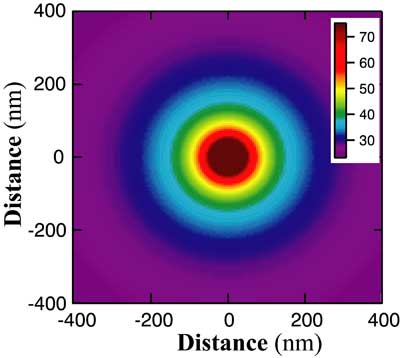
Gold nanoparticles can heat up fast, by tens of degrees in just a few nanoseconds, which could either damage the molecules or help study them.
August 31, 2006 Read more
Nano-signals get a boost from magnetic spin waves
Researchers have figured out how nanoscale microwave transmitters gain greater signal power than the sum of their parts.
August 31, 2006 Read more
Molecular motor helps cells tell which way is up
Researchers show how a newly discovered molecular motor helps a cell determine which way is up.
August 31, 2006 Read more
Nanotubes trigger neurons
Researchers at Stanford University have used electrodes made of bundles of multiwalled carbon nanotubes to stimulate rat neurons.
August 31, 2006 Read more
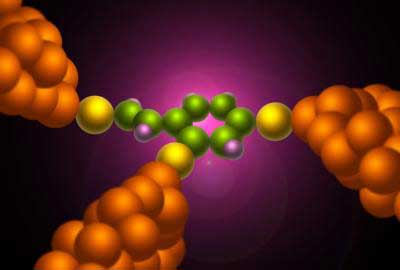
Physicists invent single molecule transistors
Physicists have discovered how to turn single molecules into working transistors.
August 30, 2006 Read more
Polymers show promise for lab-on-a-chip technology
Researchers are touting the use of liquid crystalline polymers (LCP) as a viable tool for use in devices such as the sought-after lab-on-a-chip technology.
August 30, 2006 Read more
Vitamin E nanotech innovation marks a big step for formulators
British pharmacists announced the development of a vitamin E gel that is easier to formulate thanks to the use of nanotechnology.
August 30, 2006 Read more

Nanotube ink: desktop printing of carbon nanotube patterns
Using an off-the-shelf inkjet printer, a team of scientists has developed a simple technique for printing patterns of carbon nanotubes on paper and plastic surfaces.
August 30, 2006 Read more
'Nanocantilevers' yield surprises critical for designing new detectors
Researchers have made a discovery about the behavior of tiny structures called nanocantilevers that could be crucial in designing a new class of ultra-small sensors for detecting viruses, bacteria and other pathogens.
August 28, 2006 Read more
Researchers make chemical warfare protective nanofibers
Texas Tech University researchers may have discovered a polyurethane nanofiber technique that can save lives.
August 28, 2006 Read more
Acid-sensitive nanoparticles treat ovarian cancers with little toxicity
Research shows that acid-sensitive polymer nanoparticles are effective at suppressing tumor growth when tested in an animal model of human ovarian cancer.
August 28, 2006 Read more
Nanoparticles successfully deliver protein-suppressing RNA-based therapies
Small pieces of nucleic acid, known as siRNAs (short interfering RNAs), can turn off the production of specific proteins, a property that makes them one of the more promising new classes of anticancer drugs in development.
August 28, 2006 Read more
Enzyme modulates quantum dot uptake by cells
A new simple and versatile method uses a specific type of enzyme to facilitate quantum dot entry into cells.
August 28, 2006 Read more
Quantum dots enable rapid tumor typing using clinical tissue samples
Measuring gene expression in clinical tissue samples may one day provide a powerful method for typing tumors and determining the optimal course of therapy for individual patients.
August 28, 2006 Read more
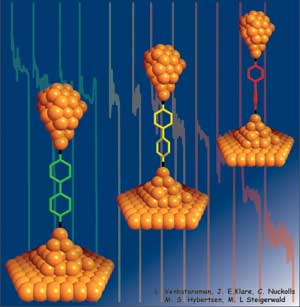
Suspicion confirmed: flat molecules better for conducting electricity
A scientist has demonstrated that in creating single-molecule electronic devices, flatter molecules conduct electricity better.
August 25, 2006 Read more
 Subscribe to our Nanotechnology News feed