Ice Magic: Making String Stick to Ice with Salt
Time needed: 5 minutes
Difficulty level: Easy
Age range: 6+ years
Adult supervision: Recommended
Difficulty level: Easy
Age range: 6+ years
Adult supervision: Recommended
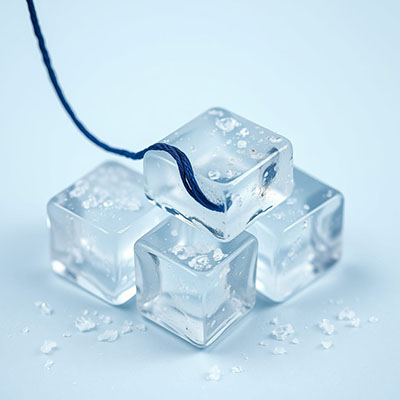
What You'll Learn
In this experiment, you'll discover how salt can help a string stick to ice. This simple demonstration shows how salt affects ice's freezing point and creates an unexpected result that seems to defy gravity!
Materials Needed
Materials collected: 0/4
Ice cubes
Table salt
String
Container or plate
Step-by-Step Instructions
1
Put a bunch of ice cubes into your container
2
Put your string directly on the ice
3
Add salt along the string where it touches the ice
4
Wait a bit, then gently lift the string - the ice will stick to it!
Watch It In Action
Watch this quick demonstration to see how salt helps a string stick to ice - it's like magic!
The Science Behind It
When salt touches ice, it lowers the freezing point and melts a thin layer.
The water around the string quickly refreezes because the surrounding ice is still cold.
This traps the string in the newly formed ice, making it stick!
Common Questions
Why doesn't the string stick without salt?
Without salt, the ice stays frozen and the string just sits on top. The salt creates a cycle of melting and refreezing that traps the string.
How long should I wait before lifting the string?
Wait about 30-60 seconds after adding the salt. This gives enough time for the melting and refreezing process to occur.
What type of string works best?
Any regular string or twine will work. The key is making sure it's long enough to handle easily.
Take It Further
- Try different types of string (thick, thin, cotton, synthetic)
- Experiment with different amounts of salt
- See how many ice cubes you can lift at once
- Time how long it takes for the ice to stick with different amounts of salt
Related Experiments
If you enjoyed this experiment, try these next:
- Cloud in a Glass - Another fun experiment with water state changes
- Frost Formation - Explore crystal formation during freezing