Reference terms from Wikipedia, the free encyclopedia
 

Humanoid robot

A humanoid robot is a robot with it's body shape built to resemble the human body. The design may be for functional purposes, such as interacting with human tools and environments, for experimental purposes, such as the study of bipedal locomotion, or for other purposes. In general, humanoid robots have a torso, a head, two arms, and two legs, though some humanoid robots may replicate only part of the body, for example, from the waist up. Some humanoid robots also have heads designed to replicate human facial features such as eyes and mouths. Androids are humanoid robots built to aesthetically resemble humans.

 
Note:   The above text is excerpted from the Wikipedia article Humanoid robot, which has been released under the GNU Free Documentation License.
 

Check out these latest Nanowerk Robotics News:

 

Molecular 'slack' switch could lead to tougher, smarter soft materials

Molecular rings reveal how hidden chain length controls stiffness, toughness and elasticity, offering a blueprint for tunable smart materials.

AI fast-forwards molecular simulations by 10 000-fold

AI can now predict molecular changes over time, potentially accelerating drug testing and helping identify promising treatments faster and more accurately.

Can robots read the room?

Robots need better social awareness to interpret human facial cues, context and relationships in shared spaces.

Artificial eyes could bring human-like sight to self-driving cars, robots

Inspired by the way human eyes adjust from bright to dark settings, the new system is able to recognize visual patterns with high accuracy in mixed lighting in a test reminiscent of an eye doctor exam.

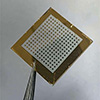
Teaching AI to design optical surfaces using real-world imperfections

Researchers developed an AI-powered deep-learning framework trained on experimental data rather than simulations, enabling faster and more accurate design of light-controlling nanostructures.

Fewer animal experiments thanks to virtual mouse

Researchers have developed an AI-supported computer model of a mouse body that uses machine learning to predict how different nanomaterials are distributed in the mouse organism.

A stair-climbing robot that catches itself when it falls

A reinforcement-learning-based safety system teaches a stair-traversing service robot to brace itself mid-fall, addressing one of the biggest barriers to deploying autonomous robots on staircases.

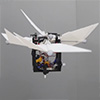
Liquid metal pump powers soft robotic butterfly at less than 0.1 volts

A pea-sized liquid metal pump drives soft robots and wearables at ultra-low voltage, enabling portable fluidic actuation without bulky hardware.

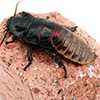
AI listens to insect body signals to guide cyborg cockroaches

AI-guided cyborg cockroaches use internal signals to estimate environmental states and steer movement while reducing unnecessary stimulation.

Perfect randomness realized for the first time

Researchers have, for the first time, created certifiably perfect random numbers using a quantum experiment. These can be used, for instance, for encrypting messages.

Check out more of the latest Robotics News here.