Reference terms from Wikipedia, the free encyclopedia
 

Sea-Monkeys

Sea-Monkeys is a marketing term used to refer to brine shrimp (Artemia) that are sold as novelty aquarium pets. Developed in the United States in 1957 by Harold von Braunhut, they are sold as eggs intended to be added to water, and almost always come bundled in a kit of three pouches and instructions. Sometimes a small tank and/or supplementary pouches may also be included with the product. The product was heavily marketed in the 1960s and 70s, especially in comic books, and remains a presence in popular culture.

 
Note:   The above text is excerpted from the Wikipedia article Sea-Monkeys, which has been released under the GNU Free Documentation License.
 

Check out these latest Nanowerk News:
 

New tool speeds flaw detection in diamond and advanced semiconductors

A software workflow automates X-ray analysis to spot crystal defects in diamond and advanced semiconductors, helping improve electronics and quantum devices.

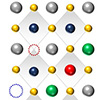
Nanoparticles turn oxide thin films metallic and magnetic

Researchers demonstrate a giant insulator-to-metal transition and room-temperature superparamagnetism by controlling defect reconstruction and nickel nanoparticle formation in perovskite oxide thin films.

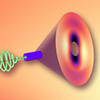
Imaging for the first time how molecules rearranged during a chemical reaction controlled by light

For the first time, researchers imaged a molecule undergoing a coherently controlled chemical reaction - a reaction steered with pulses of laser light.

A magnetic field that kills superconductivity can also bring it back

Magnetic fields usually kill superconductivity, but in a thin oxide interface they made it vanish, then return, opening a new way to study quantum effects.

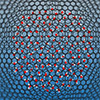
New research reveals what really controls water chemistry in nanoscale spaces

Water in nanoscale spaces is shaped more by pressure and surrounding materials than confinement, offering new ways to improve batteries, fuel cells and nanofluidics.

Scientists discover classical space-time crystals moving like Majorana quasiparticles

New experimental evidence demonstrates that discrete space-time crystals can be realized in classical soft-matter systems, thereby moving beyond the traditional complexities of quantum mechanics.

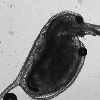
Tiny water fleas reveal early warning signs of nanomaterial toxicity

Automated system analyzes heart rates of about 150 Daphnia magna per hour, enabling more sensitive detection of toxic effects at low concentrations in aquatic ecosystems.

Self-driving chemistry lab discovers catalysts that can switch products on demand

A self-driving lab rapidly screened catalyst recipes, finding tunable systems that switch chemical products by changing reaction conditions

Electron buildup unlocks precision control of Janus 2D semiconductors

Plasma treatment weakens sulfur bonds, enabling precise room-temperature fabrication of Janus 2D semiconductors for advanced electronics.

Sugar-coated nanoparticles show promise for treating most aggressive form of brain cancer

Sugar-coated lipid nanoparticles carried tumor-suppressing mRNA across the blood-brain barrier, shrinking glioblastoma tumors in mice.