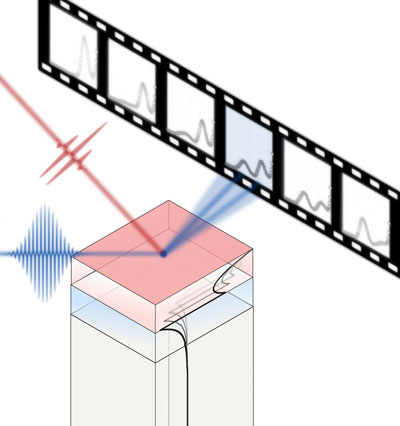
 No comprehensive study has yet been carried out to characterize the photoexcited lattice dynamics of an opaque thin film on a semi-infinite transparent substrate. As a result, ultrafast X-ray diffraction data for such samples can be challenging to interpret. Now a new study builds a model to help interpret such data.
Nov 18th, 2014
Read more
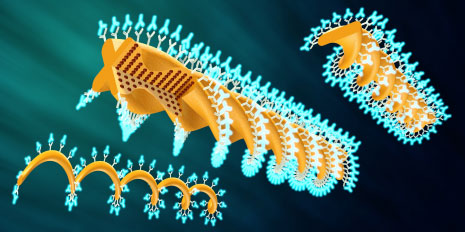 Researchers have developed improved forms of tiny magnetic actuators thanks to new materials and a microscopic 3D printing technology.
Nov 18th, 2014
Read more
Researchers in bone tissue regeneration believe they have made a significant breakthrough for sufferers of bone trauma, disease or defects such as osteoporosis.
Nov 18th, 2014
Read more
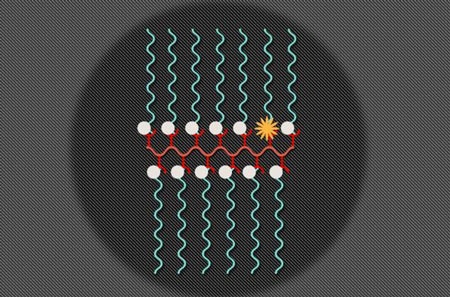 MIT chemists have developed new nanoparticles that can simultaneously perform magnetic resonance imaging (MRI) and fluorescent imaging in living animals. Such particles could help scientists to track specific molecules produced in the body, monitor a tumor's environment, or determine whether drugs have successfully reached their targets.
Nov 18th, 2014
Read more
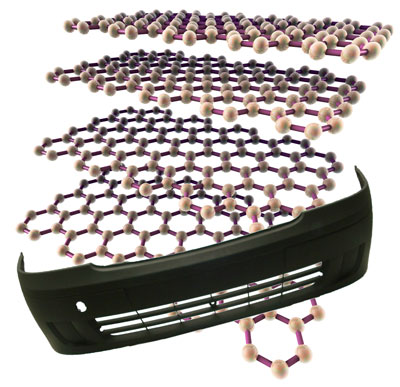 Researchers have developed reinforced graphite nanoplatelets seeking to improve the performance of solar cell materials.
Nov 18th, 2014
Read more
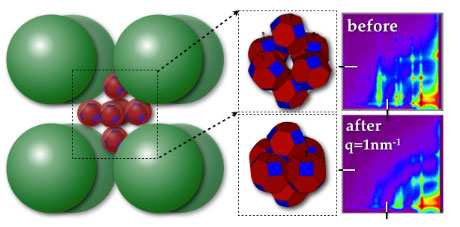 Imagine building a chemical reactor small enough to study nanoparticles a billionth of a meter across. A billion times smaller than a raindrop is the volume of an E. coli cell. And another million times smaller would be a reactor small enough to study isolated nanoparticles. Add to that the challenge of making not just one of these tiny reactors, but billions of them, all identical in size and shape. Researchers at Cornell have done just that.
Nov 17th, 2014
Read more
 Scientists have invented a novel cathode that may make cheap, flexible dye-sensitized solar cells practical.
Nov 17th, 2014
Read more
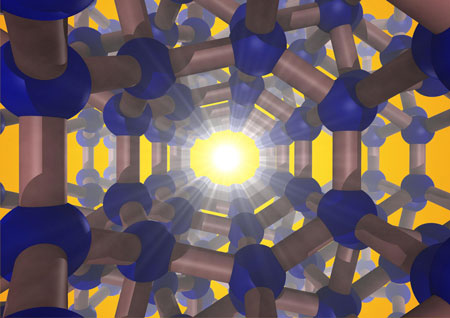 Silicon is the second most-abundant element in the earth's crust. When purified, it takes on a diamond structure, which is essential to modern electronic devices - carbon is to biology as silicon is to technology. A team of scientists has synthesized an entirely new form of silicon, one that promises even greater future applications.
Nov 17th, 2014
Read more
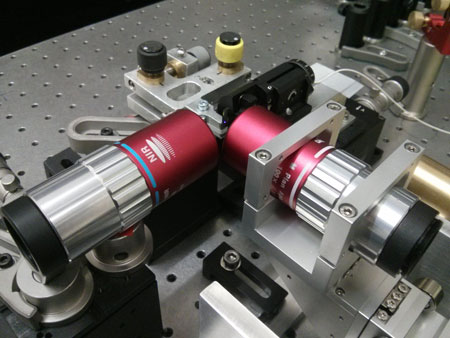 Researchers have developed a new technique to help produce more reliable and robust next generation photonic chips.
Nov 17th, 2014
Read more
A team of physicists has developed a method to control the movements occurring within magnetic materials, which are used to store and carry information. The breakthrough could simultaneously bolster information processing while reducing the energy necessary to do so.
Nov 17th, 2014
Read more
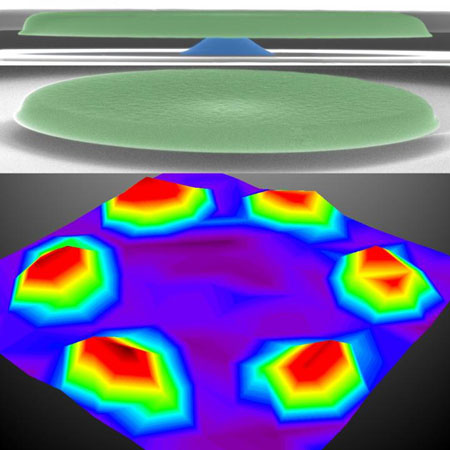 For the first time, scientists have vividly mapped the shapes and textures of high-order modes of Brownian motions - in this case, the collective macroscopic movement of molecules in microdisk resonators.
Nov 17th, 2014
Read more
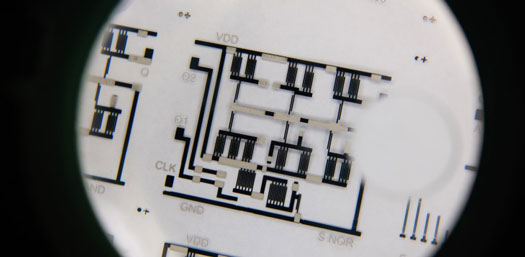 Resistors, transistors and capacitors, the key components of a complex electronic circuit, are printed using non-toxic organic materials like silver nanoparticles, carbon and plastics.
Nov 17th, 2014
Read more
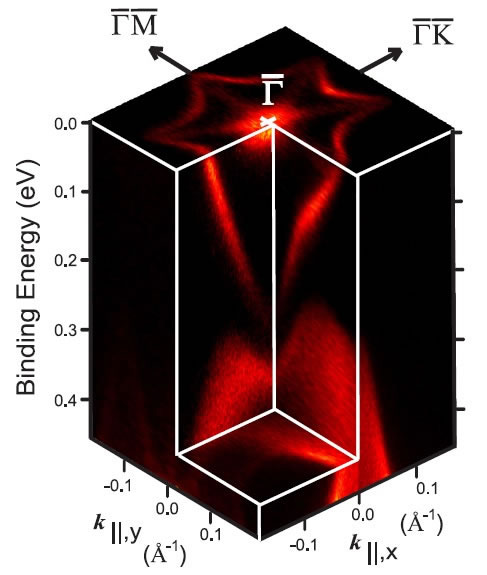 Topological insulators are promising to develop into a material for lossless electricity and information transport. Now, researchers investigated for the first time whether the direction of motion of electrons in topological insulators affects their behavior.
Nov 14th, 2014
Read more
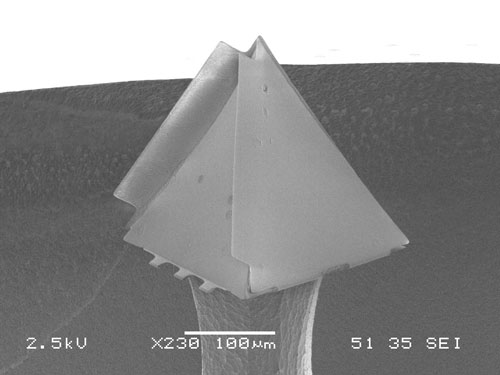 A new technique can form the basis for a new three-dimensional production technique that avoids the limitations of the current two-dimensional microtechnology.
Nov 14th, 2014
Read more
Chemists have developed a molecule that assembles spontaneously into a lightweight structure with microscopic pores capable of binding large quantities of several potent greenhouse gases.
Nov 14th, 2014
Read more
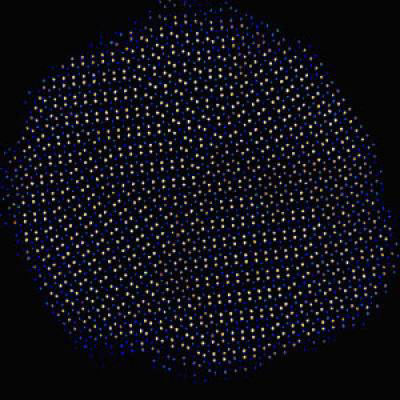 A research team reports that it has discovered an entirely new form of crystalline order that simultaneously exhibits both crystal and polycrystalline properties and holds promise for improving the efficiency of thermoelectric devices.
Nov 14th, 2014
Read more

 Subscribe to our Nanotechnology News feed