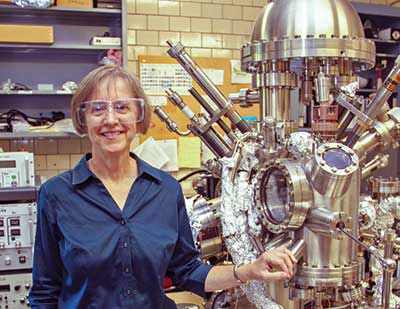
 Scientists are exploring the unique properties of two-dimensional materials and metals grown on graphene, graphite, and other carbon coated surfaces.
Feb 10th, 2017
Read more
 For the first time, scientists have captured a movie of how large populations of carbon nanotubes grow and align themselves.
Feb 10th, 2017
Read more
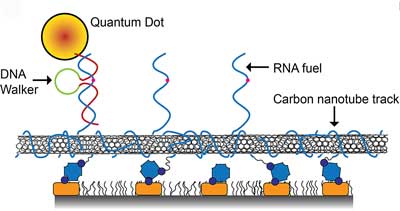 Researchers have introduced a new type of super-resolution microscopy and used it to discover the precise walking mechanism behind tiny structures made of DNA that could find biomedical and industrial applications.
Feb 10th, 2017
Read more
 Researchers create new photodetector based on GdNiO3/Nb-doped SrTiO3 p-n heterojunction.
Feb 9th, 2017
Read more
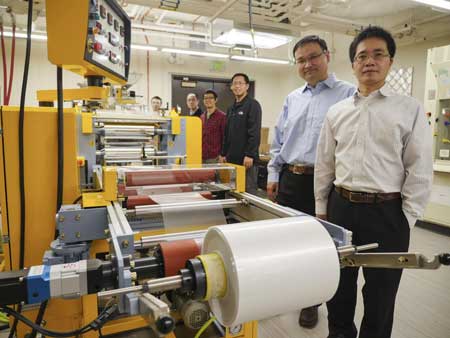 Engineers have developed a scalable manufactured metamaterial to act as a kind of air conditioning system for structures. It has the ability to cool objects even under direct sunlight with zero energy and water consumption.
Feb 9th, 2017
Read more
 Cellphones and other devices could soon be controlled with touchless gestures and charge themselves using ambient light, thanks to new LED arrays that can both emit and detect light.
Feb 9th, 2017
Read more
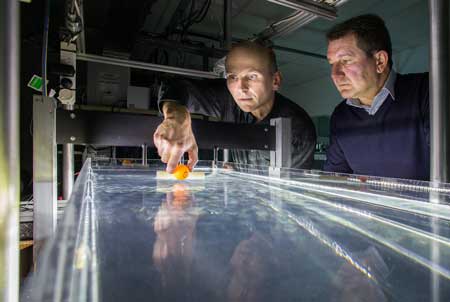 Scientists have controlled wave-generated currents to make previously unimaginable liquid materials for new technological innovations, including techniques to manipulate micro-organisms.
Feb 9th, 2017
Read more
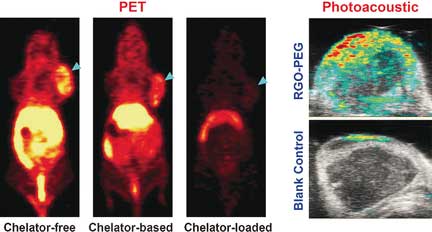 Directly radiolabeled graphene materials without chelators are suitable for bioimaging applications.
Feb 9th, 2017
Read more
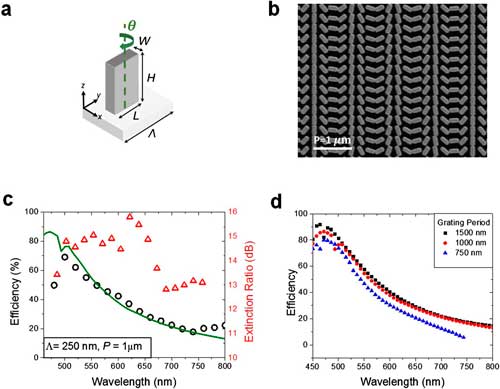 Game-changing nanostructure-based lenses allow smaller devices, increased functionality.
Feb 9th, 2017
Read more
 Physicists have cleared a further hurdle on the path to creating quantum computers: in a recent study, they present a method with which they can very quickly and precisely sort large numbers of atoms.
Feb 9th, 2017
Read more
 Scientists were inspired by medieval mail armor when producing a new metamaterial with novel properties. They succeeded in reversing the Hall coefficient of a material.
Feb 9th, 2017
Read more
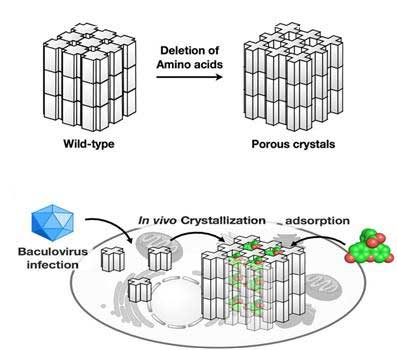 The exquisite design of natural proteins prompted scientists to exploit it in synthetic biology to engineer molecules that can self-assemble into nanoparticles with desired structure and that may be used for various purposes such as gas storage, enzyme catalysis, intracellular drug delivery, etc.
Feb 9th, 2017
Read more
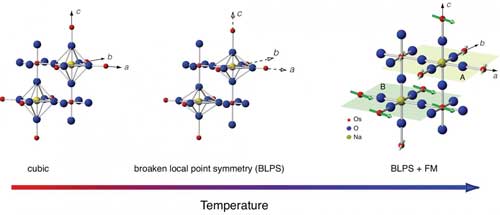 Researchers have shown experimentally how a unique form of magnetism arises in an odd class of materials called Mott insulators.
Feb 9th, 2017
Read more
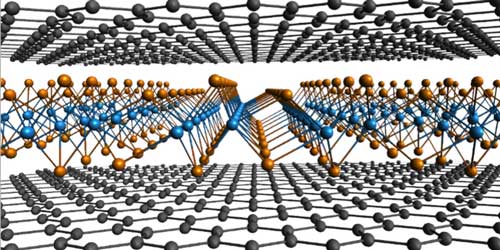 Researchers produced a single, three-atom-thick layer of a unique two-dimensional material called tungsten ditelluride.
Feb 8th, 2017
Read more
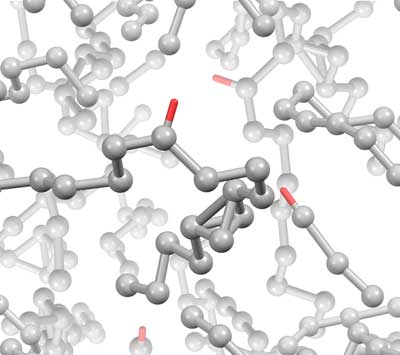 Researchers for the first time have produced micro- and nanostructured magnetic carbon.
Feb 8th, 2017
Read more
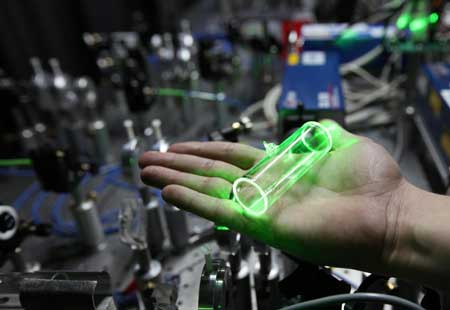 Holographic atomic memory is the first device able to generate single photons on demand in groups of several dozen or more.
Feb 8th, 2017
Read more

 Subscribe to our Nanotechnology News feed