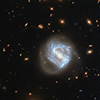
 Astrophysicists have leveraged artificial intelligence to uncover a better way to estimate the mass of colossal clusters of galaxies. The AI discovered that by just adding a simple term to an existing equation, scientists can produce far better mass estimates than they previously had.
Mar 23rd, 2023
Read more
 A proposed way to search for alien life using tiny rocks ejected from other worlds.
Mar 23rd, 2023
Read more
 An international team has used artificial intelligence to analyze the chemical abundances of old stars and found indications that the very first stars in the Universe were born in groups rather than as isolated single stars.
Mar 23rd, 2023
Read more
 Oumuamua, the first known interstellar object found moving through our solar system, may be propelled by hydrogen gas produced by ice reserves according to international researchers.
Mar 22nd, 2023
Read more
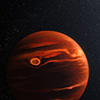 Weather report: Expect scattered, patchy clouds made up of silicates on planet VHS 1256 b.
Mar 22nd, 2023
Read more
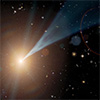 A team of international astronomers have discovered a galaxy that has changed classification due to unique activity within its core. The galaxy, named PBC J2333.9-2343, was previously classified as a radio galaxy, but the new research has revealed otherwise.
Mar 21st, 2023
Read more
 Physicists show that black holes and dense state of gluons - the 'glue' particles that hold nuclear matter together - share common features.
Mar 21st, 2023
Read more
 Researchers from the fields of astrophysics, astrochemistry and biochemistry have now determined in a novel, interdisciplinary collaboration the necessary properties that allow moons around free-floating planets to retain liquid water for a sufficiently long time and thus enable life.
Mar 20th, 2023
Read more
 It's easy to envisage other universes, governed by slightly different laws of physics, in which no intelligent life, nor indeed any kind of organised complex systems, could arise. Should we therefore be surprised that a universe exists in which we were able to emerge?
Mar 15th, 2023
Read more
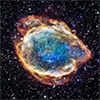 The largest data release of relatively nearby supernovae (colossal explosions of stars), containing three years of data from thePan-STARRS telescope is publicly available via the Young Supernova Experiment (YSE).
Mar 15th, 2023
Read more
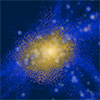 Researchers have found the earliest evidence of parts of the universe that were heated to temperatures more characteristic to the intergalactic gas medium where most atoms reside in the universe today.
Mar 15th, 2023
Read more
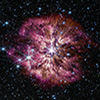 The rare sight of a Wolf-Rayet star - among the most luminous, most massive, and most briefly detectable stars known - was one of the first observations made by the James Webb Space Telescope in June 2022. Webb shows the star, WR 124, in unprecedented detail with its powerful infrared instruments.
Mar 14th, 2023
Read more
 Robotic parts could be assembled into nimble spider bots for exploring lava tubes or heavy-duty elephant bots for transporting solar panels.
Mar 14th, 2023
Read more
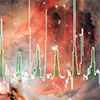 Scientists detected radio recombination lines of ions heavier than helium for the first time. These lines were assigned to carbon and/or oxygen ions.
Mar 6th, 2023
Read more
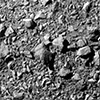 Astronomers offer new insight into how deflection missions can protect the planet from future Earth-bound asteroids and comets.
Mar 1st, 2023
Read more
 Astronomers spectroscopically surveyed more than 1000 bright stars that potentially host exoplanets.
Feb 28th, 2023
Read more
 New observations have revealed a spiral pattern in a disk of material around a still forming, but already high-mass, baby star. This indicates that there is gravitational instability in the disk, which has important implications for how high-mass stars form.
Feb 28th, 2023
Read more
 While analyzing data from the first images of a well-known early galaxy taken by the James Webb Space Telescope, astronomers discovered a companion galaxy previously hidden behind the light of the foreground galaxy - one that surprisingly seems to have already hosted multiple generations of stars despite its young age, estimated at 1.4 billion years old.
Feb 27th, 2023
Read more

 Subscribe to our Space Exploration News feed