

Cleantech and Environmental News – Latest Headlines
 Subscribe to our Cleantech News feed
Tesla gives up patents to 'open source movement'
Electric carmaker Tesla announced on Thursday it was giving up its patents to 'the open source movement' to help spur electric vehicle technology.
June 12, 2014 Read more
A new solution for storing hydrogen fuel for alternative energy
Scientists report a new solid, stable material that can pack in a large amount of hydrogen that can be used as a fuel.
June 12, 2014 Read more

Greening our cities
Solutions to halving energy consumption, costs and greenhouse emissions in cities may be on the horizon, as long as partners find suitable ways to cooperate.
June 11, 2014 Read more
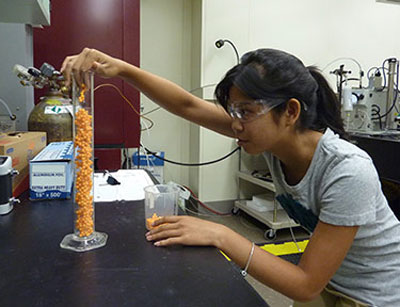
Snowballs to soot: The clumping density of many things seems to be a standard
Particles of soot floating through the air and comets hurtling through space have at least one thing in common: 0.36. That, reports a research group, is the measure of how dense they will get under normal conditions, and it's a value that seems to be constant for similar aggregates across an impressively wide size range from nanometers to tens of meters.
June 11, 2014 Read more
NREL finds up to 6-cent per kilowatt-hour extra value with concentrated solar power
Concentrating Solar Power projects would add additional value of 5 or 6 cents per kilowatt hour to utility-scale solar energy in California where 33 percent renewables will be mandated in six years, a new report by the Energy Department's National Renewable Energy Laboratory has found.
June 10, 2014 Read more
Sopcawind, a multidisciplinary tool for designing wind farms (w/video)
The SOPCAWIND tool is a piece of software that facilitates the design of wind farms, bearing in mind not only the aspects of energy productivity but also the possible impact the wind farm may have on the environment, radars or other telecommunications systems in the vicinity. It also assesses acoustic noise, the effect of shadow on nearby housing, and applies criteria for heritage protection or clearance from transport networks and certain facilities.
June 10, 2014 Read more
How much fertilizer is too much for the climate?
Helping farmers around the globe apply more-precise amounts of nitrogen-based fertilizer can help combat climate change. In a new study, researchers provide an improved prediction of nitrogen fertilizer's contribution to greenhouse gas emissions from agricultural fields.
June 9, 2014 Read more
Ireland's AMBER Institute announces energy research collaboration with Bell Labs
The two organisations will seek ways to make data networks in communications and ICT more energy efficient in the face of exponential growth in traffic.
June 6, 2014 Read more
Scientists provide new insights into biomass breakdown
Scientists at the University of York are playing a key role in the quest for a better understanding of how a recently discovered family of enzymes can degrade hard-to-digest biomass into its constituent sugars.
June 6, 2014 Read more
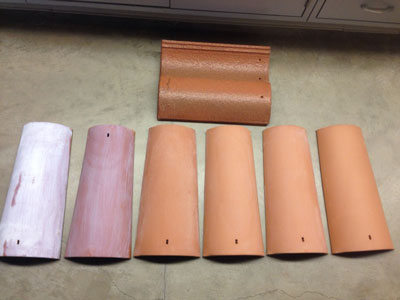
Cleaning the air with roof tiles
Researchers created a roof tile coating that when applied to an average-sized residential roof breaks down the same amount of smog-causing nitrogen oxides per year as a car driven 11,000 miles.
June 4, 2014 Read more
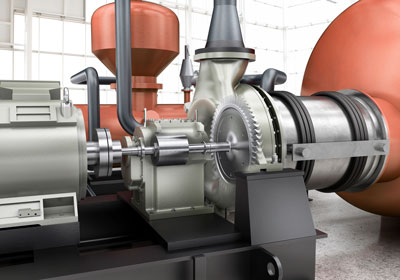
Clean power from waste heat
Siemens has developed a technology to use waste heat, which previously had gone unused, to generate electricity. The solution employs silicone oils, which have a lower enthalpy of vaporization than water, and is needed because waste heat produced in industrial plants or power stations often does not have enough energy to drive a turbine with steam.
June 4, 2014 Read more
Current trends for forest biomass for energy in the EU
This study aims to clarify possibilities and implications of woody bioenergy supply for the natural environment and climate for the EU by 2020 and 2030.
June 4, 2014 Read more
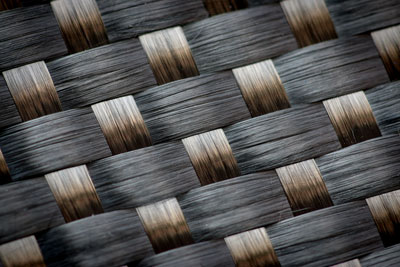
What if the body of the car itself was a battery?
What if the body of the car itself was a battery? Researchers at Sweden's KTH Royal Institute of Technology have found a promising solution with carbon fibre.
June 4, 2014 Read more
Lithium sulfur: A battery revolution on the cheap?
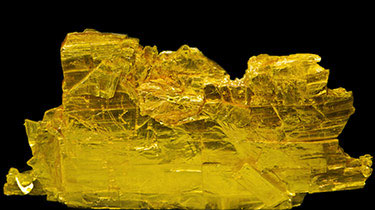
Researchers have combined common ingredients to make an inexpensive, high-capacity lithium-sulfur battery that can be cycled hundreds of times without losing function.
June 4, 2014 Read more
Climate engineering can't erase climate change
Tinkering with climate change through climate engineering isn't going to help us get around what we have to do says a new report authored by researchers at six universities. After evaluating a range of possible climate-altering approaches to dissipating greenhouse gases and reducing warming, the interdisciplinary team concluded there's no way around it. We have to reduce the amount of carbon being released into the atmosphere.
June 3, 2014 Read more
Toxic computer waste in the developing world
As the developing world continues to develop, standards of living and access to technology increases. Unfortunately, as personal computers, laptops and mobile phones become increasingly common so the problem of recycling and disposal of such devices when they become technologically obsolete rises too.
June 3, 2014 Read more
Cyborg plants as environmental biosensors (w/video)
By using the same sort of technology that measures brain and muscle movements in human beings, Dr Vitaletti and his team think we can better understand what is happening in the environment, and in plant-life as a result. He calls this blend of living tissue and digital sensors 'cyborg plants'.
June 3, 2014 Read more
Controlling thermal conductivities can improve energy storage
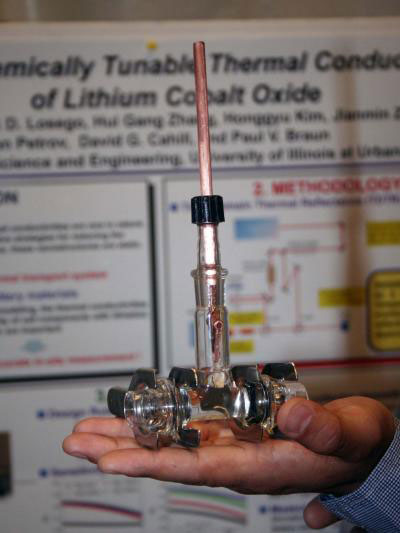
For the first time, researchers have experimentally shown that the thermal conductivity of lithium cobalt oxide, an important material for electrochemical energy storage, can be reversibly electrochemically modulated over a considerable range.
June 3, 2014 Read more