

Cleantech and Environmental News – Latest Headlines
 Subscribe to our Cleantech News feed

Scientists use 'wired microbes' to generate electricity from sewage
Interdisciplinary team creates 'microbial battery' driven by naturally occurring bacteria that evolved to produce electricity as they digest organic material.
September 17, 2013 Read more

Sandia Labs harnessing the sun's energy with tiny particles
Engineers at Sandia National Laboratories, along with partner institutions Georgia Tech, Bucknell University, King Saud University and the German Aerospace Center (DLR), are using a falling particle receiver to more efficiently convert the sun's energy to electricity in large-scale, concentrating solar power plants.
September 16, 2013 Read more

Environmentally friendly cement is stronger than ordinary cement
New research from the Niels Bohr Institute shows that cement made with waste ash from sugar production is stronger than ordinary cement. The research shows that the ash helps to bind water in the cement so that it is stronger, can withstand higher pressure and crumbles less. At the same time, energy is saved and pollution from cement production is reduced.
September 16, 2013 Read more

Scientists create new hydrogen fuel safety app
Engineers and scientists at the U.S. Department of Energy's Pacific Northwest National Laboratory have developed an app that focuses on hydrogen safety.
September 13, 2013 Read more
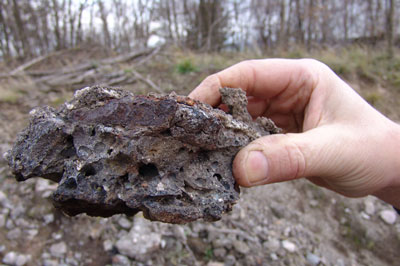
Reusable materials from metallurgical plant dumps reduces imports of raw material
Metallurgical plant dumps harbor important raw materials such as metals and minerals that often have not been used yet. The reason: comprehensive data regarding the exact reusable material potential of these dumps is missing. To close this gap, Fraunhofer UMSICHT is coordinating the REStrateGIS project. The objective is to develop a multi-scalar resource register for metallurgical plant dumps.
September 13, 2013 Read more
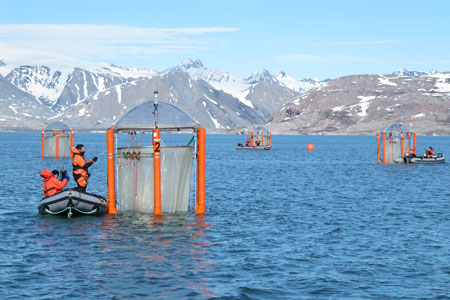
Tiny plankton could have big impact on climate
As the climate changes and oceans' acidity increases, tiny plankton seem set to succeed. An international team of marine scientists has found that the smallest plankton groups thrive under elevated carbon dioxide levels. This could cause an imbalance in the food web as well as decrease ocean CO2 uptake, an important regulator of global climate.
September 13, 2013 Read more

SustainX starts world's first grid-scale isotherm compressed air energy storage system
Multi-year development culminates in grid connection and startup of breakthrough bulk energy storage technology.
September 13, 2013 Read more

Electric transport with wind in its sails
Researchers are aiming to remove the electric car market's biggest problem - the fear of not reaching the next charging station.
September 13, 2013 Read more
Unprecedented rate and scale of ocean acidification found in the Arctic
Acidification of the Arctic Ocean is occurring faster than projected according to new findings. The increase in rate is being blamed on rapidly melting sea ice, a process that may have important consequences for health of the Arctic ecosystem.
September 12, 2013 Read more
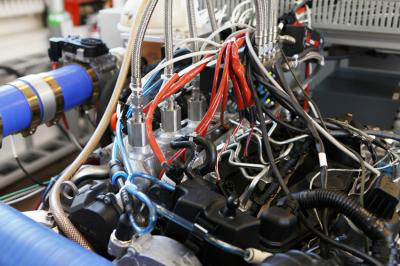
Innovative hybrid diesel engine developed to run on natural gas (w/video)
Researchers at ETH Zurich have developed an internal combustion engine that emits less than half the CO2 compared to a regular engine without compromising performance. This corresponds to fuel consumption of less than 2.4l per 100km. This natural gas-diesel hybrid engine is based on a system of sophisticated control engineering.
September 12, 2013 Read more

Cilantro, that favorite salsa ingredient, purifies drinking water
Reporting on research done by undergraduate students at a community college, Douglas Schauer, Ph.D., said that cilantro - also known as coriander and Thai parsley - shows promise as a much-needed new 'biosorbent' for removing lead and other potentially toxic heavy metals from contaminated water.
September 12, 2013 Read more
Soitec launches new solar-energy module featuring a record 31.8% efficiency
Soitec's new module, which is already in industrial volume production, has the highest efficiency of any commercial product available for multi-megawatt installations.
September 12, 2013 Read more
Delaying climate policy would triple short-term mitigation costs
Further delay in the implementation of comprehensive international climate policies could substantially increase the short-term costs of climate change mitigation. Global economic growth would be cut back by up to 7 percent within the first decade after climate policy implementation if the current international stalemate is continued until 2030 - compared to 2 percent if a climate agreement is reached by 2015 already, a study to be published next Tuesday by scientists of the Potsdam Institute for Climate Impact Research (PIK) shows.
September 12, 2013 Read more
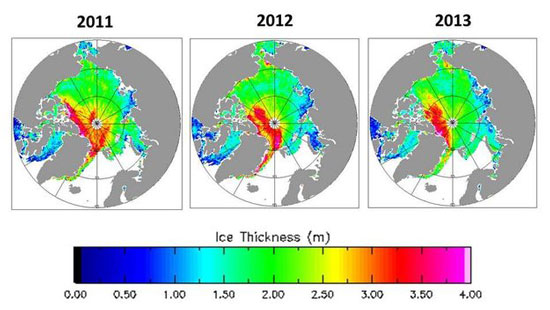
CryoSat mission shows that Artic sea-ice continues to thin (w/video)
Offering new insights into our fragile polar regions, ESA's CryoSat mission has provided three consecutive years of Arctic sea-ice thickness measurements, which show that the ice continues to thin.
September 12, 2013 Read more
Development banks finance record amount in clean energy
Clean energy financing by the world's development banks increased 19% last year to break through the $100bn-a-year barrier for the first time. The top three banks were Germany's KfW, China Development Bank and the Brazilian Development Bank (BNDES).
September 11, 2013 Read more

How the newest diesel engines emit very little greenhouse gas nitrous oxide
The newest catalytic converters in diesel engines blast away a pollutant from combustion with the help of ammonia. New research shows that the catalyst attacks its target pollutant in an unusual way, providing insight into how to make the best catalytic converters.
September 10, 2013 Read more

Most powerful blade in wind industry finished
Vestas has produced the first prototype 80 meter blade for the V164-8.0 MW - the world's most powerful offshore wind turbine - at the R+D centre on the Isle of Wight, UK. The blade will now undergo an extensive testing regime to ensure total reliability.
September 10, 2013 Read more
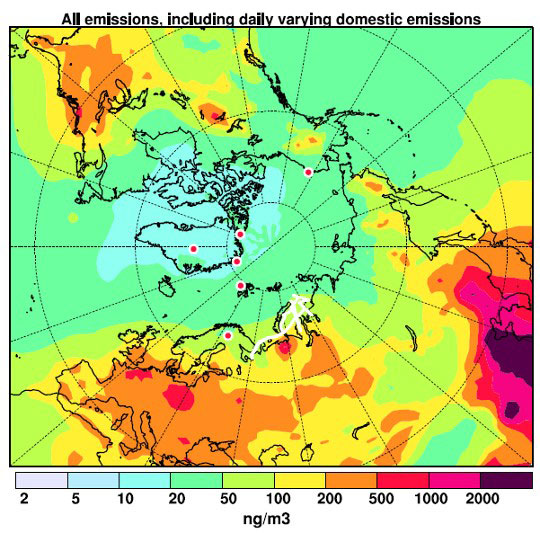
Gas flaring and household stoves speed Arctic thaw
Gas flaring by the oil industry and smoke from residential burning contributes more black carbon pollution to Arctic than previously thought - potentially speeding the melting of Arctic sea ice and contributing to the fast rate of warming in the region.
September 10, 2013 Read more