

Nanotechnology News – Latest Headlines
Phase-change memory solid state device points to future of computer storage
A University of California, San Diego faculty-student team is about to demonstrate a first-of-its kind, phase-change memory solid state storage device that provides performance thousands of times faster than a conventional hard drive and up to seven times faster than current state-of-the-art solid-state drives.
June 2, 2011 Read more
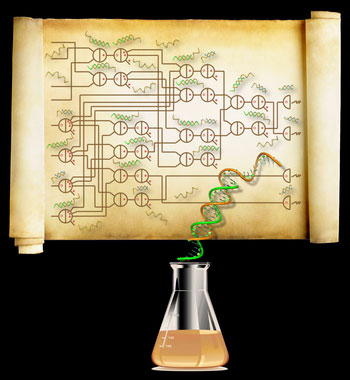
Researchers build the most complex biochemical circuit ever created from scratch
In many ways, life is like a computer. An organism's genome is the software that tells the cellular and molecular machinery - the hardware - what to do. But instead of electronic circuitry, life relies on biochemical circuitry - complex networks of reactions and pathways that enable organisms to function. Now, researchers at the California Institute of Technology (Caltech) have built the most complex biochemical circuit ever created from scratch, made with DNA-based devices in a test tube that are analogous to the electronic transistors on a computer chip.
June 2, 2011 Read more
Hard or soft: New nanomaterial switches properties at the touch of a button
A world premiere: a material which changes its strength, virtually at the touch of a button. This transformation can be achieved in a matter of seconds through changes in the electron structure of a material; thus hard and brittle matter, for example, can become soft and malleable.
June 2, 2011 Read more
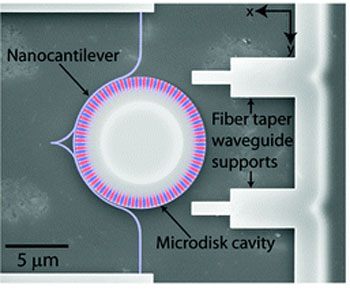
Researchers develop integrated nanomechanical sensor for atomic force microscopy
Researchers have fabricated a novel integrated sensor combining a nanomechanical cantilever probe with a high sensitivity nanophotonic interferometer on a single silicon chip.
June 2, 2011 Read more
Cancer Nanotechnology: an overview of INBT's 2011 symposium talks
Seven speakers presented at Johns Hopkins Institute for NanoBioTechnology's fifth annual nano-bio symposium, held May 13, 2011. This year's topic - cancer nanotechnology - was approached from a variety of angles.
June 2, 2011 Read more
Chemists shed light on sun's role mixing up molecules
University of Sydney scientists have discovered a startling new mechanism where sunlight can rearrange the atoms of molecules to form new chemical substances.
June 2, 2011 Read more
Microcantilevers are masters of measurement
Rice University researcher Sibani Lisa Biswal and Kai-Wei Liu, a graduate student in Biswal's lab who recently earned her doctorate at Rice, used microcantilevers as ultrasensitive measuring devices to study how lipid bilayers interact with surfactants.
June 2, 2011 Read more
New method for creating single-crystal arrays of graphene
New method marks advance in efforts to develop a replacement for silicon in high-performance electronics.
June 2, 2011 Read more
Engineer tests improved 'Icephobic' micro- and nanooatings
A $320,000 National Science Foundation grant to investigate what is called "icophobic behavior" by select surfaces.
June 2, 2011 Read more
Hart oder weich - beides zugleich: Neues Nanomaterial wechselt Eigenschaft nach Bedarf
Das hat die Welt noch nicht gesehen: Ein Werkstoff, der quasi auf Knopfdruck seine Festigkeit aendert. Dieser Wandel in Sekundenschnelle kann durch Aenderungen der Elektronenstruktur eines Materials erreicht und so zum Beispiel aus einem festen und sproeden Stoff ein weicher und formbarer werden. Den entscheidenden Impuls liefern elektrische Signale, Clou dieser sensationellen Entwicklung.
June 2, 2011 Read more
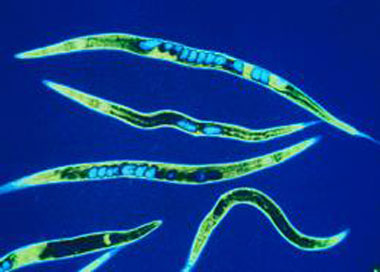
Microscopic worms could help open up travel into deep space
A space flight by millions of microscopic worms could help us overcome the numerous threats posed to human health by space travel. The Caenorhabditis elegans (C. elegans) have also given experts an insight into how to block muscle degradation in the sick and elderly.
June 2, 2011 Read more
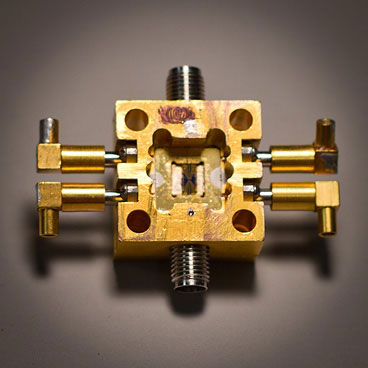
Long live the qubit!
The power of quantum computers depends on keeping them in a fragile quantum-mechanical state - which researchers have found a new way to extend.
June 2, 2011 Read more
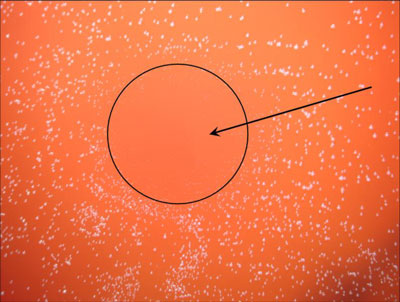
An alternative to antibiotics
Antibiotics are among the greatest achievements of medical science. But lately the former multi-purpose weapon fails in the battle against infectious diseases. Bacteria are increasingly developing resistance to antibiotics. Researchers have now found a therapeutic equivalent which could replace penicillin and related phamaceuticals.
June 2, 2011 Read more
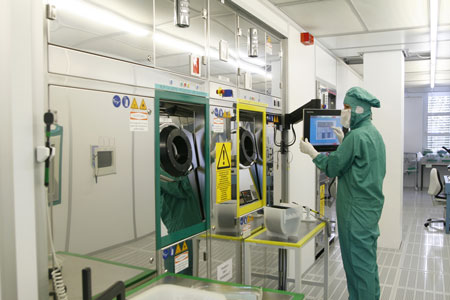
The fine art of etching
They see more than the naked eye and could make traffic safer: miniaturized thermal imaging sensors. But they are difficult to manufacture on a commercial scale. Researchers have now developed a new system. On it, special micro-electromechanical systems can be produced - with the correct etching technique.
June 2, 2011 Read more
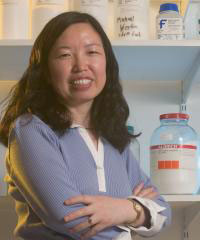
Virginia Tech's Kathy Lu receives Humboldt Foundation research award
Peizhen Kathy Lu, associate professor of materials science and engineering at Virginia Tech, is a 2011 recipient of the Friedrich Wilhelm Bessel Research Award presented by the Alexander von Humboldt Foundation.
June 1, 2011 Read more
Pittcon 2012 announces annual call for papers
The Pittcon Program Committee is pleased to announce the Call for Papers for Pittcon 2012, which will be held March 11-15, 2012, at the Orange County Convention Center in Orlando, Florida.
June 1, 2011 Read more
 Subscribe to our Nanotechnology News feed