

Nanotechnology News – Latest Headlines
Trapping a rainbow: Researchers slow broadband light waves with nanoplasmonic structures
A team of electrical engineers and chemists at Lehigh University have experimentally verified the "rainbow" trapping effect, demonstrating that plasmonic structures can slow down light waves over a broad range of wavelengths.
March 14, 2011 Read more
New desalination process using carbon nanotubes
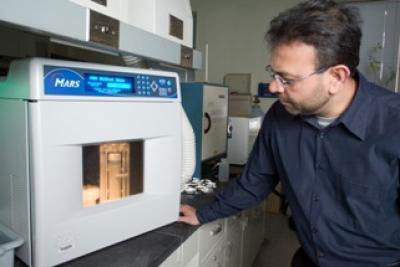
A faster, better and cheaper desalination process enhanced by carbon nanotubes has been developed by NJIT Professor Somenath Mitra. The process creates a unique new architecture for the membrane distillation process by immobilizing carbon nanotubes in the membrane pores. Conventional approaches to desalination are thermal distillation and reverse osmosis.
March 14, 2011 Read more
Nanorods could greatly improve visual display of information
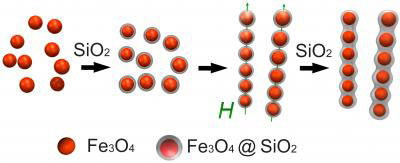
Chemists at the University of California, Riverside have developed tiny, nanoscale-size rods of iron oxide particles in the lab that respond to an external magnetic field in a way that could dramatically improve how visual information is displayed in the future.
March 14, 2011 Read more
New techniques set stage for ultra-fast nanophotography
Processes at the atomic level are not only miniscule; they are often extremely fast and therefore, difficult to capture in action. But now, German scientists together with U.S. colleagues present techniques that take us a good step closer to producing an 'atomic movie'.
March 14, 2011 Read more
Cameras out of the salt shaker
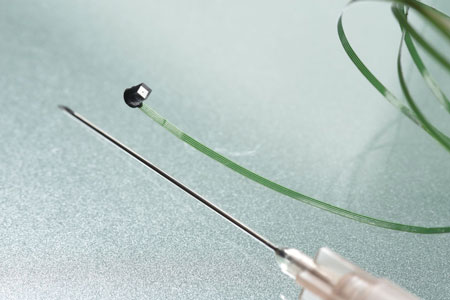
There have been gloves and shavers for one-off use for a long time. In future, there will also be disposable endoscopes for minimally invasive operations on the human body. A new microcamera is what makes it possible. It is as large as a grain of salt, supplies razor-sharp pictures and can be manufactured very inexpensively.
March 14, 2011 Read more
Magnetic vortices on nanostructured thin-film for data storage
Magnetic vortices show promise as data storage structures, however the vortex formation process imposes a lower limit on the element's size. Here, a technique is presented, which application increases the probability of nucleating of magnetic vortices in sub-micrometer sized soft magnetic thin film elements.
March 14, 2011 Read more
Research project aims at achieving a fundamental understanding of heat transfer at interfaces
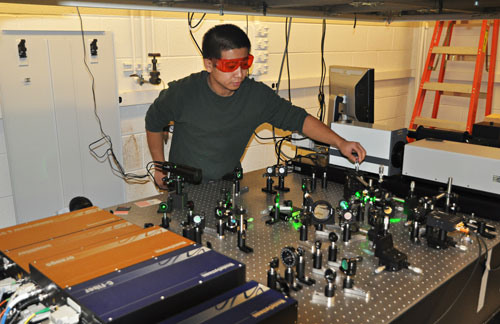
A two-year-old Air Force Office of Scientific Research Multidisciplinary University Research Initiative effort involving the University of Michigan, Stanford University, Brown University, and the University of California at Santa Cruz is making great strides in achieving a fundamental understanding of heat transfer at interfaces.
March 14, 2011 Read more
Snapshots of laser driven electrons
Physicists of the Laboratory of Attosecond Physics at the Max Planck Institute of Quantum Optics succeeded in the first real-time observation of laser produced electron plasma waves and electron bunches accelerated by them.
March 14, 2011 Read more
Book illuminates life, legacy of physicist Feynman
From childhood sweetheart to quantum electrodynamics, the life and scientific contributions of the legendary Richard Feynman, a physicist of mythic hero status, are given a new and stimulating perspective in a book by Arizona State University professor Lawrence M. Krauss.
March 14, 2011 Read more
Scientists achieve breakthrough in nanocomposite for high-capacity hydrogen storage
Scientists with the Lawrence Berkeley National Laboratory (Berkeley Lab) have designed a new composite material for hydrogen storage consisting of nanoparticles of magnesium metal sprinkled through a matrix of polymethyl methacrylate, a polymer related to Plexiglas. This pliable nanocomposite rapidly absorbs and releases hydrogen at modest temperatures without oxidizing the metal after cycling - a major breakthrough in materials design for hydrogen storage, batteries and fuel cells.
March 13, 2011 Read more
New nanomaterials for regenerative medicine is to be discussed at Pharmaceutical Nanotechnology conference
SMi is proud to present their Pharmaceutical Nanotechnology: Applications + Commercialisation conference, taking place in London on 29th and 30th June, 2011.
March 12, 2011 Read more
Irish nanotechnology centre reports significant milestones for 2009-2010 period
The Science Foundation Ireland funded centre CRANN has launched its public report for 2009-2010. The report highlights that CRANN, a Trinity College Dublin Institute founded in 2004, has continued to establish itself as a national and international force in nanoscience and nanotechnology research and collaborative industry engagement.
March 12, 2011 Read more
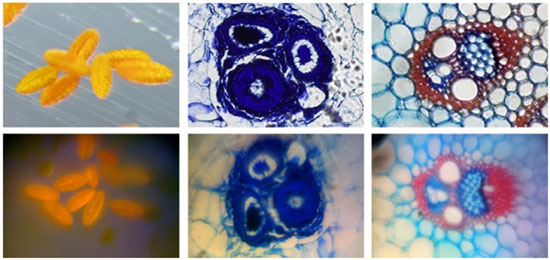
Turn your smartphone into a biomedical device
In a new, free-access paper in PloS one, researchers propose to take advantage of the rapid improvements in commercial CMOS sensors and microscopic optics driven by the cell-phone industry to develop two common biomedical devices, namely a microscope and spectrometer, that are available as simple and inexpensive add-ons to a commercial cell phone camera like Apple's iPhone.
March 11, 2011 Read more
Nanoscale whiskers from sea creatures could grow human muscle tissue
Minute whiskers of nanoscale dimensions taken from sea creatures could hold the key to creating working human muscle tissue, University of Manchester researchers have discovered.
March 11, 2011 Read more
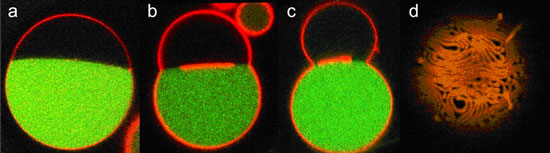
Osmotic forces play a role in nanotube formation in cells
When unfolding a tent for the first time, you may wonder how the huge tarpaulin fits into a bag the size of a football. Biologists wonder about something similar: when a cell divides, the surface area of the cell membrane grows. Moreover, when molecules are brought from one organelle to another inside the cell, membrane-enclosed transport vesicles are formed. So that membranes can be made available quickly, they are stored within the cells in the form of nanotubes, tubular membrane structures - similarly to a tarpaulin that has been folded together.
March 11, 2011 Read more
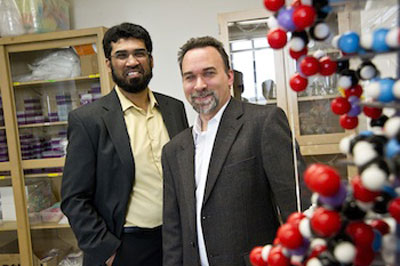
Researchers use nanotechnology in gene detection to show disposition to certain cancers
Researchers at The University of Texas at Arlington are perfecting a system to detect a gene mutation implicated in 90 percent of pancreatic cancers and often in lung cancer by running tiny amounts of blood over nanomaterials.
March 11, 2011 Read more
 Subscribe to our Nanotechnology News feed