

Nanotechnology News – Latest Headlines
Hollow gold nanospheres show promise for biomedical and other applications
A new metal nanostructure developed by researchers at the University of California, Santa Cruz, has already shown promise in cancer therapy studies and could be used for chemical and biological sensors and other applications as well.
March 22, 2009 Read more
UW Materials Research Science and Engineering Center joins second annual NanoDays
The University of Wisconsin-Madison Materials Research Science and Engineering Center (MRSEC) on Nanostructured Interfaces presents NanoDays 2009, part of the second annual nationwide festival of educational programs about nanoscale science and engineering and its potential impact on the future.
March 21, 2009 Read more
Nanotechnology increases efficiency of sun-to-fuel process
Researchers at the University of Arkansas at Little Rock said they have developed a process involving nanostructure that shows great promise in boosting the efficiency of titania photoanodes used to convert solar energy into hydrogen in fuel cells.
March 20, 2009 Read more
MIND research center poised to meet demands of emerging nanotechnology
The nanoelectronics industry has embarked on a quest for fundamental changes that will transform virtually everything it touches, according to Dr. Robert Doering, senior fellow and research strategy manager at Texas Instruments, one of the world's leading semiconductor companies.
March 20, 2009 Read more
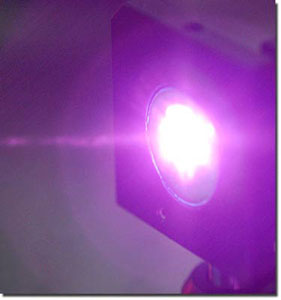
Shifting sound to light may lead to better computer chips
By reversing a process that converts electrical signals into sounds heard out of a cell phone, researchers may have a new tool to enhance the way computer chips, LEDs and transistors are built.
March 20, 2009 Read more
Water acts as catalyst in explosives
The most abundant material on Earth exhibits some unusual chemical properties when placed under extreme conditions.
March 20, 2009 Read more
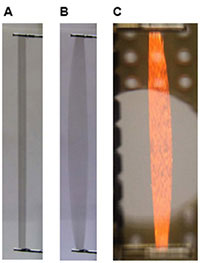
Carbon nanotube artificial muscles can operate at extreme temperatures
Researchers at the UT Dallas Alan G. MacDiarmid NanoTech Institute have demonstrated a fundamentally new type of artificial muscle, which can operate at extreme temperatures where no other artificial muscle can be used.
March 20, 2009 Read more
Carbon nanotubes are superior to metals for electronics
Researchers have been performing quantum mechanics calculations, which prove that in carbon nanotubes, higher current density does not lead to electromigration and thermomigration; it also produces just one percent of the heat produced by traditional metals, such as copper.
March 20, 2009 Read more
Motor proteins may be vehicles for drug delivery
Specialized motor proteins that transport cargo within cells could be turned into nanoscale machines for drug delivery, according to bioengineers.
March 20, 2009 Read more
Nanophotonics exhibition in Moscow
A high-tech Photonics exhibition, which is to be held at Expocentre (Moscow) on April 20 - 23, 2009, will include a special section that will be completely devoted to laser nanotechnologies, which are considerably transforming the image of modern electronics.
March 20, 2009 Read more
EU project to toughen up electronics for use in extreme environments
Dubbed MORGAN ('Materials for robust gallium nitride'), the three-year, EUR 9.2 million project is financed under the Nanosciences, nanotechnologies, materials and new production technologies Theme of the Seventh Framework Programme.
March 19, 2009 Read more
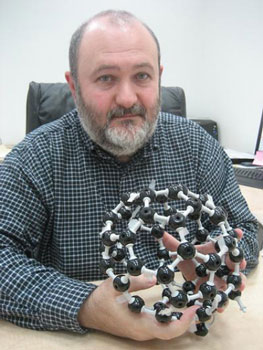
Fullerene to treat multiple sclerosis
In partnership with a group of Prof. Howard Weiner from Brigham and Women's Hospital at Harvard Medical School, Dr. Michael Gozin from TAU's School of Chemistry is attempting to create the next generation MS drug based on a delivery platform of "buckyballs.
March 19, 2009 Read more

High-speed microwave signal mixer made from a tunnel-junction transistor laser
Scientists at the University of Illinois have successfully demonstrated a microwave signal mixer made from a tunnel-junction transistor laser. Development of the device brings researchers a big step closer to higher speed electronics and higher performance electrical and optical integrated circuits.
March 19, 2009 Read more
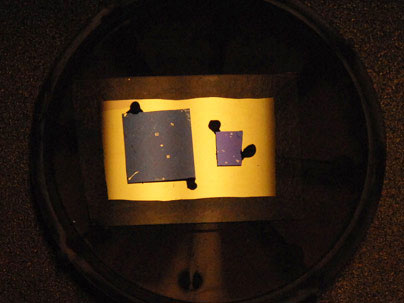
Graphene may solve communications speed limit
New research findings at MIT could lead to microchips that operate at much higher speeds than is possible with today's standard silicon chips, leading to cell phones and other communications systems that can transmit data much faster.
March 19, 2009 Read more

Maryland NanoCenter improves energy storage options
Researchers at the Maryland NanoCenter at the University of Maryland, College Park, have developed new systems for storing electrical energy derived from alternative sources that are, in some cases, 10 times more efficient than what is commercially available.
March 19, 2009 Read more
The power of nanotechnology super batteries
Next-generation batteries based on novel nanotechnology devices developed at the University of Maryland could take as little as 10 years to appear in cars. These modern batteries will be capable of storing enough electricity to eliminate the need for hybrid cars, which rely on gasoline as a backup.
March 19, 2009 Read more
 Subscribe to our Nanotechnology News feed