

Nanotechnology News – Latest Headlines
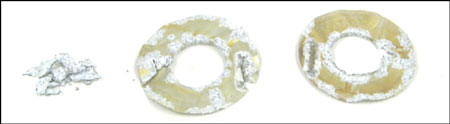
Thinner, less toxic, corrosion-resistant nanocoatings for metals
Scientists at the U.S. Department of Energy's Brookhaven National Laboratory have developed a method for coating metal surfaces with an ultrathin film containing nanoparticles which renders the metal resistant to corrosion and eliminates the use of toxic chromium for this purpose.
March 25, 2009 Read more
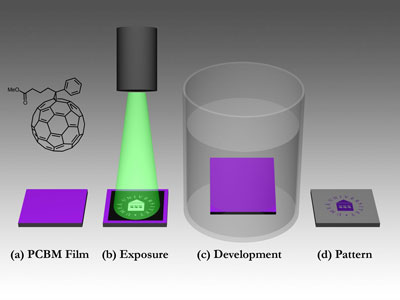
New way to produce electronic components can lead to cheap and flexible electronics
Flexible display screens and cheap solar cells can become a reality through research and development in organic electronics. Physicists at Umea University in Sweden have now developed a new and simple method for producing cheap electronic components.
March 25, 2009 Read more
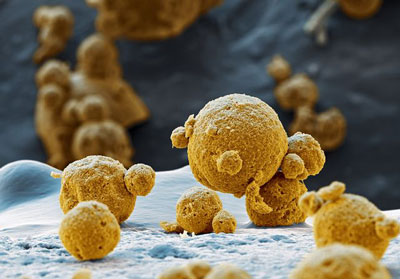
Podcast explains how chemistry improves the efficiency of lithium ion batteries
In this podcast from BASF you will learn how chemistry improves the efficiency of lithium ion batteries.
March 25, 2009 Read more
Review of federal strategy for nanotechnology-related environmental, health, and safety research
A new book from the National Research Council finds serious weaknesses in the government's plan for research on the potential health and environmental risks posed by nanomaterials, which are increasingly being used in consumer goods and industry.
March 25, 2009 Read more
Landmark report addresses regulatory oversight for emerging synthetic biology
The safety of early applications of synthetic biology may be adequately addressed by the existing regulatory framework for biotechnology, especially in contained laboratories and manufacturing facilities. But further advances in this emerging field are likely to create significant challenges for U.S. government oversight.
March 24, 2009 Read more
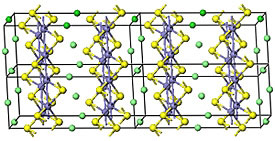
Magnetism governs properties of iron-based superconductors
Though a year has passed since the discovery of a new family of high-temperature superconductors, a viable explanation for the iron-based materials? unusual properties remains elusive. But a team of scientists working at the National Institute of Standards and Technology may be close to the answer.
March 24, 2009 Read more
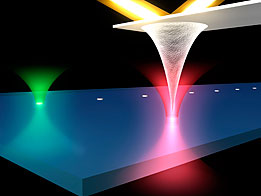
Making a point: Picoscale stability in a room-temperature AFM
Forget dancing angels, a research team has shown how to detect and monitor the tiny amount of light reflected directly off the needle point of an atomic force microscope probe, and in so doing has demonstrated a 100-fold improvement in the stability of the instrument?s measurements under ambient conditions.
March 24, 2009 Read more
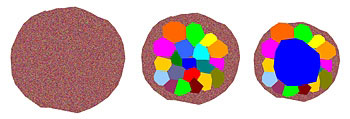
Flatland physics probes mysteries of superfluidity
If physicists lived in Flatland - the fictional two-dimensional world invented by Edwin Abbott in his 1884 novel - some of their quantum physics experiments would turn out differently (not just thinner) than those in our world. The distinction has taken another step from speculative fiction to real-world puzzle with a paper from the Joint Quantum Institute reporting on a Flatland arrangement of ultracold gas atoms.
March 24, 2009 Read more
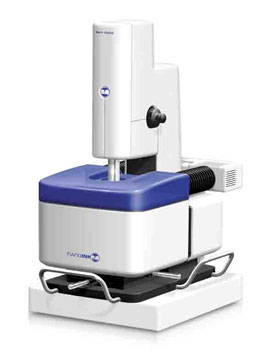
Self-cleaning, low-reflectivity treatment boosts efficiency for photovoltaic cells
Using two different types of chemical etching to create features at both the micron and nanometer size scales, researchers at the Georgia Institute of Technology have developed a surface treatment that boosts the light absorption of silicon photovoltaic cells in two complementary ways.
March 24, 2009 Read more
One form of titanium dioxide performs better than other in the reaction spotlight
Not all titanium dioxide is equal when it comes to splitting water with visible light.
March 24, 2009 Read more
Carboranes - a new family of self-assembled-monolayer materials
U.S. scientists say they have found a way to control the geometry and stability of a new family of self-assembled-monolayer materials called carboranes.
March 24, 2009 Read more
Researchers create nanocarbon catalysts for use in hydrogen storage materials
A team of scientists from Virginia Commonwealth University, the University of Uppsala in Sweden, and the Savannah River National Laboratory have identified that carbon nanostructures can be used as catalysts to store and release hydrogen, a finding that may point researchers toward developing the right material for hydrogen storage for use in cars.
March 24, 2009 Read more
Nanocarbons: from physicochemical and biological properties to biomedical and environmental effects
The European Science Foundation has announced the conference Nanocarbons: from physicochemical and biological properties to biomedical and environmental effects, from September 8-13, 2009 in Acquafredda di Maratea, Italy.
March 24, 2009 Read more
High-tech Europe's 2020 - EU future technologies conference in Prague
What will our technological future look like? Where are the boundaries of science being pushed to reveal new possibilities for tomorrow? Find out at the Science beyond Fiction Conference!
March 24, 2009 Read more
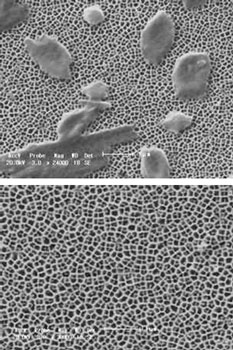
Buckyballs could keep water systems flowing
Spherical carbon molecules known as buckyballs may be able to keep the nation's water pipes clear in the same way clot-busting drugs prevent arteries from clogging up.
March 24, 2009 Read more
TechConnect World announces The CancerNano 2009 Symposium May 3-7
Hundreds of sessions, led by the industry's preeminent thought leaders, will examine nanotechnology's role in cancer prevention, diagnosis and treatment.
March 24, 2009 Read more
 Subscribe to our Nanotechnology News feed