

Space Exploration News – Latest Headlines
 Subscribe to our Space Exploration News feed
New findings on makeup of universe may spawn research
New areas of extragalactic study may emerge from research by astrophysicists using data from the Chandra Space Telescope to conclude that baryons making up all visible matter - once thought to be missing from clusters - are present in the expected ratios in large, luminous clusters.
July 16, 2013 Read more
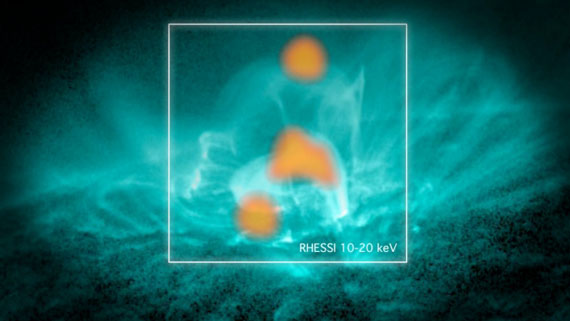
The heart of space weather observed in action (w/video)
Two NASA spacecraft have provided the most comprehensive movie ever of a mysterious process at the heart of all explosions on the sun: magnetic reconnection. Magnetic reconnection happens when magnetic field lines come together, break apart and then exchange partners, snapping into new positions and releasing a jolt of magnetic energy. This process lies at the heart of giant explosions on the sun, such as solar flares and coronal mass ejections, which can fling radiation and particles across the solar system.
July 15, 2013 Read more
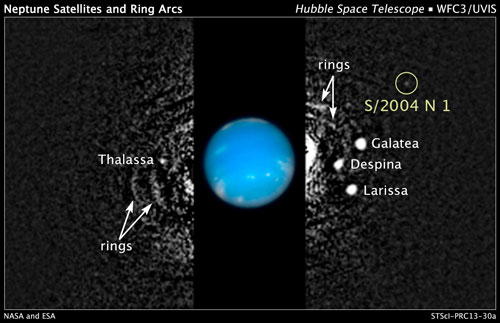
Hubble finds new Neptune moon
NASA's Hubble Space Telescope has discovered a new moon orbiting the distant blue-green planet Neptune. This brings the number of known satellites circling the giant planet to 14.
July 15, 2013 Read more
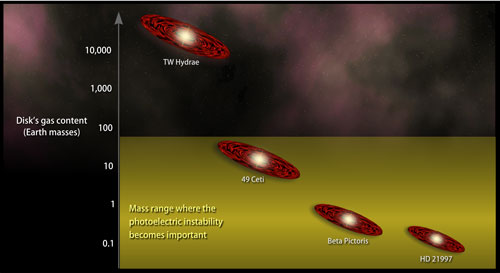
Study shows disks don't need planets to make patterns (w/video)
A new study by NASA scientists sounds a cautionary note in interpreting rings and spiral arms as signposts for new planets. Thanks to interactions between gas and dust, a debris disk may, under the right conditions, produce narrow rings on its own, no planets needed.
July 14, 2013 Read more
Solar tsunami used to measure Sun's magnetic field
A solar tsunami observed by NASA's Solar Dynamics Observatory and the Japanese Hinode spacecraft has been used to provide the first accurate estimates of the Sun's magnetic field.
July 11, 2013 Read more
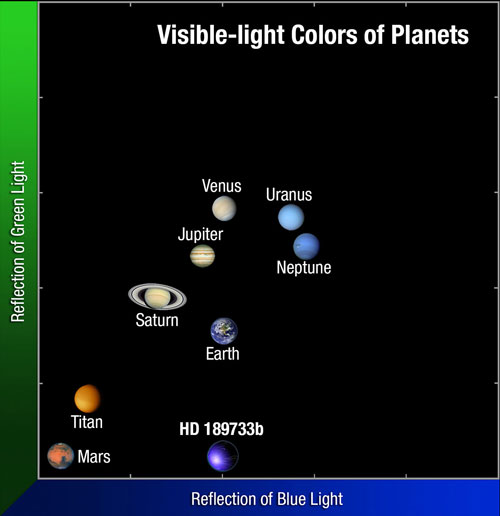
Hubble finds a true blue planet
Astronomers using NASA's Hubble Space Telescope have deduced the actual visible-light color of a planet orbiting another star 63 light-years away.
July 11, 2013 Read more
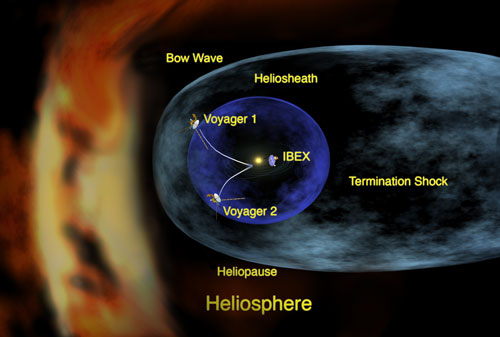
IBEX spacecraft images the heliotail, revealing an unexpected structure
NASA's Interstellar Boundary Explorer (IBEX) spacecraft recently provided the first complete pictures of the solar system's downwind region, revealing a unique and unexpected structure.
July 10, 2013 Read more
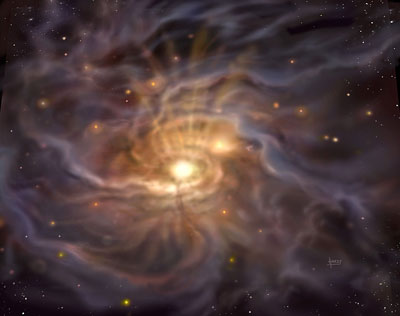
Astronomers witness birth of Milky Way's most massive star
Scientists have observed in unprecedented detail the birth of a massive star within a dark cloud core about 10,000 light years from Earth.
July 10, 2013 Read more
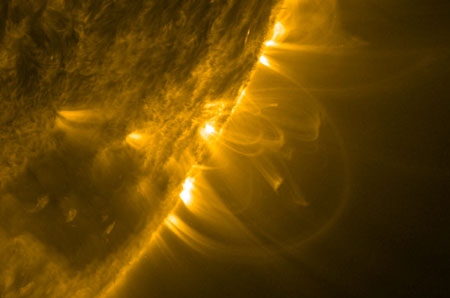
Sun's loops are displaying an optical illusion
To understand how the corona is heated, some astronomers study coronal loops. These structures are shaped like an upside-down U and show where magnetic field lines are funneling solar gases or plasma. Our best photos of the sun suggest that these loops are a constant width, like strands of rope. However, new work shows that this is an optical illusion; the loops are actually tapered, wider at the top and narrower at the ends. This finding has important implications for coronal heating.
July 9, 2013 Read more
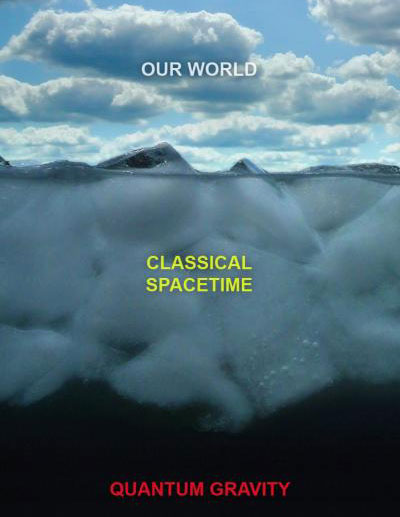
Space-time is not the same for everyone
Before the Big Bang, space-time as we know it did not exist. So how was it born? The process of creating normal space-time from an earlier state dominated by quantum gravity has been studied for years by theorists at the Faculty of Physics, University of Warsaw. Recent analyses suggest a surprising conclusion: not all elementary particles are subject to the same space-time.
July 9, 2013 Read more
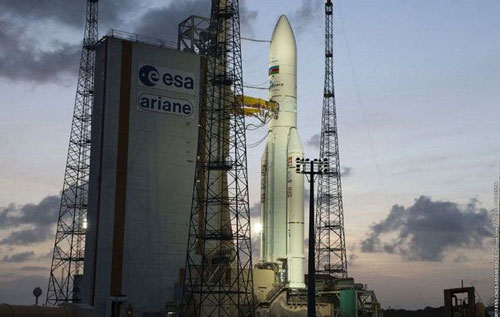
European Space Agency approves new rocket Ariane 6
The European Space Agency has approved the final design for a next-generation rocket, Ariane 6, aimed at maintaining Europe's grip on the fast-changing market for satellite launches.
July 9, 2013 Read more
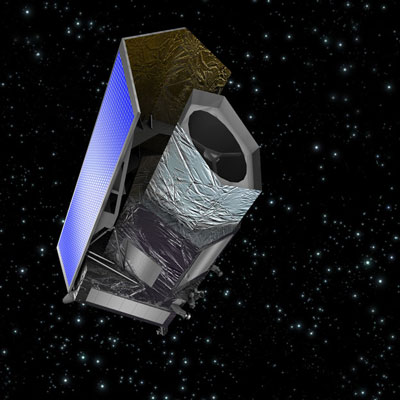
Construction for ESA's Euclid mission kicks off
The construction of ESA's Euclid space mission to explore the 'dark Universe' will be led by Italy's Thales Alenia Space as prime contractor, beginning the full industrial phase of the project.
July 9, 2013 Read more
Detecting DNA in space
Researchers, in a step toward analyzing Mars for signs of life, find that gene-sequencing chip can survive space radiation.
July 9, 2013 Read more
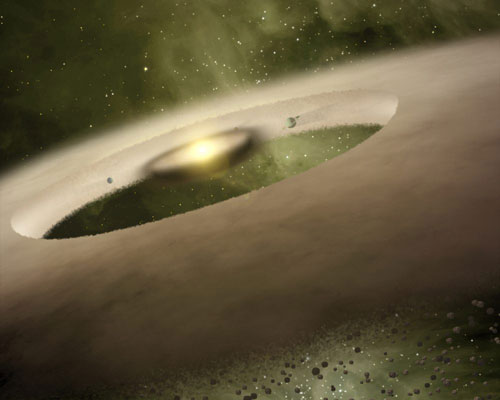
Cosmochemist discovers potential solution to meteorite mystery
Chondrules may have formed from high-pressure collisions in early solar system.
July 8, 2013 Read more
Cosmic dust belts without dust
Six newly discovered debris disks not only are extremely cold, they also are lacking the characteristic dust which is always released when the rocks collide.
July 8, 2013 Read more
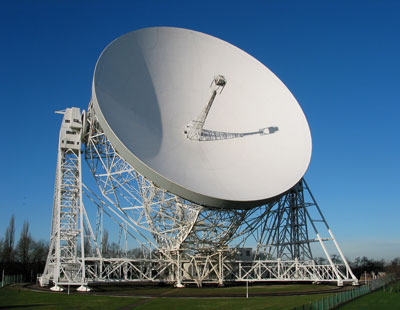
UK launches Search for ExtraTerrestrial Intelligence Research Network
A network has been launched to promote academic research in the UK relating to the Search for ExtraTerrestrial Intelligence (SETI). The UK SETI Research Network (UKSRN) brings together academics from 11 institutions across the country.
July 5, 2013 Read more
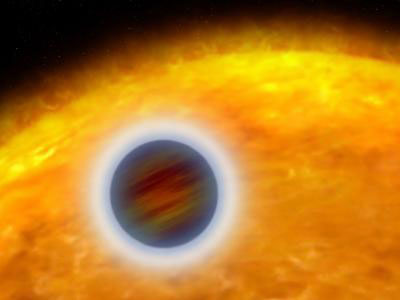
Hubble Telescope reveals variation between hot extrasolar planet atmospheres
First results from the analysis of eight 'hot Jupiter' exoplanets suggest that winds and clouds play an important role in the atmospheric make up of these exotic planets.
July 5, 2013 Read more
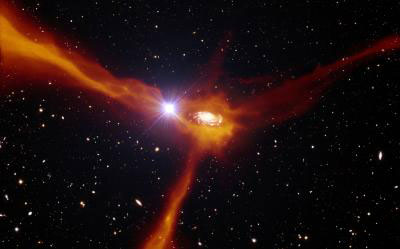
Feeding galaxy caught in distant searchlight by international research team
An international group of astronomers has spotted a distant galaxy hungrily snacking on nearby gas. The gas is seen to fall inward toward the galaxy, creating a flow that both fuels star formation and drives the galaxy's rotation. This is the best direct observational evidence so far supporting the theory that galaxies pull in and devour nearby material in order to grow and form stars.
July 5, 2013 Read more