

Space Exploration News – Latest Headlines
 Subscribe to our Space Exploration News feed
NASA to launch equipment for 3D manufacturing in space
In preparation for a future where parts and tools can be printed on demand in space, NASA and Made in Space Inc. have joined to launch equipment for the first 3-D microgravity printing experiment to the International Space Station.
May 31, 2013 Read more
Researchers discover a general picture of solar storm Sun-to-Earth propagation
With data from NASA's twin spacecraft, STEREO, researchers developed a novel technique, called geometric triangulation, which can determine the trajectory and velocity of coronal mass ejections continuously when they travel in interplanetary space.
May 31, 2013 Read more
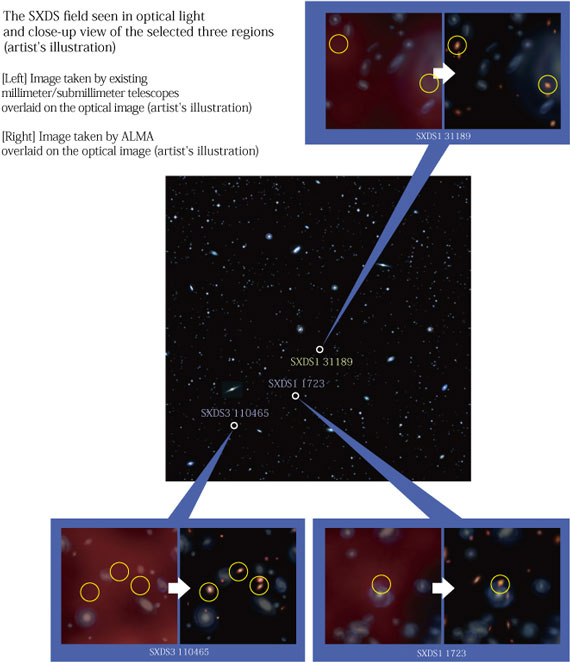
'Population census' of galaxies buried in dust
Conventional research on distant galaxies have been carried out mainly with visible light and near infrared light. However, it is possible that many galaxies in the universe have been overlooked as much of that radiation is largely absorbed by cosmic dust.
May 31, 2013 Read more
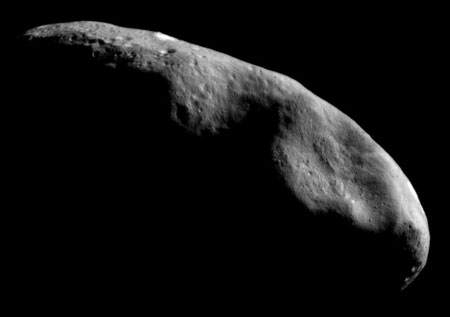
Asteroids provide sustainable resource, study finds
The prospects of a robotic manufacturing base operating off Earth is not as far-fetched as it used to be according to a study published by a team of NASA researchers led by a Kennedy Space Center physicist.
May 30, 2013 Read more
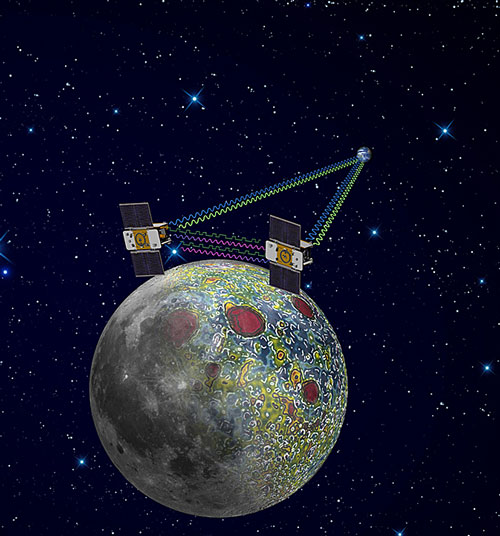
An answer to a lunar mystery: Why is the moon's gravity so uneven?
Simulations based on GRAIL data show how gravitational anomalies developed early in lunar history.
May 30, 2013 Read more
Radiation exposure on journey to Mars could exceed NASA's career limit for astronauts
Measurements taken by NASA's Mars Science Laboratory (MSL) mission as it delivered the Curiosity rover to Mars in 2012 are providing NASA the information it needs to design systems to protect human explorers from radiation exposure on deep-space expeditions in the future.
May 30, 2013 Read more
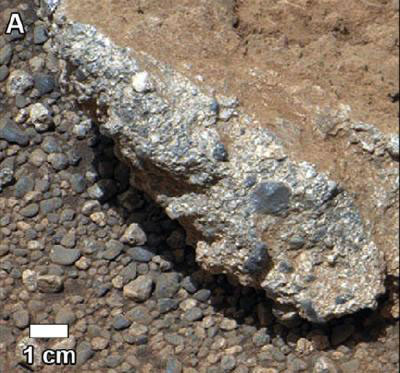
Mars curiosity rover provides strong evidence for flowing water
Rocks analyzed by NASA's Mars Curiosity Rover team provide solid evidence that Mars had rivers or streams.
May 30, 2013 Read more
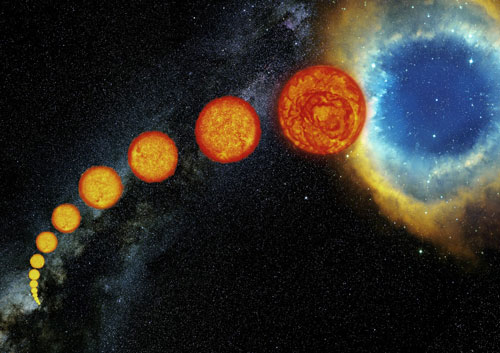
A stellar mid-life crisis: why do some cluster stars die early?
It was written in the stars all along, but we've just found out: a whopping 70% of stars in a widely-studied cluster die before reaching old age which, for stars, is the most productive stage of their lives.
May 30, 2013 Read more
Researchers use weightlessness of space to design better materials for Earth
Researchers from Northeastern University are among the many scientists helping NASA use the weightlessness of space to design stronger materials here on Earth.
May 29, 2013 Read more
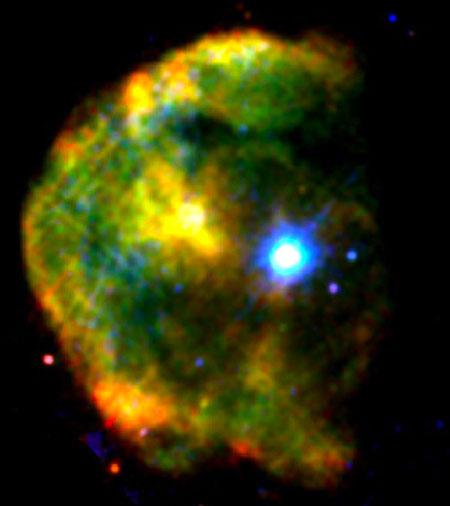
A new kind of cosmic glitch
The physics behind some of the most extraordinary stellar objects in the Universe just became even more puzzling. A group of astronomers using NASA's Swift satellite have discovered a new kind of glitch in the cosmos, specifically in the rotation of a neutron star.
May 29, 2013 Read more
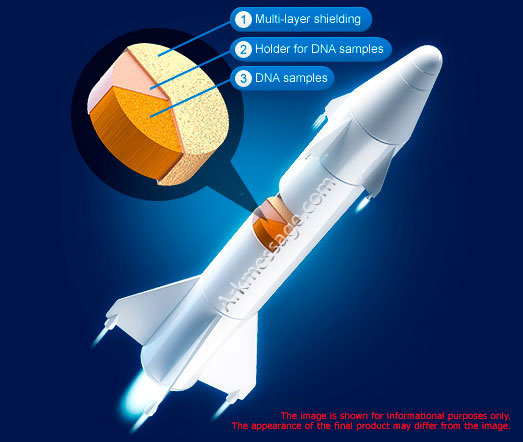
The DNA ARK project wants to send your DNA to extraterrestrial civilizations
The DNA Ark Project is organised to preserve the human heritage even in case of a universal catastrophe. The DNA Ark is a holder containing DNA samples, as well as graphic and written messages to extraterrestrial civilizations on the hull.
May 29, 2013 Read more
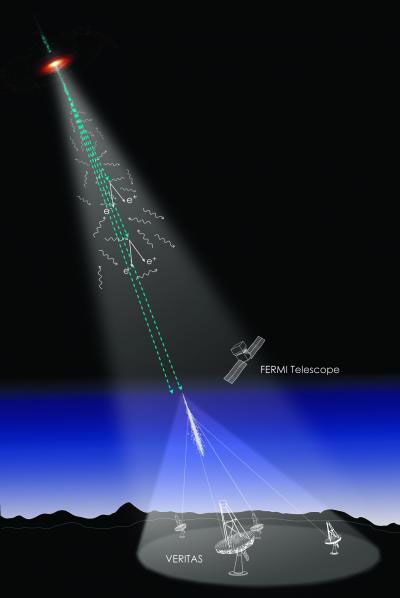
Measuring all the light in the universe since the Big Bang
How much light has been emitted by all galaxies since the cosmos began? After all, almost every photon from ultraviolet to far infrared wavelengths ever radiated by all galaxies that ever existed throughout cosmic history is still speeding through the Universe today. If we could carefully measure the number and energy (wavelength) of all those photons we might learn important secrets about the nature and evolution of the Universe.
May 24, 2013 Read more
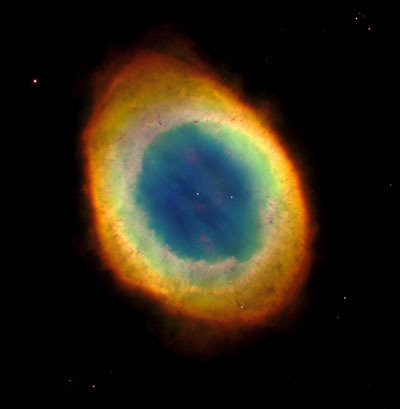
Hubble reveals the Ring Nebula's true shape
The Ring Nebula's distinctive shape makes it a popular illustration for astronomy books. But new observations by NASA's Hubble Space Telescope of the glowing gas shroud around an old, dying, sun-like star reveal a new twist.
May 23, 2013 Read more
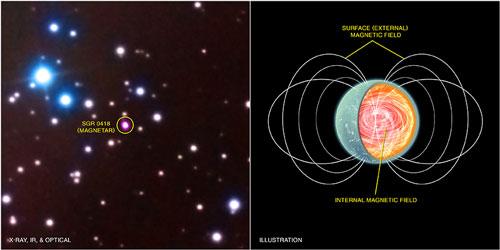
A hidden population of exotic neutron stars
Magnetars - the dense remains of dead stars that erupt sporadically with bursts of high-energy radiation - are some of the most extreme objects known in the Universe. A major campaign using NASA's Chandra X-ray Observatory and several other satellites shows magnetars may be more diverse and common - than previously thought.
May 23, 2013 Read more
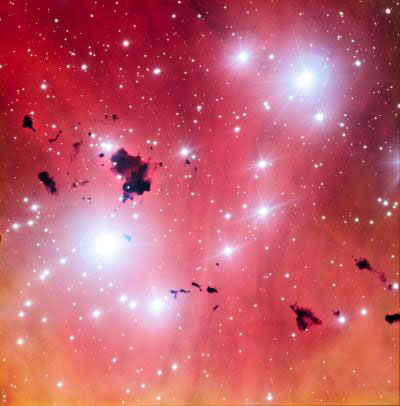
ESO's Very Large Telescope celebrates 15 years of success
With this new view of a spectacular stellar nursery ESO is celebrating 15 years of the Very Large Telescope - the world's most advanced optical instrument.
May 23, 2013 Read more
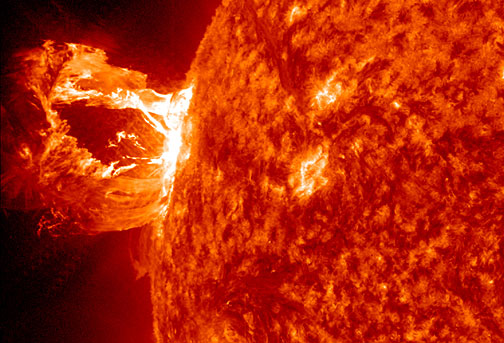
Researchers explain magnetic field misbehavior in solar flares
When a solar flare erupts from the sun, its magnetic fields sometime break a widely accepted rule of physics. Why? Now we know.
May 22, 2013 Read more
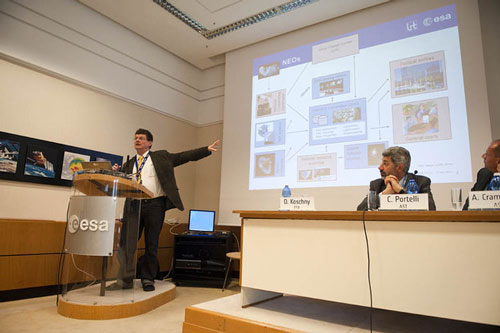
Watching for hazards: ESA opens asteroid center
ESA today inaugurated a new hub that will strengthen Europe's contribution to the global hunt for asteroids and other hazardous natural objects that may strike Earth.
May 22, 2013 Read more
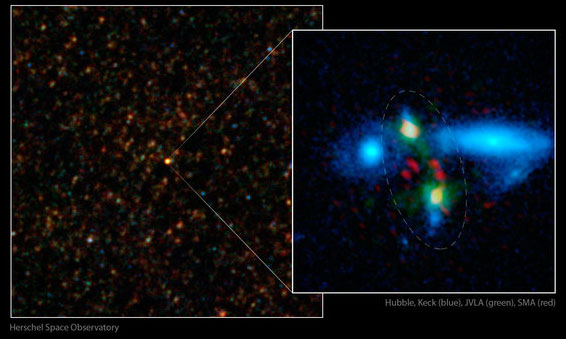
Rare merger reveals secrets of galaxy evolution
A rare encounter between two gas-rich galaxies spotted by ESA's Herschel space observatory indicates a solution to an outstanding problem: how did massive, passive galaxies form in the early Universe?
May 22, 2013 Read more