Reference terms from Wikipedia, the free encyclopedia
 

Electrical engineering

Electrical engineering is an engineering discipline concerned with the study, design and application of equipment, devices and systems which use electricity, electronics, and electromagnetism. It emerged as an identifiable occupation in the latter half of the 19th century after commercialization of the electric telegraph, the telephone, and electrical power generation, distribution and use.

Electrical engineering is now divided into a wide range of different fields, including computer engineering, systems engineering, power engineering, telecommunications, radio-frequency engineering, signal processing, instrumentation, photovoltaic cells, electronics, and optics and photonics. Many of these disciplines overlap with other engineering branches, spanning a huge number of specializations including hardware engineering, power electronics, electromagnetics and waves, microwave engineering, nanotechnology, electrochemistry, renewable energies, mechatronics/control, and electrical materials science.

Electrical engineers typically hold a degree in electrical engineering or electronic engineering. Practising engineers may have professional certification and be members of a professional body or an international standards organization. These include the International Electrotechnical Commission (IEC), the Institute of Electrical and Electronics Engineers (IEEE) and the Institution of Engineering and Technology (IET) (formerly the IEE).

Electrical engineers work in a very wide range of industries and the skills required are likewise variable. These range from circuit theory to the management skills of a project manager. The tools and equipment that an individual engineer may need are similarly variable, ranging from a simple voltmeter to sophisticated design and manufacturing software.

 
Note:   The above text is excerpted from the Wikipedia article Electrical engineering, which has been released under the GNU Free Documentation License.
 

Check out these latest Nanowerk News:

 

Creating complex light patterns using a two-century-old light phenomenon

Researchers used the Poisson spot effect to create stable optical skyrmions with a laser and disc, simplifying studies for photonics and computing applications.

Graphene catalyst design could cut the cost of hydrogen fuel cells

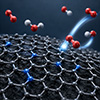
Simulations pinpoint an electronic sweet spot where nitrogen-doped graphene can drive oxygen reactions more efficiently than platinum.

Cleanroom-free process brings electronic skin to curved robots and wearables

A UV laser and 3D printer create large flexible tactile sensor arrays directly on target surfaces, simplifying fabrication and rapid prototyping.

Hollow silicon nanotubes boost waste-heat conversion without rare metals

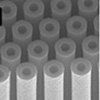
A nanoscale tube-in-wall structure localizes heat-carrying vibrations, sharply lowering thermal conductivity while staying compatible with chip manufacturing.

Raman microscopy gets a roadmap for biology and medicine

Bioengineers bridge the gap between spectroscopy developers and biologists through a systematic guide explaining modern Raman imaging technologies, probes, and applications.

Interlocking 3D nano-architecture powers solar desalination for freshwater and irrigation

The material's interlocked, porous structure improves salt resistance, water transport, and vapor generation, enabling stable solar desalination outdoors.

Interface layer drives quantum dot tandem solar cells to record efficiency

Researchers used an ultrathin chlorinated polymer layer to cut charge losses and set efficiency records for all-PbS quantum dot tandem solar cells.

Modular nanorobot targets cancer cells and can be reused for other tasks

Researchers developed a versatile nanorobot with propulsion and payload modules. The two reusable modules autonomously self-assemble and could be used in medicine or industry.

Light color controls a photonic synapse that remembers and forgets

Researchers built a photonic synapse that strengthens or erases memory by light color, using a defect to mimic the brain's balanced learning.

Twisting 2D materials brings quantum light control closer to reality

Researchers show that twisting atom-thin boron nitride layers can tune quantum light emitters, offering new control for quantum technologies.