Reference terms from Wikipedia, the free encyclopedia
 

Food powder

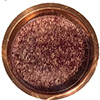
Food powder or powdery food is the most common format of dried solid food material that meets specific quality standards, such as moisture content, particle size, and particular morphology. Common powdery food products include milk powder, tea powder, cocoa powder, coffee powder, soybean flour, wheat flour, and chili powder. Powders are particulate discrete solid particles of size ranging from nanometres to millimetres that generally flow freely when shaken or tilted. The bulk powder properties are the combined effect of particle properties by the conversion of food products in solid state into powdery form for ease of use, processing and keeping quality. Various terms are used to indicate the particulate solids in bulk, such as powder, granules, flour and dust, though all these materials can be treated under powder category. These common terminologies are based on the size or the source of the materials.

The particle size, distribution, shape and surface characteristics and the density of the powders are highly variable and depend on both the characteristics of the raw materials and processing conditions during their formations. These parameters contribute to the functional properties of powders, including flowability, packaging density, ease of handling, dust forming, mixing, compressibility and surface activity.

 
Note:   The above text is excerpted from the Wikipedia article Food powder, which has been released under the GNU Free Documentation License.
 

Check out these latest Nanowerk News:
 

Machine learning points scientists to new superconductors- and possibly thousands more

Machine learning helped identify new superconductors and a process that could speed the discovery of thousands more energy-saving materials.

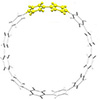
Lithium-doped carbon nanorings promise better optical devices

Simulations show that adding lithium to carbon nanorings greatly boosts nonlinear optical response, guiding designs for future photonic and optical devices.

Roll-to-roll lithography boosts flexible electronics production

A roll-to-roll digital lithography system compensates for substrate distortion in real time, enabling faster mass production of flexible electronics.

Identifying proteins, molecule by molecule

A nanopore detection method can rapidly identify individual proteins, aiding disease research, drug development, and biomarker discovery.

Switching spin states in manganese ions with light

Scientists developed a manganese-based molecular data storage material that works at about -132 C, warmer than earlier iron-based versions.

Shape-shifting surface adds touch to displays

A soft magnetic metasurface can morph into thousands of shapes, sense deformation, and show LED feedback, pointing to tactile interfaces, wearables, soft robotics, and AR/VR.

Plastic bottles could find new life in batteries as graphite

Graphene oxide helps turn PET plastic waste into synthetic graphite for lithium-ion battery anodes, offering a recycling route for battery materials.

Atomic defects tune carbon quantum dots for precise light control

Atomic defects can tune carbon quantum dots across UV to near-infrared light, guiding cleaner design of sensors, bioimaging and solar materials.

Molecules on a surface reach the ultimate quantum limit

Surface-bound molecules reached the Fourier quantum limit, enabling cleaner studies of emitters for quantum tech and nanoscale control.

Glass cells of atoms offer a new path to smarter, cheaper sensors

All-glass atomic vapor cells could enable smaller, cheaper, more stable sensors for navigation, radar and wireless signals without silicon interference.