Reference terms from Wikipedia, the free encyclopedia
 

Observer bias

In research, the observer bias is a form of detection bias originating at a study’s stage of observing or recording information. Different observers may assess subjective criteria differently, and cognitive biases (including preconceptions and assumptions) can affect how a subject is assessed.

For example, being aware of a subject’s disease status may introduce a bias in how the outcome is assessed. Observer bias can also occur when the subject knows they are being examined (sometimes referred as the Hawthorne effect).

When a subject knows they are being observed, it can cause them to act differently from how they normally would, which could interfere with the experiment.

Another example examines police work, where police officers change their behavior based on who is watching.

Blinded experiments are used to limit observer bias. Observer bias can also be avoided or limited by having researchers work independently of one another.

 
Note:   The above text is excerpted from the Wikipedia article Observer bias, which has been released under the GNU Free Documentation License.
 

Check out these latest Nanowerk News:

 

New review explores perovskite solar cells for space, underwater, and other extreme environments

Advances in perovskite solar cell design may enable reliable power generation in some of the world's harshest environments.

AI platform turns catalyst data into a discovery engine

A new AI-ready data framework could accelerate catalyst discovery, supporting cleaner energy and more sustainable chemical processes.

Machine learning points scientists to new superconductors- and possibly thousands more

Machine learning helped identify new superconductors and a process that could speed the discovery of thousands more energy-saving materials.

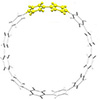
Lithium-doped carbon nanorings promise better optical devices

Simulations show that adding lithium to carbon nanorings greatly boosts nonlinear optical response, guiding designs for future photonic and optical devices.

Roll-to-roll lithography boosts flexible electronics production

A roll-to-roll digital lithography system compensates for substrate distortion in real time, enabling faster mass production of flexible electronics.

Identifying proteins, molecule by molecule

A nanopore detection method can rapidly identify individual proteins, aiding disease research, drug development, and biomarker discovery.

Switching spin states in manganese ions with light

Scientists developed a manganese-based molecular data storage material that works at about -132 C, warmer than earlier iron-based versions.

Shape-shifting surface adds touch to displays

A soft magnetic metasurface can morph into thousands of shapes, sense deformation, and show LED feedback, pointing to tactile interfaces, wearables, soft robotics, and AR/VR.

Plastic bottles could find new life in batteries as graphite

Graphene oxide helps turn PET plastic waste into synthetic graphite for lithium-ion battery anodes, offering a recycling route for battery materials.

Atomic defects tune carbon quantum dots for precise light control

Atomic defects can tune carbon quantum dots across UV to near-infrared light, guiding cleaner design of sensors, bioimaging and solar materials.