

Nanotechnology News – Latest Headlines

Laser4Fun project develops laser-based surface patterning
Using the latest laser techniques, many surfaces of existing products can be accurately treated. The technique can replace the special coatings that are currently applied to existing materials for surface improvement.
September 29, 2015 Read more
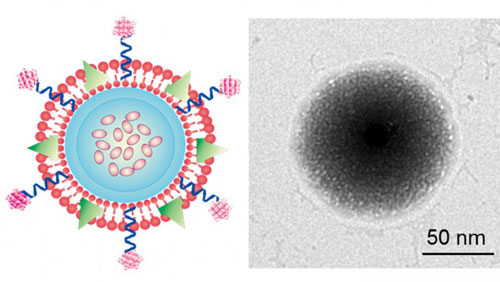
Researchers disguise drugs as platelets to target cancer
Researchers have for the first time developed a technique that coats anticancer drugs in membranes made from a patient's own platelets, allowing the drugs to last longer in the body and attack both primary cancer tumors and the circulating tumor cells that can cause a cancer to metastasize. The work was tested successfully in an animal model.
September 29, 2015 Read more
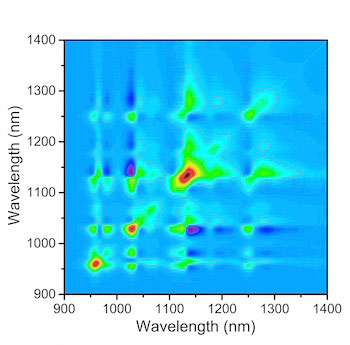
Variance spectroscopy technique advances nanoparticle analysis
In a great example of 'less is more', scientists have developed a powerful method to analyze carbon nanotubes in solution.
September 29, 2015 Read more
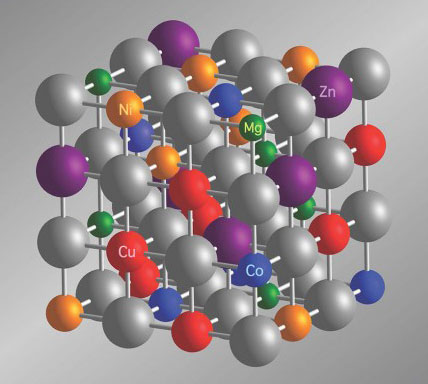
Researchers create first entropy-stabilized complex oxide alloys
Researchers have created the first entropy-stabilized alloy that incorporates oxides - and demonstrated conclusively that the crystalline structure of the material can be determined by disorder at the atomic scale rather than chemical bonding.
September 29, 2015 Read more

A new sunblock that doesn't penetrate the skin
Scientists have developed a new sunblock, made with bioadhesive nanoparticles, that stays on the surface of the skin.
September 29, 2015 Read more
Hopes of improved brain implants with nanowire structures
Neurons thrive and grow in a new type of nanowire material. In time, the results might improve both neural and retinal implants, and reduce the risk of them losing their effectiveness over time, which is currently a problem.
September 29, 2015 Read more
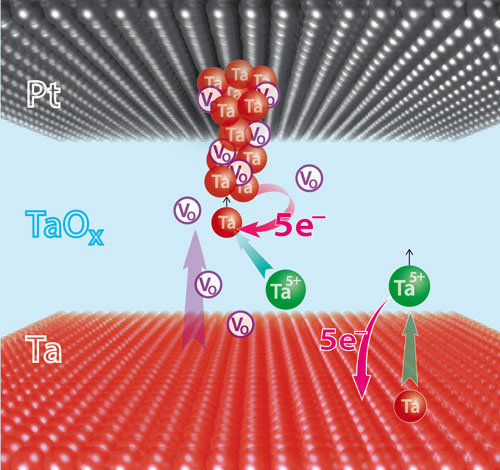
New processes in modern ReRAM memory cells decoded
Researchers discovered an unexpected second switching process in valence change memory (VCM): metal ions also help to form filaments in VCMs.
September 29, 2015 Read more
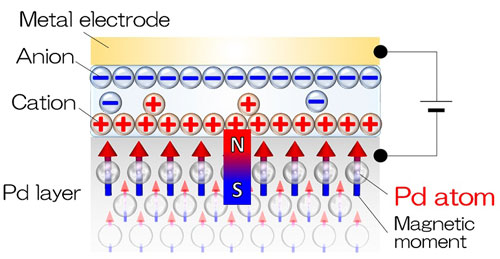
Electric field control of magnetic moment in palladium
This research demonstrates the possibility of electrically inducing magnetism in non-magnetic materials.
September 29, 2015 Read more
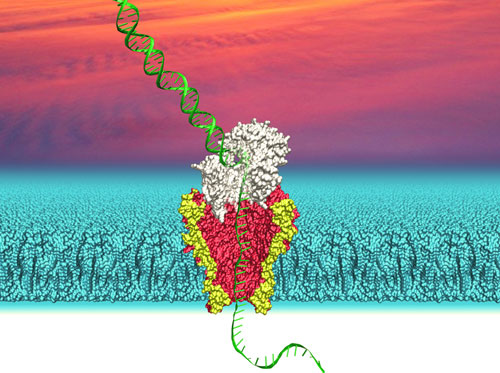
A new single-molecule tool to observe enzymes at work
Scientists have created an innovative tool to directly detect the delicate, single-molecule interactions between DNA and enzymatic proteins. Their approach provides a new platform to view and record these nanoscale interactions in real time.
September 28, 2015 Read more
Carbon nanotube rectenna converts light to DC current (w/video)
Using nanometer-scale components, researchers have demonstrated the first optical rectenna, a device that combines the functions of an antenna and a rectifier diode to convert light directly into DC current.
September 28, 2015 Read more
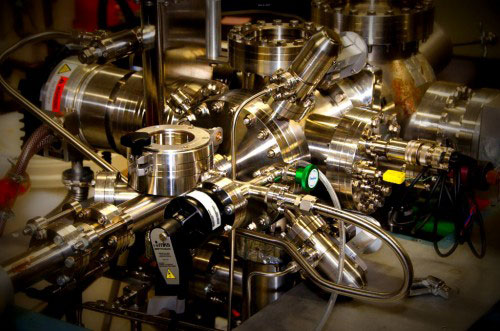
New method for building on an atomic scale
Scientists have pioneered a new way of manipulating several thousand atoms at a time, paving the way for building nanoscale electronic devices more quickly and easily at room temperature.
September 28, 2015 Read more
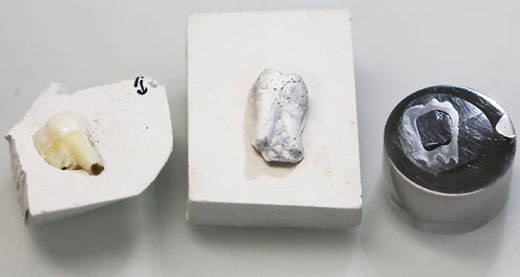
Biomimetic dental prosthesis
Material researchers are developing a procedure that allows them to mimic the complex fine structure of biological composite materials, such as teeth or seashells. They can thus create synthetic materials that are as hard and tough as their natural counterparts.
September 28, 2015 Read more
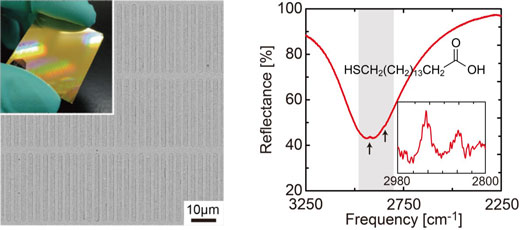
Metamaterial absorbers for infrared inspection technologies
A metamaterial absorber capable of highly sensitive infrared detection enhances the spectroscopy of tiny molecular details.
September 28, 2015 Read more
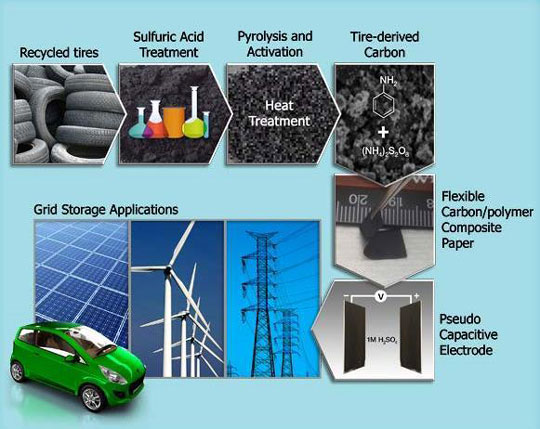
Supercapacitors from scrap tires
Some of the 300 million tires discarded each year in the United States alone could be used in supercapacitors for vehicles and the electric grid using a new technology.
September 25, 2015 Read more

Rsearchers produce first 2D perovskite hybrid sheets
To the growing list of two-dimensional semiconductors, such as graphene, boron nitride, and molybdenum disulfide, whose unique electronic properties make them potential successors to silicon in future devices, you can now add hybrid organic-inorganic perovskites. However, unlike the other contenders, which are covalent semiconductors, these 2D hybrid perovskites are ionic materials, which gives them special properties of their own.
September 25, 2015 Read more
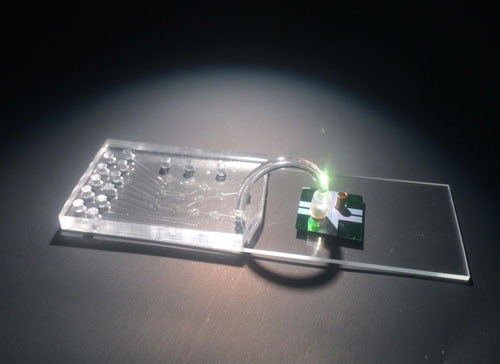
Chip-based technology enables reliable direct detection of Ebola virus
Hybrid device integrates a microfluidic chip for sample preparation and an optofluidic chip for optical detection of individual molecules of viral RNA.
September 25, 2015 Read more
 Subscribe to our Nanotechnology News feed