

Nanotechnology News – Latest Headlines
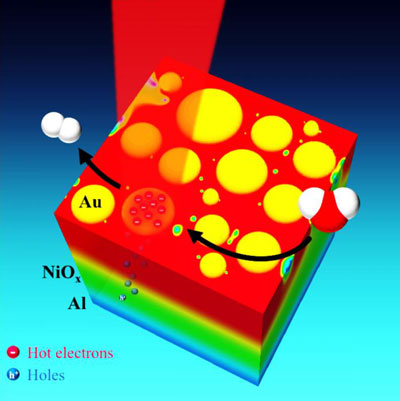
Nanotechnology researchers demo solar water-splitting technology
Process uses light-harvesting nanoparticles, captures energy from 'hot electrons'.
September 4, 2015 Read more
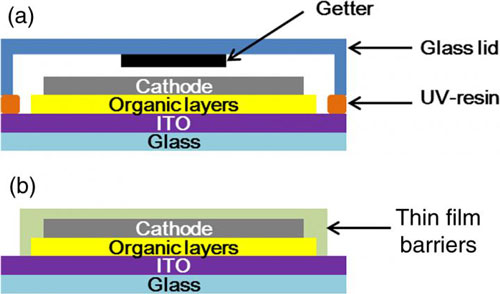
New findings move flexible lighting technology toward commercial feasibility
Researchers report on advances in three key areas - flexible electrodes, flexible encapsulation methods, and flexible substrates - that make commercial use of flexible lighting technology more feasible and closer to implementation.
September 4, 2015 Read more
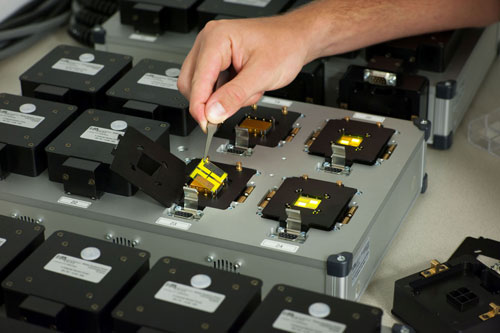
Compostable electronics for printing (w/video)
Researchers develop printed electronics made of compostable natural materials and processes for industrial production.
September 4, 2015 Read more
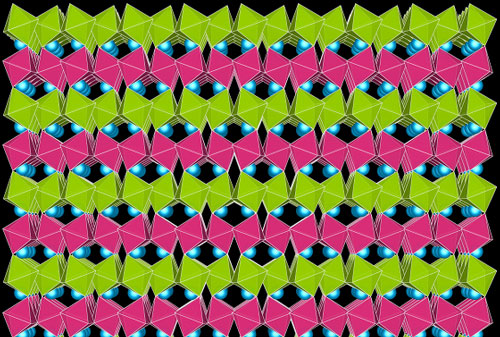
The multiferroic sandwich
Magnetic and ferroelectric metal: the two faces of tomorrow's materials.
September 4, 2015 Read more
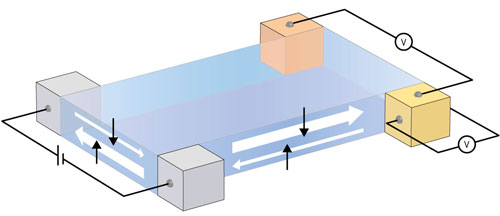
Spins on the edge
The edges of thin films could provide an ideal laboratory for studying the behavior of electron spins.
September 4, 2015 Read more
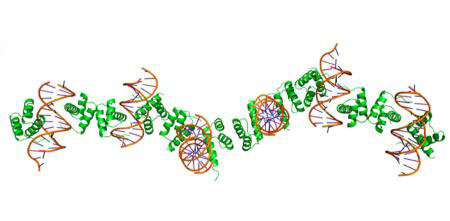
Making nanowires from protein and DNA
Using computational and experimental methods, researchers at Caltech have developed a technique for creating so-called protein-DNA nanowires - a hybrid biomaterial that could have important applications.
September 3, 2015 Read more
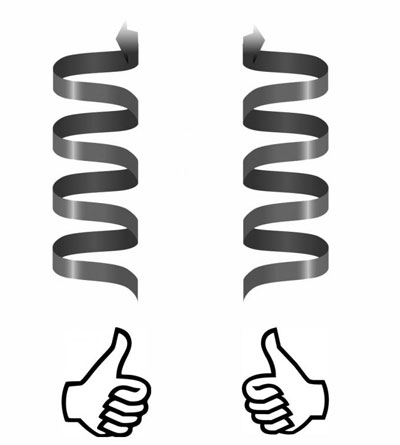
Long-sought chiral anomaly detected in crystalline material
A new study presents evidence for a long-sought phenomenon - first theorized in the 1960s and predicted to be found in crystals in 1983 - called the 'chiral anomaly' in a metallic compound of sodium and bismuth. The additional finding of an increase in conductivity in the material may suggest ways to improve electrical conductance and minimize energy consumption in future electronic devices.
September 3, 2015 Read more
Molecular scientists unexpectedly produce new type of glass
A new could offer a simple way to improve the efficiency of electronic devices such as light-emitting diodes, optical fibers and solar cells. It also could have important theoretical implications for understanding the still surprisingly mysterious materials called glasses.
September 3, 2015 Read more
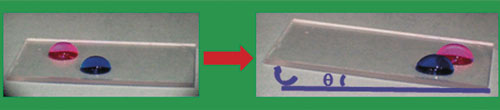
A future without cleaning
Self-cleaning windows, stain-resistant automobile interiors, graffiti-proof walls - there is a long list of things that we wish could have a surface to which dirt wouldn't stick.
September 3, 2015 Read more
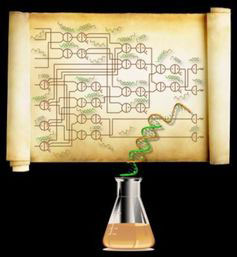
Organic 'computers' made of DNA could process data inside our bodies
We invariably imagine electronic devices to be made from silicon chips, with which computers store and process information as binary digits (zeros and ones) represented by tiny electrical charges. But it need not be this way: among the alternatives to silicon are organic mediums such as DNA.
September 3, 2015 Read more
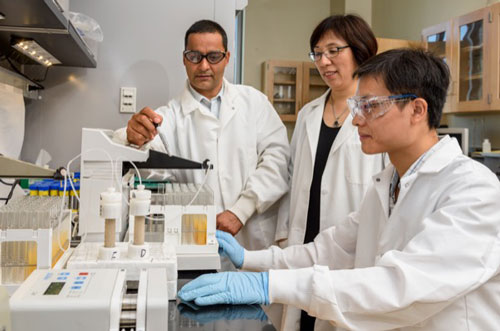
Researchers identify behaviors of nanoparticle that shows promise as nanofertilizer
Rhave discovered unique behaviors of hydroxyapatite nanoparticles (HANPs) that show promise as a phosphorus nanofertilizer and could be used to help slow the release of phosphorous in soils.
September 3, 2015 Read more
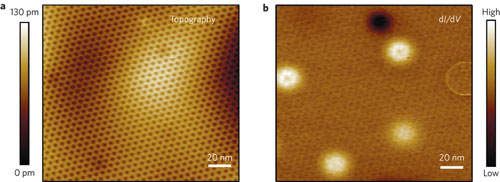
Defects through the looking glass
Researchers characterize individual defects inside a bulk insulator using scanning tunneling microscopy.
September 3, 2015 Read more
Lloyd's Register Foundation awards GBP9 million grants in nanotechnology
The Lloyd's Register Foundation has awarded grants totalling GBP 9 million to three international consortia in the field of nanotechnology. These grants support research and doctoral training that will support the Foundation's aims to advance engineering-related education and research and support work that enhances safety of life at sea, on land and in the air.
September 3, 2015 Read more
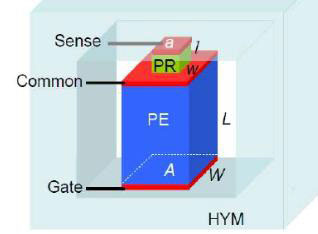
Squishy transistors: a device concept for fast, low-power electronics
Researchers have shown that a new device concept - a 'squishy' transistor - can overcome the predicted power bottleneck caused by CMOS (complementary metal-oxide-semiconductor) technology reaching its fundamental limits.
September 3, 2015 Read more
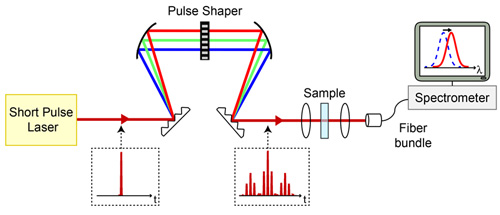
Single-beam two-dimensional spectroscopy
This new spectroscopy method is two-dimensional: It measures the response of the molecule to simultaneous illumination with two different wavelengths.
September 3, 2015 Read more

Stick and slip
It has long been accepted that such a thin layer of lubrication between sliding surfaces alternates along with the cycles of sticking and slipping; it starts as a solid, turns to liquid in the slipping phase and then back to a solid when the surfaces stick once again. But a recent paper suggests this model is incorrect.
September 3, 2015 Read more
 Subscribe to our Nanotechnology News feed