

Nanotechnology News – Latest Headlines
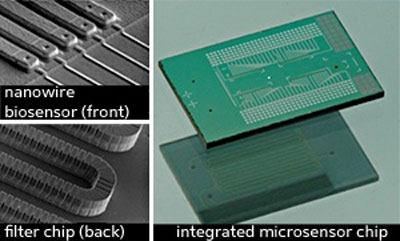
Medical diagnostics: Quick blood testing
A*STAR researchers have developed an integrated chip device for the rapid analysis of blood samples from cardiac patients.
January 18, 2012 Read more
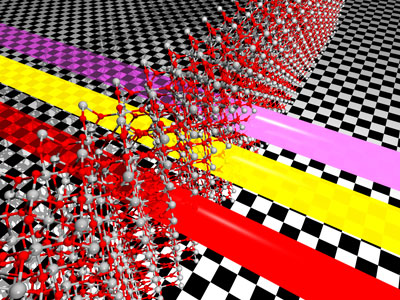
Researchers uncover transparency limits on transparent conducting oxides
Computational Materials researchers at UC Santa Barbara use cutting-edge calculations to determine fundamental optical transparency limits in conducting oxide material tin oxide.
January 18, 2012 Read more
Nanomaterial for quick, simple removal of toxic arsenic in drinking water
Researchers have developed a nanomaterial which enables simple detection and removal of arsenic from drinking water. This nanomaterial responds to warnings that as many as 60 million people live in contaminated areas in Southeast Asia without safe drinking water.
January 18, 2012 Read more
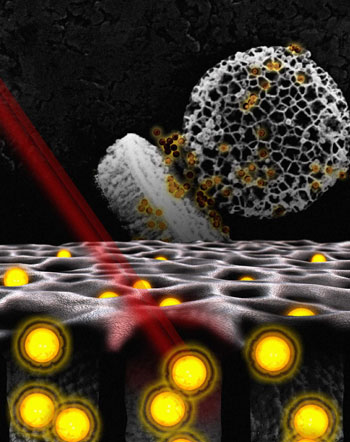
Breast cancer cells targeted, then burned, by gold-filled silicon wafers
By shining infrared light on specially designed, gold-filled silicon wafers, scientists at The Methodist Hospital Research Institute have successfully targeted and burned breast cancer cells. If the technology is shown to work in human clinical trials, it could provide patients a non-invasive alternative to surgical ablation, and could be used in conjunction with traditional cancer treatments, such as chemotherapy, to make those treatments more effective.
January 18, 2012 Read more
Five ways nanomanufacturing improves manufacturing today
SME's NanoManufacturing Conference and Exhibits, March 27-28, Boston, will highlight the current and near-term applications of nanotechnology and how they are transforming manufacturing.
January 18, 2012 Read more
A baby crystal is born
Scientists have determined that a structure comprising 32 lead-sulfur pairs is the smallest possible cubic arrangement that exhibits the same coordination as bulk lead sulfide.
January 18, 2012 Read more
Flaky graphene makes reliable chemical sensors
Scientists from the University of Illinois at Urbana-Champaign and the company Dioxide Materials have demonstrated that randomly stacked graphene flakes can make an effective chemical sensor.
January 18, 2012 Read more
The hot topics in printed electronics
On 3-4 April, IDTechEx is hosting its 8th annual Printed Electronics Europe event in Berlin, Germany. The event focus is on the commercialisation of printed electronics, with adopters from many verticals discussing their needs and experiences.
January 17, 2012 Read more
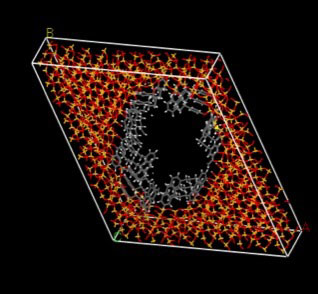
Neutron scattering provides window into surface interactions
To better understand the fundamental behavior of molecules at surfaces, researchers at the U.S. Department of Energy's Oak Ridge National Laboratory are combining the powers of neutron scattering with chemical analysis.
January 17, 2012 Read more
High-quality 64 kb ferroelectric NAND flash memory array
Towards the industrial production of the next-generation nonvolatile semiconductor memory.
January 17, 2012 Read more
Biologischer Nanomotor mit Hybridantrieb entdeckt
Methanbildende Archaeen gehoeren zu den urspruenglichsten Lebensformen auf der Erde. In den Tiefen der Ozeane gewinnen diese Mikroorganismen Energie fuer ihren Stoffwechsel, indem sie aus Kohlendioxid und Wasser Methan herstellen. Energetisch gesehen ist dies am Limit dessen, was ueberhaupt Leben erlaubt.
January 17, 2012 Read more
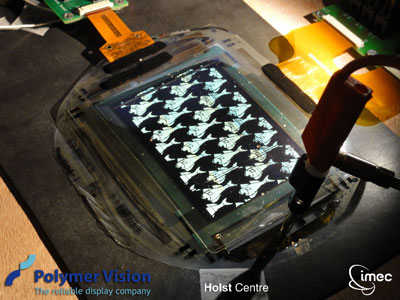
Holst Centre and imec launch research program on flexible OLED displays
The primary objective of the new program is to develop an economically scalable route to high-volume manufacturing of flexible active-matrix OLED displays. The shared program will bring together partners from across the value chain to tackle challenges such as high resolution, low power consumption, large area, outdoor readability, flexibility and light weight.
January 17, 2012 Read more
High school student intern at UAlbany Nanocollege is selected as semifinalst in Intel science competition
Cited for innovative research on energy-efficient and environmentally friendly lighting technology.
January 16, 2012 Read more
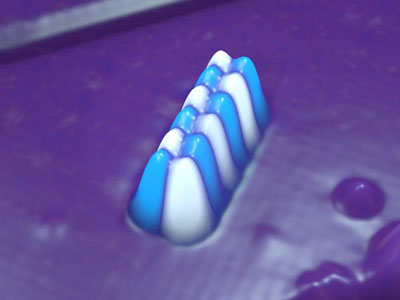
The world's smallest magnetic data storage unit
Scientists from IBM and the German Center for Free-Electron Laser Science (CFEL) have built the world's smallest magnetic data storage unit. It uses just twelve atoms per bit, the basic unit of information, and squeezes a whole byte (8 bit) into as few as 96 atoms.
January 16, 2012 Read more
World's best metronome enables slow-motion pictures of atoms and molecules
The world's most accurate metronome keeps stroke to an incredible 10 quintillionth of a second. The device enables slow-motion pictures from the world of molecules and atom.
January 16, 2012 Read more
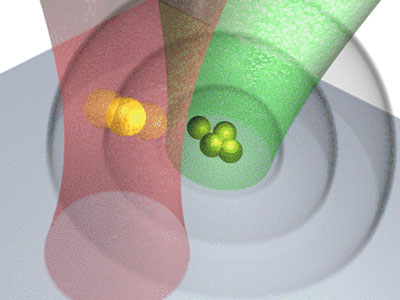
Nanoears - gold nanoparticles detect tiny acoustic vibrations
How noisy is a walking flea? What sorts of sound waves are caused by motile bacteria? Physicists at the Nanosystems Initiative Munich (NIM) have managed for the first time to detect sound waves at such minuscule length scales.
January 16, 2012 Read more
 Subscribe to our Nanotechnology News feed