

Nanotechnology News – Latest Headlines
Thai NANOTEC and GPO team up on drug discovery using nanotechnology
The National Nanotechnology Center (NANOTEC) and Government Pharmaceutical Organization (GPO) signed a strategic research collaboration agreement to focus on drug discovery using nanotechnology.
July 4, 2011 Read more
AK Nanomaterialien des AGS liefert Bericht zu Nanomaterialien
Der Ausschuss fuer Gefahrstoffe (AGS) hat den vom AK Nanomaterialien des UA I des AGS erarbeiteten Sachstandsbericht zum Thema Nanomaterialien beraten und beschlossen, mit der Erarbeitung einer Bekanntmachung zur Umsetzung der Vorgaben der Gefahrstoffverordnung (GefStoffV) bei Taetigkeiten mit Nanomaterialien zu beginnen.
July 4, 2011 Read more
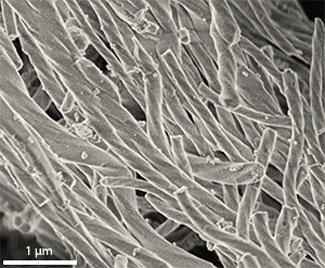
Precise helicity control in chiral mesoporous materials could lead to more efficient pharmaceutical production
The preparation of mesoporous materials with chiral pores is of particular interest for the production of pharmaceuticals. Researchers in Japan have now reported the preparation of chiral mesoporous materials with perfect control of helicity.
July 4, 2011 Read more
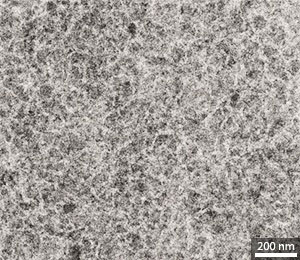
Organic electronics: Two birds, one polymer
A single polymer can be used to fabricate both high-performance solar cells and transistors.
July 4, 2011 Read more
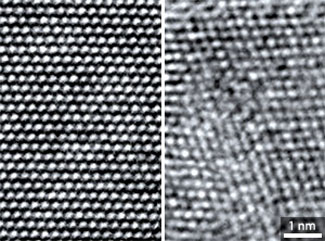
Silicon nanowires: Bent to disorder
Electron microscopy reveals the changes in crystal structure that occur when silicon nanowires are bent.
July 4, 2011 Read more
Graphene supercapacitor: Keep it moist
Films of chemically derived graphene layers separated by water show high performance in supercapacitors.
July 4, 2011 Read more
'Megapixel' DNA replication technology promises faster, more precise diagnostics
University of British Columbia researchers have developed a DNA measurement platform that sets dramatic new performance standards in the sensitivity and accuracy of sample screening.
July 3, 2011 Read more
Important step in the next generation of computing
Research reveals vital insight into spintronics.
July 3, 2011 Read more
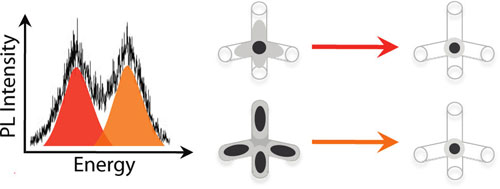
Breaking Kasha's rule: Scientists find unique luminescence in nanocrystals
Named for chemist Michael Kasha, who proposed it in 1950, Kasha's rule holds that when light is shined on a molecule, the molecule will only emit light (fluorescence or phosphorescence) from its lowest energy excited state. Highly luminescent molecular systems crafted from quantum dots that break Kasha's rule have not been reported - until now.
July 1, 2011 Read more
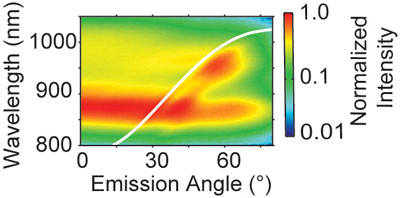
Nanowires offer opportunities for improved LEDs
Researchers from the FOM Institute AMOLF, together with colleagues from Philips Research, Eindhoven University of Technology and Delft University of Technology, have made special nanostructures that could be used as light-emitting diodes (LEDs). These nanostructures can be used to control the direction of the emission.
July 1, 2011 Read more
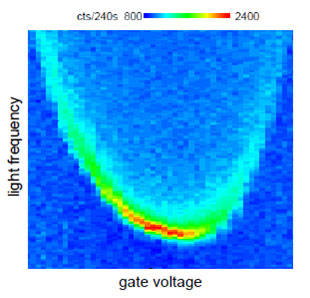
Shedding light on Kondo correlations
Scientists from ETH Zurich, LMU Munich, Princeton and Yale Universities have used resonant laser absorption to examine how a quantum dot with Kondo correlations responds to a quantum quench, i.e. to an abrupt change in the interactions that give rise to Kondo correlations in the first place.
July 1, 2011 Read more
New technique advances bioprinting of cells
By extending his pioneering acoustical work that applied sound waves to generate droplets from fluids, Dr. Utkan Demirci and his team at Harvard Medical School's (Brigham and Women's Hospital) Bio-Acoustic Mems in Medicine Laboratory report encouraging preliminary results at an early and crucial point in a stem cell's career known as embroid body formation.
July 1, 2011 Read more
Printed nanotechnology solar cells could dramatically reduce costs
Australian researchers have invented nanotech solar cells that are thin, flexible and use one hundredth the materials of conventional solar cells.
July 1, 2011 Read more
Faster 3-D nanoimaging a possibility with full color synchrotron light
Researchers can now see objects more precisely and faster at the nanoscale due to utilising the full colour spectrum of synchrotron light, opening the way for faster 3D nanoimaging.
July 1, 2011 Read more
Magnetic memory and logic could achieve ultimate energy efficiency
Magnetic microprocessors could use million times less energy than today's silicon chips.
July 1, 2011 Read more

Guitar hero? Special thin-film on guitar converts string tension into digital control signals
Guitar virtuosos have to master all kinds of playing techniques. But how can the intricate process of playing the instrument be captured digitally? A special thin film on the tailpiece has the answer. Functioning as a sensor, it converts the tension on the string into digital control signals.
July 1, 2011 Read more
 Subscribe to our Nanotechnology News feed