

Nanotechnology News – Latest Headlines
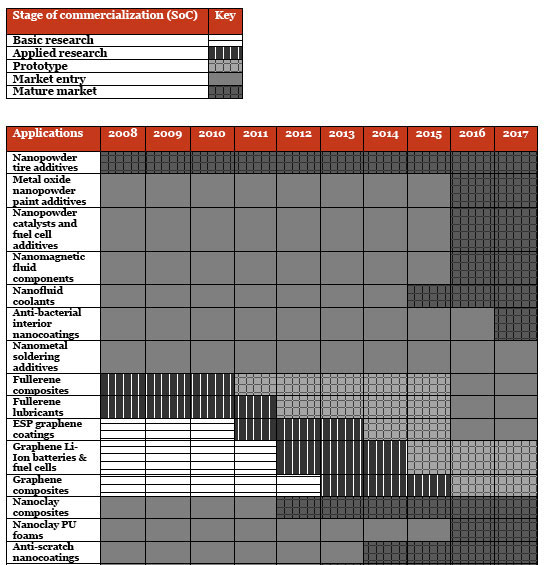
Nanotechnology and nanomaterials commercialization in the automotive industry
The folks at Future Markets, Inc., a technology consultancy firm, present the second in a new series of commercialization charts on nanotechnology and nanomaterials.
April 16, 2011 Read more
U.S. House subcommittee explores economic benefits of federal Nanotechnology Initiative
On April 15, the Subcommittee on Research and Science Education held a hearing to examine the National Nanotechnology Initiative (NNI) and address the nation's nanotechnology research and development priorities for the future.
April 16, 2011 Read more
New project to develop continuous flow process for separating and sorting carbon nanotubes
Archimedes Polymer Technologies (UK Ltd) and Brunel University, London have secured Technology Strategy Board Funding (TSB) to develop a new continuous flow process for separating and sorting commercially available carbon nanotubes and carbon nanomaterials.
April 15, 2011 Read more
EU research center contributes to risk assessment of selected engineered nanomaterials to human health and the environment
Scientists from the Institute for Health and Consumer Protection (IHCP) of the European Commission's Joint Research Centre (JRC) performed basic risk assessments for four types of nanomaterials: fullerenes, carbon nanotubes, nano-silver and metal-oxides (nano-titanium dioxide and nano-zinc oxide) following the methodology described in the REACH guidance.
April 15, 2011 Read more
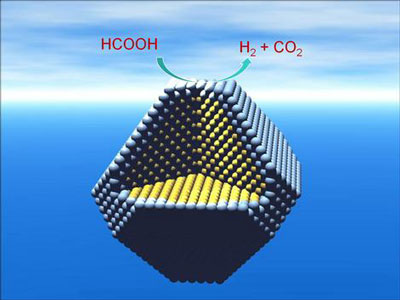
Putting a fuel cell in your pocket
Edman Tsang of Oxford University's Department of Chemistry and colleagues are developing new catalysts which can produce hydrogen at room temperature without the need for solvents or additives.
April 15, 2011 Read more
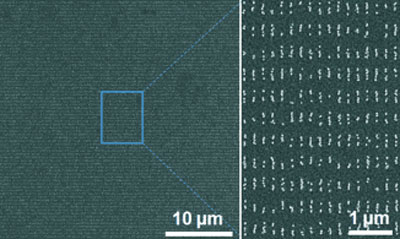
Nanoscale Gutenberg-style printing
When Gutenberg developed the principles of modern book printing, books became available to the masses. Hoping to bring technology capable of mass production to the nanometer scale, Udo Bach and this team of scientists at Monash University (Australia) and the Lawrence Berkeley National Laboratory (USA) have developed a nanoprinting process modeled on Gutenberg's printing method. Their goal is the simple, inexpensive production of nanotechnological components for solar cells, biosensors, and other electronic systems.
April 15, 2011 Read more
BASF Dialogueforum Nano - Information and Transparency Along the Product Life Cycle of Nanomaterials Final Report
In the BASF Dialogueforum Nano representatives of environmental and consumer organisations, trade unions, scientific institutes and churches (Civil Society Organisations / Non Governmental Organisations) work together with employees of the chemical company BASF SE on various issues related to the subject of nanotechnologies. The 2009 / 2010 dialogueforum, led by the Risk Dialogue Foundation, St. Gallen, resulted in recommendations on how transparency and information can be guaranteed along the product life cycle.
April 15, 2011 Read more
Large-area Organic and Printed Electronics Convention:LOPE-C 2011 sets new record
LOPE-C, the premier conference and exhibition of the worldwide organic and printed electronics community, is steering towards a new record in 2011. More than 95 companies are expected to exhibit on the greatly expanded floorspace of 1,300 square meters at the Messe Frankfurt Forum, Germany.
April 15, 2011 Read more
Turning windows into powerplants
If a new development from labs at MIT pans out as expected, someday the entire surface area of a building's windows could be used to generate electricity - without interfering with the ability to see through them.
April 15, 2011 Read more
Solar power without solar cells: A hidden magnetic effect of light could make it possible
A dramatic and surprising magnetic effect of light discovered by University of Michigan researchers could lead to solar power without traditional semiconductor-based solar cells. The researchers found a way to make an "optical battery". In the process, they overturned a century-old tenet of physics.
April 14, 2011 Read more
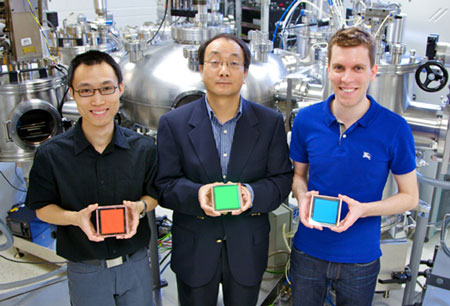
Researchers 'brighten' the future of OLED technology
One-atom thick chlorine reduces OLED device complexity while enabling record efficiencies.
April 14, 2011 Read more
Semiconductor innovations key to U.S. economic growth
The Semiconductor Industry Association (SIA), representing U.S. leadership in semiconductor manufacturing and design, today announced that Dr. Jeff Welser testified at a hearing on the future of nanotechnology research and the National Nanotechnology Initiative (NNI) on behalf of the SIA, the Semiconductor Research Corporation (SRC) and the Nanoelectronics Research Initiative (NRI) today in the House Committee on Science, Space and Technology's Subcommittee on Research and Science Education.
April 14, 2011 Read more
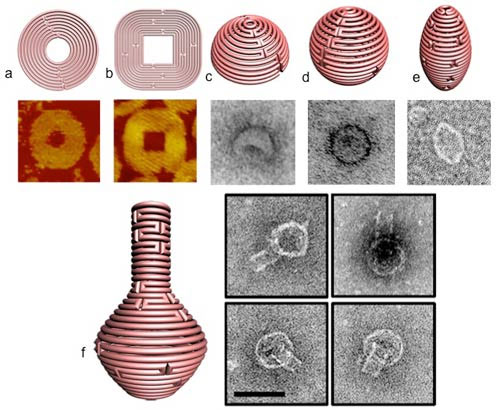
DNA origami used to create 3-D nanostructures
Miniature architectural forms - some no larger than viruses - have been constructed through a revolutionary technique known as DNA origami. Now, Hao Yan, Yan Liu and their colleagues at Arizona State University's Biodesign Institute have expanded the capability of this method to construct arbitrary, two and three-dimensional shapes, mimicking those commonly found in nature.
April 14, 2011 Read more
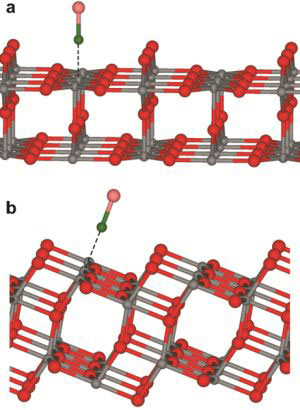
Towards a more efficient use of solar energy
The exploitation and utilization of new energy sources are considered to be among today's major challenges. Solar energy plays a central role, and its direct conversion into chemical energy, for example hydrogen generation by water splitting, is one of its interesting variants. Titanium oxide-based photocatalysis is the presently most efficient, yet little understood conversion process. Scientists have studied the basic mechanisms of photochemistry by the example of titania and have presented new detailed findings.
April 14, 2011 Read more
New low-cost photovoltaic materials to develop the next generation of solar cells
The direct conversion of sunlight into electricity using photovoltaics is becoming an increasingly important technology for renewable energy generation as a replacement for fossil fuels, with applications from large-scale generation to roof-top solar panels and even mobile phones. But photovoltaics still accounts for only a marginal fraction of global energy supply. One of the main reasons for this is the relatively high cost of the base material - silicon - used in the most common type of solar cell.
April 14, 2011 Read more

Blood vessel simulation probes secrets of brain
Newer, faster supercomputers have allowed scientists to create detailed models of blood flow that help doctors understand what happens at the molecular level and, consequently, how heart and blood diseases can be treated.
April 14, 2011 Read more
 Subscribe to our Nanotechnology News feed