

Nanotechnology News – Latest Headlines
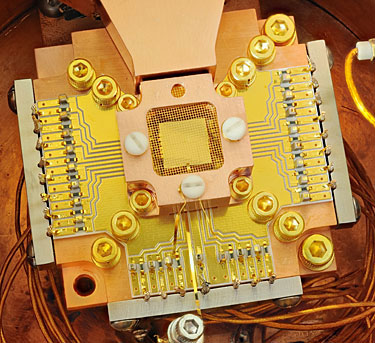
'Quantum tuning forks' demonstrate directly coupling of vibrating ions
Physicists at the National Institute of Standards and Technology (NIST) have for the first time coaxed two atoms in separate locations to take turns jiggling back and forth while swapping the smallest measurable units of energy. The technique directly links the motions of two physically separated atoms and might simplify information processing in future quantum computers and simulations.
March 2, 2011 Read more
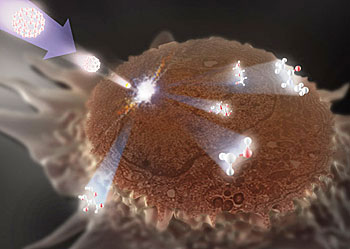
'A little off the top' helps map cells with submicrometer resolution
To determine if a tissue biopsy reveals the presence of cancer, a histologist often screens for cells with an abnormal appearance or a specific visible trait such as a larger-than-usual nucleus. However, by the time a cancer is physically noticeable, the disease may be in its later stages and more difficult to treat. In an effort to identify the earlier-onset, more subtle chemical changes occurring in a cell heading toward malignancy, researchers have developed a technique that slices off the top of a cell and makes the structures accessible to spectroscopic examination of their chemical "signature."
March 2, 2011 Read more
Laser physics: Getting silicon into order
Short pulses of laser light can crystallize amorphous silicon and create a nanostructured surface texture ideal for solar-cell applications.
March 2, 2011 Read more
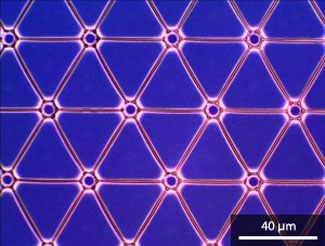
Microfabrication: The light approach
The patterning of templates using ultraviolet light is a promising new method for assembling transparent microwire networks.
March 2, 2011 Read more
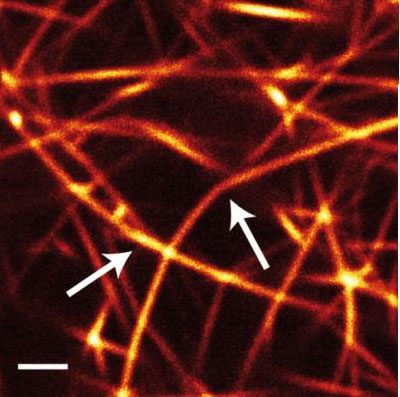
Relaxation leads to lower elasticity
Together with the crosslinking molecule fascin, actin filaments build an interconnected network whose elasticity decreases with increasing age. Deploying a wide-ranging combination of experimental techniques, researchers have now managed to cast light on the source of these changes.
March 2, 2011 Read more
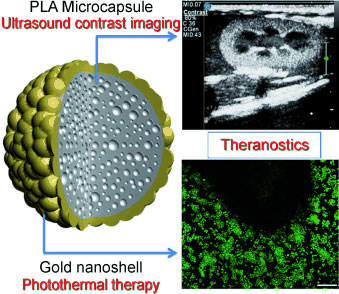
Double strike to fight cancer
Combined diagnosis and treatment of tumors: photothermically activated ultrasound contrast agent.
March 2, 2011 Read more
Using nanotechnology to reduce friction in automobile engines and machines
When tested under metal surface contact conditions that simulated conditions found in automobile engines, polymer nanoparticles were discovered to have an unprecedented friction reduction capability.
March 1, 2011 Read more
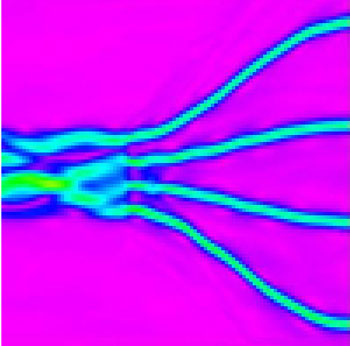
New generation of optical integrated devices for future quantum computers
A research group led by scientists from the University of Bristol has demonstrated the quantum operation of new components that will enable compact circuits for future photonic quantum computers.
March 1, 2011 Read more
UAlbany NanoCollege and SUNY Downstate Medical Center partner to launch the world's first program for research physicians in nanomedicine
Pioneering curricula will uniquely prepare a new generation of world-class clinical scientists and enable nanotechnology-driven applications to improve health care.
March 1, 2011 Read more
Sharpest microscope tip lands Canada's Nanotechnology Institute in Guinness Book of World Records
Sharpest man-made object is only 1 atom at its point.
March 1, 2011 Read more
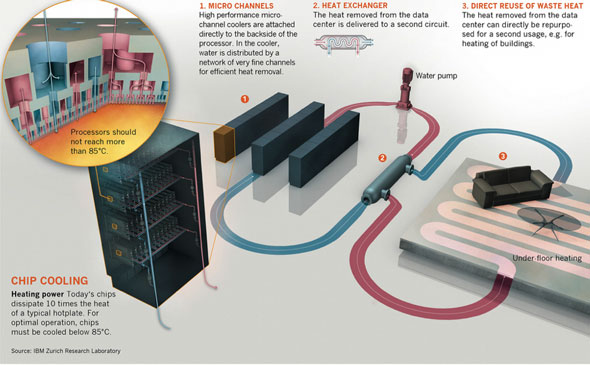
Supercomputers the size of sugar cubes
Energy efficiency and miniaturization thanks to water-cooled chips.
March 1, 2011 Read more
Surgeons predict the future of nanomedicine in practice
Nanotechnology holds promise for developing surgical measures.
March 1, 2011 Read more
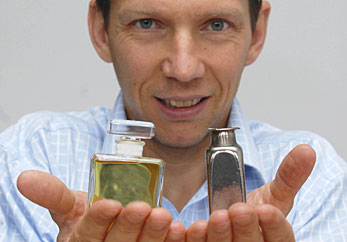
Stronger than steel, novel metals are moldable as plastic
Some recently developed bulk metallic glasses (BMGs) - metal alloys that have randomly arranged atoms as opposed to the orderly, crystalline structure found in ordinary metals - can be blow molded like plastics into complex shapes that can't be achieved using regular metal, yet without sacrificing the strength or durability that metal affords.
March 1, 2011 Read more
Microsphere nanoscope could 'solve the cause of viruses'
Researchers have created a microscope which shatters the record for the smallest object the eye can see, beating the diffraction limit of light.
March 1, 2011 Read more
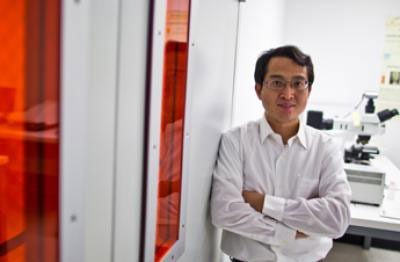
Carbon nanotube aerogel may improve robotic surgery, energy storage
University of Central Florida Associate Professor Lei Zhai and postdoctoral associate Jianhua Zou have engineered the world's lightest carbon material in such a way that it could be used to detect pollutants and toxic substances, improve robotic surgery techniques and store energy more efficiently.
March 1, 2011 Read more
Research shows the body's immune system plays a role in drug delivery with nanoparticles
Researchers have over time been able to show that medicine designed at nanoscale offers unprecedented opportunities for targeted treatment of serious diseases such as cancer. However, now research also shows that the body's immune system plays a significant part in the drug delivery process.
March 1, 2011 Read more
 Subscribe to our Nanotechnology News feed