

Nanotechnology News – Latest Headlines
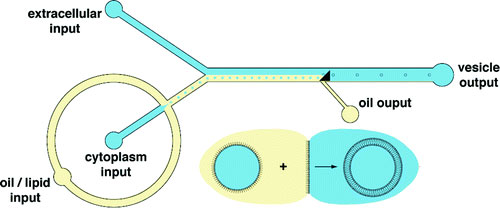
Research scientists create cell assembly line
Borrowing a page from modern manufacturing, scientists from the Florida campus of The Scripps Research Institute have built a microscopic assembly line that mass produces synthetic cell-like compartments.
March 4, 2011 Read more
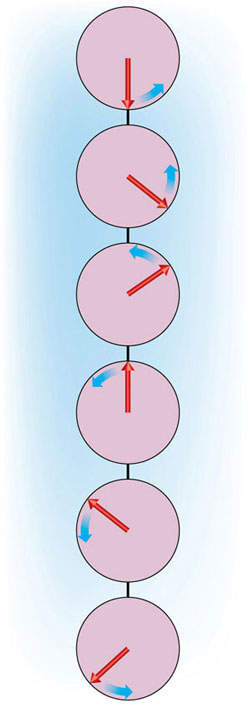
Predicting a chain of order
Calculations can now predict when and how spins of electrons and ions arrange in one-dimensional multiferroic materials.
March 4, 2011 Read more
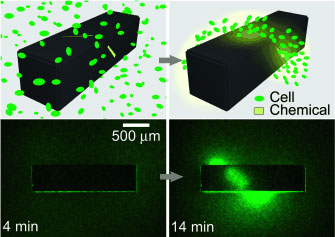
Glowing spirals - chemical scaffolds guide living cells into precisely defined three-dimensional patterns
To find our way, we use maps. Cells use "chemical maps" to find the way: they orient themselves by following concentration gradients of attractants or repellants. David H. Gracias and a team at Johns Hopkins University (Baltimore, USA) have now developed a clever new method to produce three-dimensional patterns of chemical concentration gradients in vitro - with previously unattainable versatility and precision in both space and time.
March 3, 2011 Read more
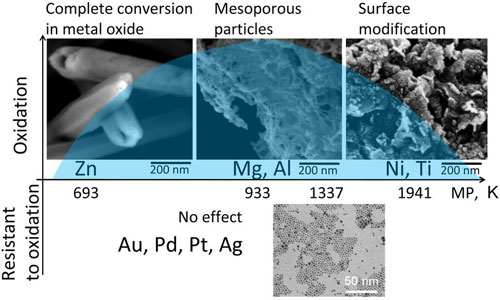
Highly precise nanostructuring using ultrasound: new procedure to produce porous metals
They are corrosion resistant, mechanically strong and withstand exceedingly high temperatures. With such characteristics, porous metals are generating a growing interest in numerous innovative fields of technology. They are characterised by nanostructured surfaces with pores measuring only a few nanometres in diameter. An international research team has successfully developed a heavy-duty and cost-efficient ultrasound procedure for the design and production of such metallic structures.
March 3, 2011 Read more
Infectious diseases researchers gain new information from surface properties of bacteria
Infectious diseases researchers at Umea University in Sweden are studying the surface properties of bacteria together with materials scientists. Studies of the outermost parts of the cell walls of bacteria yield new information about the chemical composition of structures that are important for the capacity of bacteria to infect organisms.
March 3, 2011 Read more
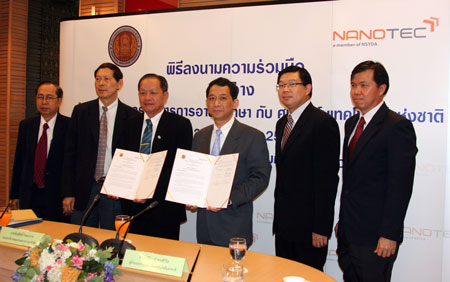
NANOTEC partners with Thai Education Commission to include nanotechnology in curriculum
After completing two collaborative training activities, both National Nanotechnology Center (NANOTEC) and Vocational Education Commission (VEC) decided to tie the knot by initiating a formal partnership agreement this afternoon at the Vocational Education Commission's office in Bangkok.
March 3, 2011 Read more
New experiment would use quantum effects to perform otherwise intractable calculations
At the Association for Computing Machinery's 43rd Symposium on Theory of Computing in June, associate professor of computer science Scott Aaronson and his graduate student Alex Arkhipov will present a paper describing an experiment that, if it worked, would offer strong evidence that quantum computers can do things that classical computers can't. Although building the experimental apparatus would be difficult, it shouldn't be as difficult as building a fully functional quantum computer.
March 2, 2011 Read more
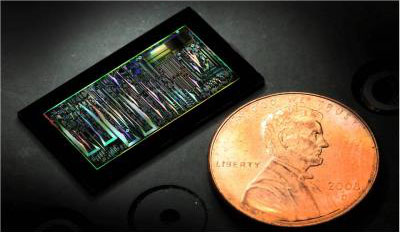
Nanofabrication tools may make silicon optical chips more accessible
In an effort to make it easier to build inexpensive, next-generation silicon-based electro-optical chips, which allow computers to move information with light and electricity, a University of Washington photonics professor, Dr. Michael Hochberg and his research team are developing design tools and using commercial nanofabrication tools.
March 2, 2011 Read more
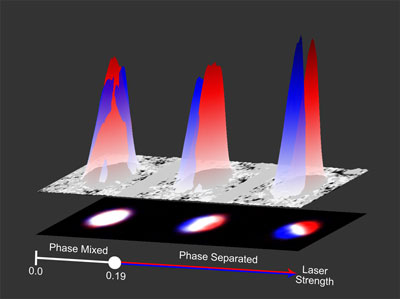
Physicists demonstrate coveted 'spin-orbit coupling' in atomic gases
Physicists at the Joint Quantum Institute (JQI), a collaboration of the National Institute of Standards and Technology (NIST) and the University of Maryland-College Park, have for the first time caused a gas of atoms to exhibit an important quantum phenomenon known as spin-orbit coupling. Their technique opens new possibilities for studying and better understanding fundamental physics and has potential applications to quantum computing, next-generation "spintronics" devices and even "atomtronic" devices built from ultracold atoms.
March 2, 2011 Read more

Combined molecular study techniques reveal more about DNA proteins
Illinois researchers have combined two molecular imaging technologies to create an instrument with incredible sensitivity that provides new, detailed insight into dynamic molecular processes.
March 2, 2011 Read more
Nanotechnology in food processing, packaging and safety
Nanotechnology exhibits great potential for the food industry. This broad and practically oriented course has therefore been put forward to meet the needs from industries to gain knowledge and understanding about current research going on in this expansive field. It deals with the current and coming applications of nanotechnology in the food industry.
March 2, 2011 Read more

Power of Research: a new online game to inspire the scientists of the future
A new strategy browser game - the "Power of research" - is officially launched. Supported by the European Commission, "Power of Research" has been developed to inspire young Europeans to pursue scientific careers and disseminate interesting up-to-date scientific information. Players assume the role of scientists working in a virtual research environment that replicates the situations that scientists have to deal with in the real world.
March 2, 2011 Read more
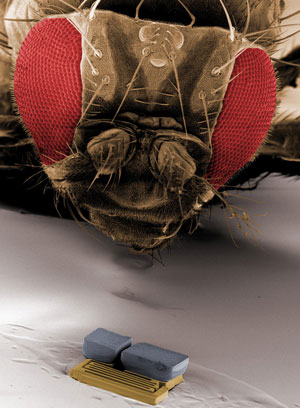
Verbindung von Magnetfeld- und Nanotechnologie
Kleinstroboter, die im Koerper praezise medizinische Eingriffe vornehmen: Ein vom Schweizerischen Nationalfonds (SNF) unterstuetztes Forscherteam entwickelt Prototypen, hat aber auch schon eine konkrete Anwendung am Start.
March 2, 2011 Read more
Accurate nanoparticle measurement key component of nano-engineering of smart drug delivery particles
Accuracy of measurement of nanoparticles is a fundamental requirement for research involving smart particles for drug delivery.
March 2, 2011 Read more

The quantum singularity
A new experiment would use quantum effects to perform otherwise intractable calculations, but conducting it should be easier than building a quantum computer.
March 2, 2011 Read more
Using artificial, cell-like 'honey pots' to entrap deadly viruses
Researchers from the National Institute of Standards and Technology (NIST) and the Weill Cornell Medical College have designed artificial "protocells" that can lure, entrap and inactivate a class of deadly human viruses - think decoys with teeth.
March 2, 2011 Read more
 Subscribe to our Nanotechnology News feed