

Nanotechnology News – Latest Headlines
Survey: Hiding risks can hurt public support for nanotechnology
A new national survey on public attitudes toward medical applications and physical enhancements that rely on nanotechnology shows that support for the technology increases when the public is informed of the technology's risks as well as its benefits - at least among those people who have heard of nanotechnology.
May 4, 2010 Read more
Researchers use new microscope to 'see' atoms for first time
Cryo-electron microscopy images shed light on virus structure, function.
May 4, 2010 Read more
Informatics moves into nanomedicine
A recently published article discusses the huge impact that informatics will have in the immediate future on vanguard medicine and innovation in a field, translational nanoinformatics, that is set to translate advances in basic nanomedical research into clinical applications of growing importance.
May 4, 2010 Read more
Carbon nanotube based thermopower wave technology may lead to environmentally safe fuel cells
MIT researchers are exploring a new technology funded by the Air Force Office of Scientific Research, and the National Science Foundation, which they call a thermopower wave, that may convert chemical energy to fuel cells for micro-machines, sensors and emergency communication beacons.
May 4, 2010 Read more
Startschuss zu ASPIMATT - Deutsch-japanisches Projekt erforscht neue Materialien zur Datenspeicherung
Bei ASPIMATT arbeiten Wissenschaftler aus Mainz, Kaiserslautern und dem japanischen Sendai an neuen Werkstoffen fuer die Spintronik.
May 4, 2010 Read more
Nanotechnology policy framework for addressing nanomaterial risks in California
The Program on Reproductive Health and the Environment at the University of California, San Francisco, has developed a draft set of policy recommendations to address potential health risk from nanomaterials and nanotechnology for the state of California.
May 4, 2010 Read more

Bionic coating could help ships to economize on fuel
A novel mechanism for long-term air retention under water is found in the sophisticated surface design of the water fern Salvinia. Its floating leaves are evenly covered with complex hydrophobic hairs retaining a layer of air when submerged under water. This Salvinia Effect provides an innovative concept to develop biomimetic surfaces with long-term air-retention capabilities for under water applications.
May 4, 2010 Read more
Treating battlefield injuries with light-activated nanosuturing technology
This new treatment for war injuries includes using a process or technology called Photochemical Tissue Bonding, which can replace conventional sutures, staples and glues in repairing skin wounds, reconnecting severed peripheral nerves, blood vessels, tendons and incisions in the cornea.
May 4, 2010 Read more
Rapid analysis of DNA damage now possible
Technology offers new way to test potential cancer drugs, see effects of environmental toxins.
May 3, 2010 Read more
Visual processing: every neuron counts
German scientists have refined and used a method to observe how individual nerve cells process visual information in a living brain. The new microscopic method made it possible for them to study tiny synapses on a single neuron, and to determine that each individual neuron performs an important role in sensory processing.
May 3, 2010 Read more
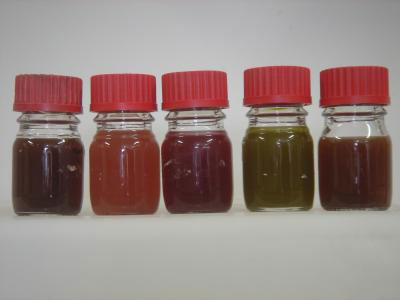
Purple is the new green
Researchers examine the light harvesting properties of purple bacteria in hopes of adapting their natural designs in 'green' technologies for humans.
May 3, 2010 Read more
An optical traffic cop for rapid communication
It looks like a piece of gel that slips into the sole of your sneaker, but it's a new nano-based technology that can make computers and the Internet hundreds of times faster - a communications technology 'enabler' that may be in use only five or ten years in the future.
May 3, 2010 Read more
DOE announces upgrade to Advanced Photon Source
DOE today announced formal approval for conceptual design of the APS upgrade, the first in a series of major milestones that the project must meet under DOE's project management regimen.
May 3, 2010 Read more
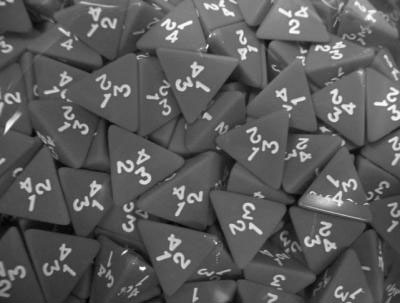
Densest dice packing and computing with molecules
Tetrahedral dice pack tighter than any other shape, and a single molecule can calculate thousands of times faster than a PC.
May 3, 2010 Read more
INBT students to teach about self assembly during national science expo
Participants at the INBT booth will be able to see at the macro scale what happens when materials of various shapes and sizes assemble into more complex structures at the nanoscale.
May 3, 2010 Read more
NPL assists the UK Health Protection Agency in setting up the National Nanotoxicology Research Centre
The National Physical Laboratory (NPL) has recently been helping the Health Protection Agency (HPA) set up the National Nanotoxicology Research Centre (NNRC) at their Centre for Radiation, Chemical and Environmental Hazards with the aim of advancing research into the possible toxic effects of nanoparticles.
May 3, 2010 Read more
 Subscribe to our Nanotechnology News feed