

Nanotechnology News – Latest Headlines
Work begins on laboratory for world's strongest microscope
With a groundbreaking ceremony, work began today on an extension to the Ernst Ruska-Centre (ER-C) on the campus of Forschungszentrum Juelich
November 6, 2009 Read more
New cancer detection method with fluorescent silica beads
A novel method of detection of cervical cancer cells has been developed by Clarkson University Professor Igor Sokolov's group, an affiliate of the University's Nanoengineering and Biotechnology Laboratories Center (NABLAB)
November 6, 2009 Read more
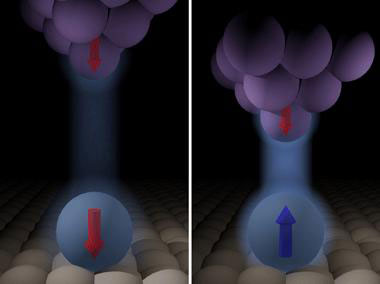
Die Magnetisierung einzelner Atome manipulieren
Feiner geht es nicht: Valeri Stepanyuk vom Max-Planck-Institut fuer Mikrostrukturphysik in Halle und seine Kollegen koennen die Magnetisierung einzelner Atome manipulieren.
November 6, 2009 Read more
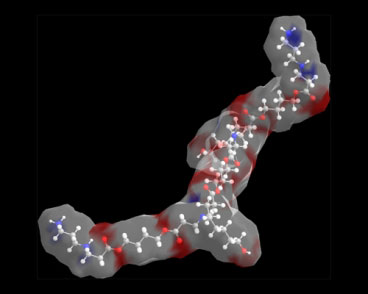
Novel nanoparticles could become a safer alternative to gene therapy delivered by viruses
Researchers report that a nanoparticle-delivered gene therapy successfully suppressed ovarian tumor growth in mice.
November 6, 2009 Read more
DOE awards Argonne, partners more than $7 million for solar energy-related research projects
The U.S. Department of Energy awarded Argonne National Laboratory nearly $2.7 million in American Recovery and Reinvestment Act Funding (ARRA) for three solar-energy related research projects.
November 6, 2009 Read more
Magnetic nanoparticles to simultaneously diagnose, monitor and treat
Whether it's magnetic nanoparticles (mNPs) giving an army of 'therapeutically armed' white blood cells direction to invade a deadly tumour's territory, or the use of mNPs to target specific nerve channels and induce nerve-led behaviour (such as the life-dependant thumping of our hearts), mNPs have come a long way in the past decade.
November 6, 2009 Read more
CAREER award for contributions to stem cell analysis
Recipient of a 2009 National Science Foundation CAREER award, Professor Brenda Ogle is developing stem cell analysis tools that offer researchers the flexibility to study not only individual cells, but also multicellular entities and small tissue-engineered constructs.
November 5, 2009 Read more
Study demonstrates first conclusive link between size of catalyst and their properties
University of Utah chemists demonstrated the first conclusive link between the size of catalyst particles on a solid surface, their electronic properties and their ability to speed chemical reactions.
November 5, 2009 Read more
6. Nanotechnologieforum Hessen richtet sich an Chemie-, Pharma- und Medizintechnik-Branche
Am 26. November laedt die Aktionslinie Hessen-Nanotech des Hessischen Wirtschaftsministeriums zum 6. Nanotechnologieforum nach Hanau ein.
November 5, 2009 Read more
Medically used nanoparticles can damage DNA across a cellular barrier
Medically used nanoparticles can damage the DNA of cells without crossing cellular barriers in the body. The study, conducted on cells grown in culture, suggests that the indirect effects of nanoparticles on cells should be considered when evaluating their safety.
November 5, 2009 Read more
Three UK nanotechnology companies win Business Innovation Awards
Three top British nanotechnology firms whose innovations make solar cells more efficient, help in the fight against heart disease, and improve the production of fine chemical compounds won Business Innovation Awards today at the UK NanoForum and Emerging Technologies Conference 2009.
November 5, 2009 Read more
Chemists describe solar energy progress and challenges, including the 'artificial leaf'
Scientists are making progress toward development of an 'artificial leaf' that mimics a real leaf's chemical magic with photosynthesis - but instead converts sunlight and water into a liquid fuel such as methanol for cars and trucks
November 5, 2009 Read more
Japan turns to University of Ulster scientist for nanotechnology research
A University of Ulster academic has won a prestigious research fellowship to work alongside world class scientists in Japan.
November 5, 2009 Read more
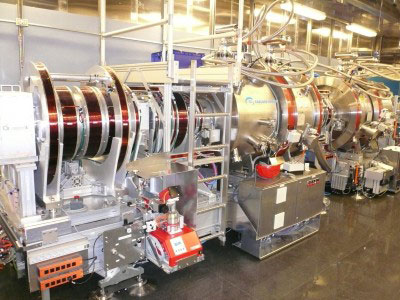
European researchers obtain access to world's strongest neutron source
A unique large-scale research device from Juelich went into operation in the USA yesterday. At the strongest neutron source in the world, the spallation source SNS in Oak Ridge, Tennessee, Forschungszentrum Juelich inaugurated a so-called neutron spin echo (NSE) spectrometer.
November 5, 2009 Read more
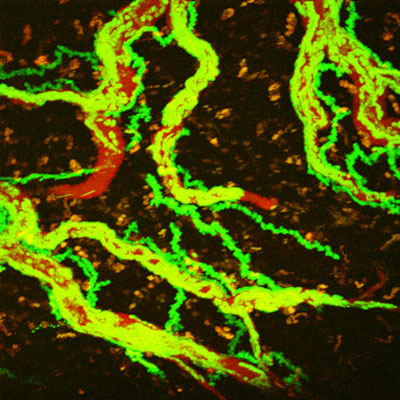
Crossing the line: how aggressive cells invade the brain
A team of scientists from the Max Planck Institute of Neurobiology, the University Medical Center Goettingen, and other institutes, has witnessed the movements of immune system cells 'live' under the microscope for the very first time.
November 5, 2009 Read more
NIH grant funds rapid saliva test using lab-on-a-chip
The National Institutes of Health (NIH) has awarded researchers in Rice University's new BioScience Research Collaborative (BRC) a $2 million Grand Opportunity (GO) grant to develop a fast, inexpensive test for oral cancer that a dentist could perform simply by using a brush to collect a small sample of cells from a patient's mouth.
November 5, 2009 Read more
 Subscribe to our Nanotechnology News feed