

Nanotechnology News – Latest Headlines
Biosensor to help enlist cancer resistance fighters?
A powerful new biosensor developed by European researchers will help identify cells in the immune system that actively suppress tumour growth, then put them to use. Enlisting the patient's own immune system would be like sending reinforcements for resistance fighters.
November 5, 2009 Read more
Europe's 'Extreme light infrastructure' project gears up for launch
Can an intense laser rip photons into electron-positron pairs? Seeking to shed light on this burning question is the ELI ('Extreme light infrastructure') project, which received EUR 6 million in funding under the 'Infrastructures' Theme of the EU's Seventh Framework Programme (FP7).
November 5, 2009 Read more
Konsultation zum Austria Nano-Aktionsplan
Interessierte Buerger habe jetzt die Gelegenheit bis zum 19. November zum Entwurf des Oesterreichischen Aktionsplans Nanotechnologie Stellung zu nehmen.
November 5, 2009 Read more
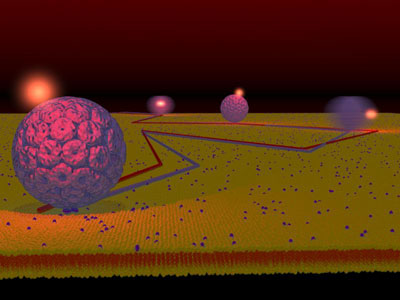
Bewegungen von Viren auf Membranen live verfolgen
Wissenschaftler am Center for Imaging Science and Technology (CIMST) der ETH Zuerich haben eine neue Methode entwickelt, die es erstmals ermoeglicht, in Echtzeit kleinste Bewegungen von Viren zu verfolgen.
November 5, 2009 Read more
Thailand Nanotechnology Conference on health, energy, environment
The Center of Excellence in Nanotechnology at Asian Institute of Technology in Thailand organizing the the 3rd Thailand Nanotechnology Conference 2009 Health, Energy, Environment on December 21-22, 2009 in Bangkok, Thailand.
November 5, 2009 Read more
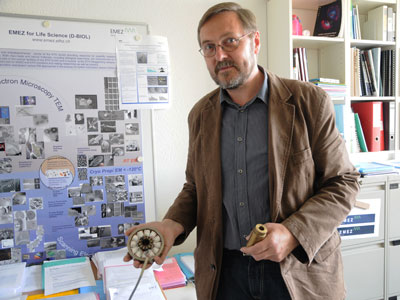
An electron microscope with glasses
An electron microscope with glasses that correct the spherical aberration of the lens in order to achieve even higher resolution is currently being assembled at the Electron Microscopy Centre (EMEZ) at ETH Zurich.
November 5, 2009 Read more
Quantum gas microscope offers glimpse of quirky ultracold atoms
Research creates a readout system for quantum simulation and computation.
November 4, 2009 Read more
US scholar: 'Don't choose clean tech winners too early'
In order to manage the huge task of transforming the current energy system to fit climate considerations, it is important to keep future ground-breaking technology options open while making early emission cuts by using energy more efficiently, says Franklin M. Orr, director of the Precourt Institute for Energy at Stanford University.
November 4, 2009 Read more
China doubles research output, leaving West in its wake
A study from Thomson Reuters released this week shows explosive growth in research output from China, far outpacing research activity in the rest of the world.
November 4, 2009 Read more
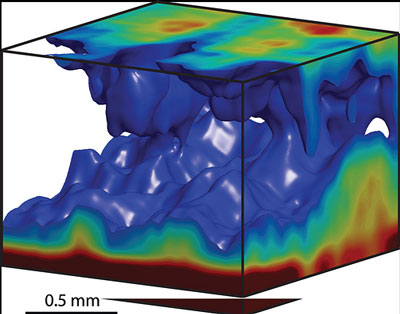
Bacteria mix it up at the microscopic level
In studies of the motion of tiny swimming bacteria, scientists found that the microscopic organisms can stir fluids remarkably quickly and effectively. As a result, the bacterial flagella could act like tiny motors to mix chemicals in biomedical kits, among other applications.
November 4, 2009 Read more

Nanotechnology spices up the effectiveness of a potential disease-fighter
Scientists are reporting development of a nano-size capsule that boosts the body's uptake of curcumin, an ingredient in yellow curry now being evaluated in clinical trials for treatment of several diseases.
November 4, 2009 Read more
Materials scientists find better model for glass creation
Harvard materials scientists have come up with what they believe is a new way to model the formation of glasses, a type of amorphous solid that includes common window glass.
November 4, 2009 Read more
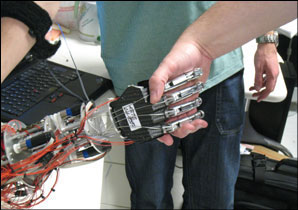
SmartHand man/machine interface is essential link in groundbreaking prosthetic hand
Scientists have successfully wired a state-of-the-art artificial hand to existing nerve endings in the stump of a severed arm. The device, called SmartHand, resembles - in function, sensitivity and appearance - a real hand.
November 4, 2009 Read more
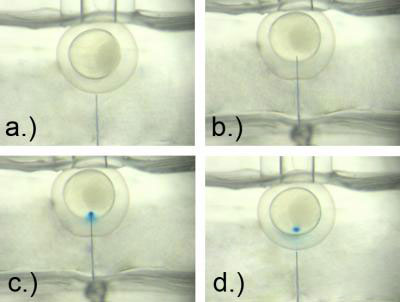
Tiny injector to speed development of new, safer, cheaper drugs
Engineering researchers at McMaster University have fabricated a palm-sized, automated, micro-injector that can insert proteins, DNA and other biomolecules into individual cells at volumes exponentially higher than current procedures, and at a fraction of the cost.
November 4, 2009 Read more
Nanoelectronics at the core of the European 'Energy efficient electrical car' project
Electric vehicles are the future and researchers are working on developing such cars to fuel technology and protect the environment. Rising to meet this challenge head on is the E3CAR ('Energy efficient electrical car') project, funded in part by the EU and ENIAC (the European Nanoelectronics Initiative Advisory Council).
November 4, 2009 Read more
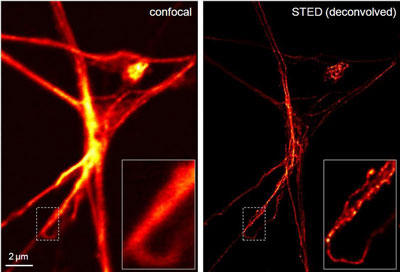
Forum Mikroskopietrends'09 - Makro-Mikro-Nano
Zum Ende des Jahres 2009 werden am 17. Dezember in Wetzlar die neusten Trends der Mikroskopie zur Betrachtung der unterschiedlichen Groessenskalen vorgestellt.
November 4, 2009 Read more
 Subscribe to our Nanotechnology News feed